A bad timing belt tensioner usually shows up as a check engine light, engine noise, rough performance, or hard starting. Vehicles have a timing belt or a timing chain inside their engine that’s partnered with a timing belt tensioner. While timing belt tensioners are generally built to last for a long time, they can still fail. When they do, it can cause an array of engine problems. In this article, you’ll learn about the symptoms of a faulty timing belt tensioner so that you can fix it before it worsens.
Quick Answers: A Bad Timing Belt Tensioner at a Glance
Here’s the short version if you’re trying to confirm a diagnosis fast.
- Common warning signs: Check engine light, whining or grinding noise, rough idle, misfires, and starting trouble.
- What it does: The tensioner keeps the timing belt tight so the crankshaft and camshaft stay in sync.
- How serious is it: Serious. A loose or broken timing belt can wreck an interference engine.
- Why it fails: Normal wear, heat, high mileage, or a failing pulley or water pump nearby.
- What to do first: Stop driving and get a proper diagnosis before the belt slips.
- Repair or replace: Replace the tensioner, and usually the timing belt and related parts at the same time.
What Does a Timing Belt Tensioner Do?
To understand the purpose of the timing belt tensioner, you’ll first need to learn about the timing belt. This part connects the crankshaft and camshaft, which are separate components at the top and at the bottom of the engine. The timing belt is also responsible for keeping these parts in sync. The crankshaft is connected to the connecting rod and piston assembly, while the camshaft controls the intake and exhaust valves.
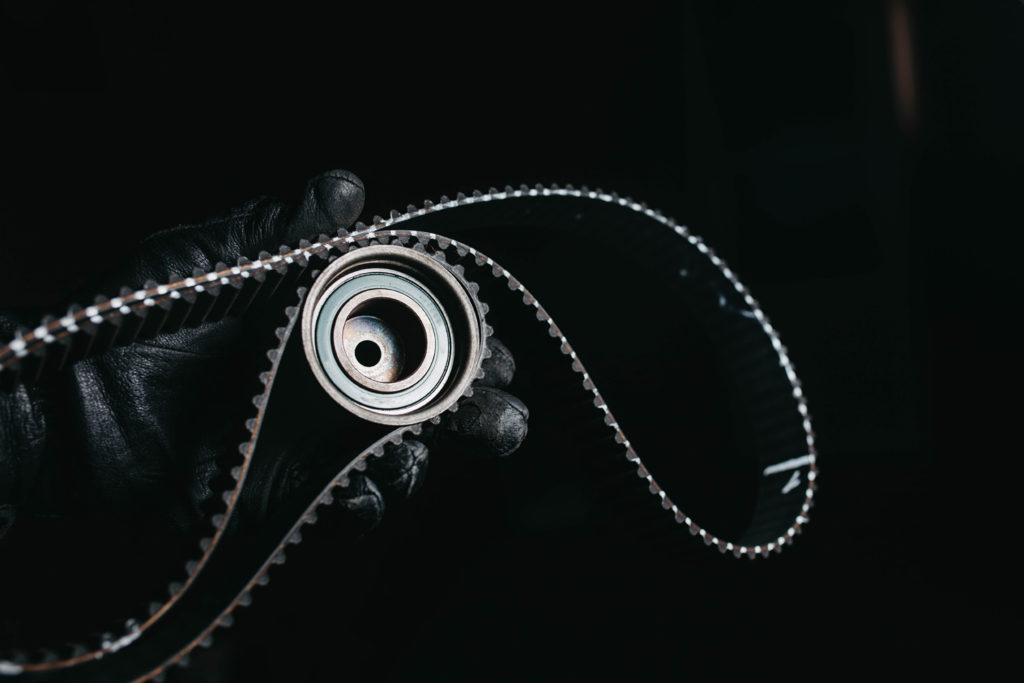
The timing belt tensioner secures the timing belt and keeps it tensioned. Since the timing belt can stretch out over time, the tensioner pushes on a segment of the belt to ensure that there isn’t any slack. Slack can cause the belt to slip on the pulleys or even come loose, which would cause a number of engine problems.
There are two types of timing belt tensioners. Hydraulic tensioners use a piston to push on a lever or arm attached to the belt, while mechanical tensioners use a spring or a special tool instead to achieve the same result.

Bad Timing Belt Tensioner Symptoms
Your vehicle might have a faulty timing belt tensioner if it exhibits one or more of the following symptoms.
Note: Other problems can mimic a failed timing belt tensioner. You or your mechanic should perform a thorough diagnosis before conducting any repairs.
Illuminated Check Engine Light
The engine timing is constantly monitored by the powertrain control module (PCM) through the crankshaft and camshaft sensors. If the timing belt develops issues, the PCM will detect the timing changes and turn on the check engine light. It will also store a diagnostic trouble code.
Engine Performance Issues
To function properly, engines need a spark, a specific combination of air and fuel, and sufficient compression. Faulty timing belts can’t open and close valves at the appropriate timing, resulting in a loss of compression. This results in an engine that performs poorly. Your vehicle might also have misfires and a rough idle.
Starting Problems
If the timing belt tensioner fails, it might cause the timing belt to break or become too loose to turn the camshafts. If this happens, the engine may not even start because the valves are open when they shouldn’t be, resulting in valve-to-piston contact and catastrophic engine failure.
Various Noises Coming from the Engine
When the tensioner becomes faulty, the belt and pulleys can generate high-pitched whining or chirping noises due to the belt rubbing on the pulleys. If the tensioner fails completely, the noise might escalate into squealing or grinding. If the timing belt tensioner is driven by oil, the noise might be most prominent during start-up, when oil is just beginning to circulate throughout the engine.
Catastrophic Engine Failure
If some engines don’t have proper valve timing because of a faulty timing belt tensioner, then it can cause the valves to hit the cylinder, which can cause catastrophic engine failure. These types of engines are called interference engines. Faulty valve timing in these types of engines can cause catastrophic damage and require an engine replacement.
Timing Belt Tensioner FAQ
A timing belt is typically made of rubber material with teeth on one side that transfers torque between various engine components. The rubber material will wear out with age and mileage due to the heat and friction inside the engine.
Rubber teeth can wear down and no longer be able to grip the gears. This frequently results in the timing belt sliding, which can potentially damage the engine. The belt can also crack under stress. The material can also crack because of mileage and age.
You shouldn’t continue to drive with a faulty timing belt tensioner. This can result in severe engine damage and might leave you stranded.
Yes, a bad tensioner can trigger the check engine light. When the timing belt slips, the crankshaft and camshaft sensors report a timing change. The control module then turns on the light and stores a trouble code.
Yes, the timing belt is usually replaced along with the tensioner. Both parts wear at a similar rate, so replacing them together makes sense. It also saves labor, since reaching one part means reaching the other.
Where to Get A New Timing Belt Tensioner for Your Vehicle
A faulty timing belt tensioner isn’t the end of the world, but it will cause many problems for you and your vehicle. Your vehicle might display engine performance issues, make strange noises, and even have difficulty starting your vehicle. Fortunately, with the help of CarParts.com, finding a replacement timing belt tensioner is a breeze.
All you need to do is use your mobile phone to visit our website at CarParts.com. Input your vehicle’s details into the selector, including the exact year, make, model, and engine. This way, you can easily check out our vast collection of compatible timing belt tensioners.
Our parts are sourced from some of the best manufacturers in the industry. They’re available at unbeatable prices to help you get more bang for your buck. We ship them from warehouses strategically located across the US to guarantee fast and reliable shipping.
With this in mind, it’s better to get your timing belt tensioner replaced sooner rather than later. Check out our collection of quality timing belt tensioners at CarParts.com to help you get started with your vehicle’s repairs. A complete timing belt kit includes the belt and tensioner, so you’re ready to tackle the job.
Keep Reading: Related Posts



Any information provided on this Website is for informational purposes only and is not intended to replace consultation with a professional mechanic. The accuracy and timeliness of the information may change from the time of publication.