Need car parts? Select your vehicle
Reading Time: 2 minutes

Summary

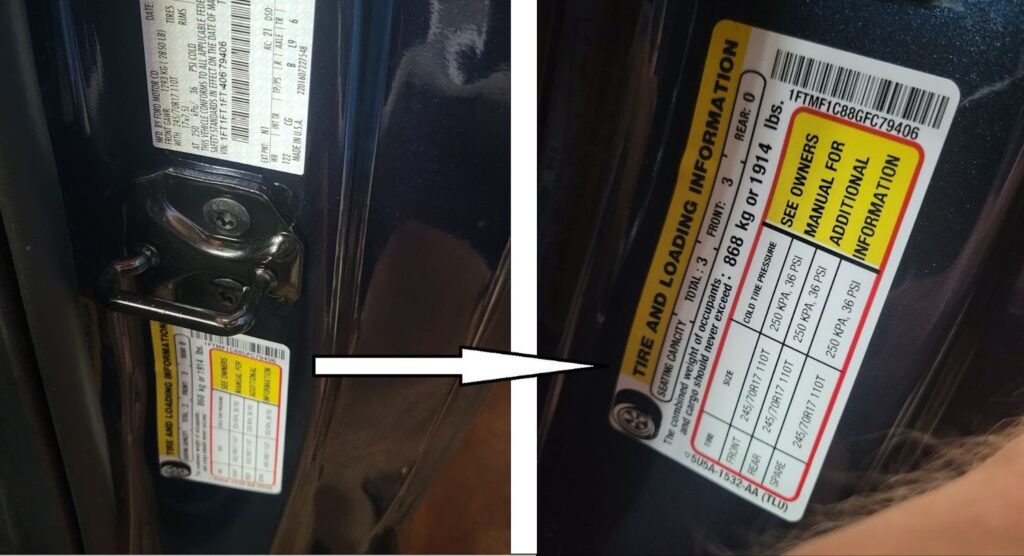
  • Tire pressure information is usually on a placard or sticker on the driver’s door jamb or doorpost, but it can also be found on the rear passenger door of some sedans, the fuel door, glove box door, or under the hood.

  • The recommended tire pressure provided by the manufacturer is measured in psi, includes tire size details, and differs from the maximum pressure listed on the tire sidewall.

  • If the placard is not visible, the owner’s manual or the manufacturer’s website provides the recommended pressure, and new tires with different specifications require following the tire manufacturer’s guidelines.

The tire pressure information is usually printed on a placard or sticker visible when you open the driver’s door, but on some 4 door sedans, you’ll find it by opening the rear passenger side door. Common locations are the door jamb and doorpost. You might also find the tire pressure information placard on the fuel door, glove box door, or even under the hood.
See also  Why Is My Car Swerving? Common Causes and Prevention Tips
tire pressure information sticker in a car
Tire pressure information sticker in a car (note: VIN information in this photo has been altered for security) | Image Source: Richard McCuistian

This information is the operating pressure recommended by the manufacturer and will include the tire size information. Sometimes referred to as the correct fill pressure, it’s measured in pounds per square inch (psi). Tire pressure affects braking, handling, fuel economy, and how long the tire can go before it needs replacement. 

There’s a big difference between tire pressure information and the maximum tire pressure, which can be found on the tire sidewall. Max tire pressure is the maximum pressure the tire can handle safely. However, you shouldn’t drive with tires inflated to their maximum pressure value or you’ll have excessive tire wear and a possible blowout due to the air expanding as the tire heats up while driving.

Tips on How to Find the Tire Pressure Information

If you can’t find the tire pressure information, you can consult your owner’s manual. The manual should have the recommended pressure level for your car’s tires. Additionally, you can visit the website of the company that manufactures either your car’s model or the tire.

See also  Why Is My Front Tire Wearing on the Inside? Plus Types and Causes of Tire Wear

If you install new tires that differ from your stock tires in size and capabilities, you’ll need to follow the tire manufacturer’s recommended pressure value. Otherwise, you might underinflate or overinflate the new tires, increasing your chances of a tire blowout.

About The Authors
Written By Automotive and Tech Writers

The CarParts.com Research Team is composed of experienced automotive and tech writers working with (ASE)-certified automobile technicians and automotive journalists to bring up-to-date, helpful information to car owners in the US. Guided by CarParts.com's thorough editorial process, our team strives to produce guides and resources DIYers and casual car owners can trust.

Reviewed By Technical Reviewer at CarParts.com

Richard McCuistian has worked for nearly 50 years in the automotive field as a professional technician, an instructor, and a freelance automotive writer for Motor Age, ACtion magazine, Power Stroke Registry, and others. Richard is ASE certified for more than 30 years in 10 categories, including L1 Advanced Engine Performance and Light Vehicle Diesel.

Any information provided on this Website is for informational purposes only and is not intended to replace consultation with a professional mechanic. The accuracy and timeliness of the information may change from the time of publication.

File Under : Wheels and Tires , Auto Repair , DIY Tagged With :
CP Mobile App
Subscribe
Notify of
guest
0 Comments
Oldest
Newest Most Voted
Inline Feedbacks
View all comments
expand_more
CarParts.com Fix-It-Forum BE PART OF OUR COMMUNITY: Share your knowledge & help fellow drivers Join Now