A radiator support cover looks simple, which is why so many orders go wrong. You click the cheapest black panel that resembles the cracked one, then find out on delivery day that the hood latch cutout sits two inches off or the retainer holes don’t line up.
The better starting question isn’t “Which one is cheapest?” It’s “What exactly needs to go in the cart for this job?” This covers the cover itself, the retainers that hold it down, the seals and labels that ride on it, and the trim version your vehicle actually uses.
A radiator support cover creates wrong-order risk for two reasons. Covers for the same model often split by trim, headlamp package, and model-year refresh, and these differences hide in hole positions and cutouts a thumbnail won’t show. The cover also tends to come off during radiator, grille, headlamp, or collision work, which means you might also need to replace parts like clips, seals, and neighboring trim.
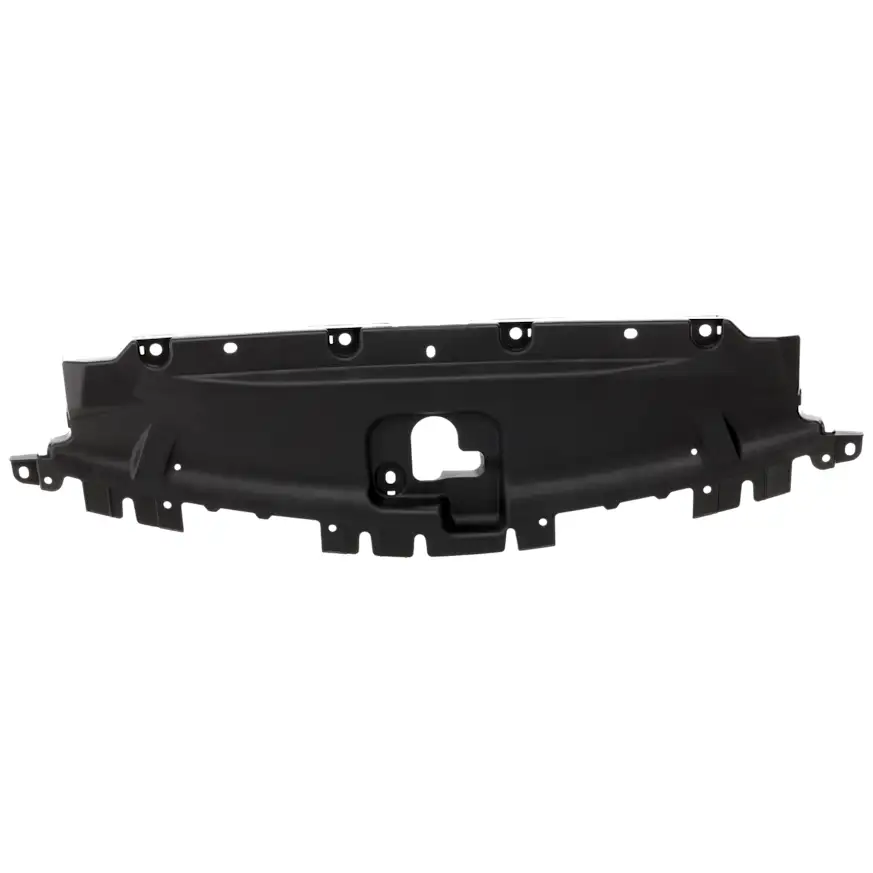
The Job in One Sentence
The job is to restore a tight, secure panel across the top of the radiator support so that the front of the engine bay is sealed, the radiator is shielded from debris, and the hood closes over everything the way the factory intended.
The radiator support cover also goes by upper radiator support cover, sight shield, core support cover, or grille upper cover. It bridges the gap between the grille and the radiator, keeps debris out of the space between the condenser and radiator, and often gives the hood seal something to press against.
That’s why the order is about more than the panel. Most aftermarket covers ship as a bare molded piece, sold individually, with no retainers, seals, or labels. Some vehicles use one full-width cover, while others use a center section with separate left and right pieces. Your cart has to match how your vehicle’s cover is built.
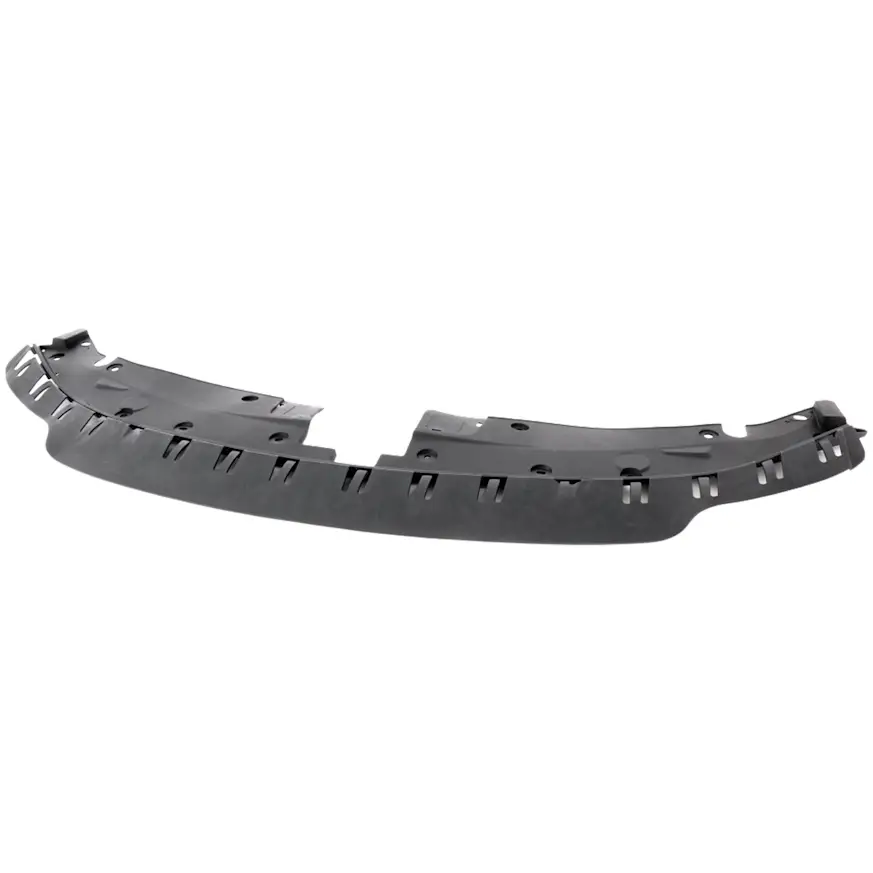
Choose Your Cart Size
The right cart size depends on why the cover is coming off and what else is already exposed.
1. Minimum Viable Repair
This lane fixes a cracked, warped, or missing cover on an otherwise healthy front end.
Choose it if:
- The cover cracked from age, heat, or a hard hood close
- The hood seal, grille, and headlamp mounts still fit tightly
Typical cart:
- Radiator support cover matched to your vehicle’s year, make, model, trim, and headlamp package
- A full set of new push-pin retainers sized to the original holes
2. Smart Same-Access Refresh
This lane fits when the cover’s already off for another job and its neighbors show wear.
Choose it if:
- You’re replacing a radiator, condenser, grille, or headlamp anyway
- The hood seal or side air deflectors are torn, brittle, or loose
Typical cart:
- Radiator support cover
- Complete retainer and fastener set, including any screws or bolts
- Hood seal or radiator support seal, depending on application
- Radiator air deflectors or side seals that share the same retainers
- Replacement underhood labels if the old cover carried them
3. High-Mileage / Front-End Do-It-Once Reset
This lane suits an older vehicle with brittle plastics or a front end recovering from a minor collision.
Choose it if:
- Multiple front-end plastics crack when you handle them
- A collision bent tabs on the grille, headlamp brackets, or radiator support bracket
Typical cart:
- Radiator support cover, plus any separate left and right sections
- Full retainer, screw, and bolt set for the cover, grille, and deflectors
- Hood seal, side seals, and air deflectors
- Grille clips or a radiator support bracket, depending on damage
Most shoppers belong in lane 1 or lane 2. Lane 3 makes sense only when the plastics around the cover are visibly failing or damaged.
What Is Commonly Ordered Together on This Job
Retainers are the item most often ordered with a radiator support cover, followed by seals and the trim pieces that share its mounting points.
Hardware, Fasteners, and Clips
Push-pin retainers hold most covers down, and many vehicles add a few screws or small bolts. Unfortunately, old two-piece retainers often break on removal. Buyers assume the new cover includes clips, but most bare covers don’t, so order retainers that match the original shaft diameter, head size, and length.

Sealing Items
Many covers carry a rubber or foam hood seal, or meet a separate radiator support seal that keeps hot underhood air from recirculating into the radiator. Some covers include the seal, while others need it transferred or ordered separately, depending on application.
Labels and Transfer Items
The factory cover often doubles as a label plate for radiator cap warnings, air conditioning (A/C) refrigerant labels, and emissions labels. A new aftermarket cover arrives blank, so plan to transfer usable labels or order replacements.
Wear Items in the Same Access Zone
Radiator air deflectors, side seals, and grille clips share this zone and age from the same heat. Add them only if they’re cracked, loose, or missing. A healthy part doesn’t need replacing just because you can see it.
One-Piece Cover vs. Sectioned Cover
Some vehicles use a single full-width cover, while others add separate left and right extensions around the headlamps. A listing labeled “radiator support cover” can show only one of these pieces, so confirm which section you’re buying.
What People Forget Until the Vehicle Is Already Apart
These are the shop-counter reminders that keep a 30-minute swap from turning into a parked car and a second order.
- Did you order new retainers, or are you counting on clips that already snapped?
- Does your vehicle use screws or bolts in addition to push pins?
- Is the hood seal bonded to the old cover, and does the new one include it?
- Which labels on the old cover need to come with you?
- Does the hood latch cutout match the latch style, including any secondary latch?
- Does a hood ajar or alarm switch mount through the cover on the trim?
- Does the air intake duct or snorkel clip into the cover on the engine?
- Did a collision bend the radiator support underneath, which no new cover will hide?
When Replacing Only the Radiator Support Cover Is False Economy
Replacing only the radiator support cover is perfectly reasonable when the cover’s the only damaged part. If the seals, deflectors, and grille clips still fit snugly, a cover and fresh retainers finish the job.
The small cart becomes false economy when you reuse failed clips. A cover held by tired retainers can vibrate loose, lift at speed, or rattle against the fan shroud. Then you’re buying clips anyway and doing the job twice.
It also turns shortsighted when the cover is off for a bigger job. During radiator, condenser, grille, or headlamp work, a torn hood seal or cracked deflector costs one extra line item. Found after reassembly, it costs another teardown.
Collision work is the clearest case. Minor front impacts often snap hidden tabs on the grille, headlamp brackets, or support bracket, and a new cover won’t sit flush over a bent mount. Check these pieces before you finalize the order, and leave them off the cart if they’re straight and intact.
The Fitment Splits That Break Radiator Support Cover Orders
Most wrong radiator support cover orders come from trim, headlamp, and model-year splits that a product photo won’t reveal.
Trim, Submodel, and Option Packages
One model can use several covers. Original equipment (OE) catalogs sometimes split covers by options such as automatic headlamp leveling or stability control, because these features change wiring routes and sensor mounts near the cover.
Headlamp Type
Halogen, high-intensity discharge (HID), and light-emitting diode (LED) packages can use different housings and mounting tabs. Where the cover’s edges overlap the headlamps, this difference changes the cover’s shape.
Engine Differences
Some engines route the air intake duct or snorkel through or beside the cover. A cover built for one engine can lack the opening or clip point another engine needs.
Model-Year Refresh and Production-Date Splits
Mid-cycle refreshes often bring a new grille, headlamps, or hood latch, and the cover changes with them. If a listing splits by production date, confirm with your vehicle identification number (VIN) or door-jamb build date.
Hood Latch and Switch Provisions
The latch cutout, secondary latch access, and any hood ajar or alarm switch mount often pass through the cover. A mismatch means the hood won’t latch cleanly or a switch has nowhere to mount.
Upper Cover vs. Lower Shield and Center vs. Side Sections
“Radiator support cover” usually means the upper panel, but some catalogs use similar names for lower splash shields and access covers. Confirm you’re ordering the upper piece and the right section.
Certification and Finish
Some listings carry Certified Automotive Parts Association (CAPA) certification, which some insurance-paid collision repairs require. Most covers use a textured black finish, and a different texture can stand out through the grille.
Delivery-Day Inspection Checklist
Hold the new cover up to the one still on the vehicle and compare them before you pull a single clip.
- Retainer and bolt hole count and spacing match the original
- Locating tabs and pins sit in the same positions
- The hood latch cutout matches in size, shape, and location
- Openings for the intake duct, sensors, or switches line up with yours
- Overall length, width, and curvature match, including the edges near the headlamps
- The hood seal is present, or you’ve confirmed the old one transfers
- The panel arrived flat, with no warping, cracks, or stress-whitened plastic
- The certification label is present if your repair requires a certified part
Your One-Job Order Sheet for a Radiator Support Cover
Use these six steps as a final check before checkout so you can finish a radiator support cover job with a single order.
1. Confirm the Vehicle
Enter the year, make, model, trim, and engine, and note the headlamp type and options. Keep the VIN handy for production-date splits.
2. Confirm the Repair Scope
Decide whether you’re fixing a lone cracked cover, working around a radiator or headlamp job, or rebuilding a damaged front end.
3. Confirm What the Listing Includes
Check whether the listing is the full cover, the center section, or a side piece, and whether it includes a seal or retainers.
4. Add the Retainers, Seals, and Labels
Add a full set of matching retainers and screws, plus a seal or labels if yours won’t transfer.
5. Check the Old Cover Against the Listing
Count the old cover’s retainer holes and note its latch cutout, intake opening, and switch mounts before you buy.
6. Choose the Right Ownership Logic
Buy the minimum cart for a one-off crack. Step up only when neighboring seals, deflectors, or mounts are already failing.
The Smart Way To Shop Radiator Support Covers
Shop radiator support covers by repair scope and exact fitment, not by thumbnail. A cheap-looking order buys a panel that resembles the old one. A correct order buys the cover the trim and headlamp package use, the retainers that hold it down, and the seals and labels that finish the job. For the hands-on side, our radiator support cover installation guide walks through the process.
The right cart changes with the vehicle, the reason the cover came off, and how long you plan to keep the car. Either way, the best order is the one that lets you close the hood once and leave it closed.
Keep Reading: Related Posts



Any information provided on this Website is for informational purposes only and is not intended to replace consultation with a professional mechanic. The accuracy and timeliness of the information may change from the time of publication.