A valve cover gasket looks like one of the simplest parts on the engine, and that’s exactly why it trips people up at checkout. Shoppers click the first listing that matches their vehicle’s year and make, toss a single gasket into the cart, and assume they’re done. Then the part arrives and it’s for the wrong bank, or the spark plug tube seals aren’t included, or the grommets are a different profile than what’s actually on the engine.
The better starting point isn’t “What’s cheapest?” It’s “What exactly needs to go in the cart for this job to be finished once?” A valve cover gasket order seems straightforward until you realize that this category spans everything from a single rubber strip to a full gasket set with tube seals, cam cap seals, and mounting hardware. The gap between what you assume is included and what actually shows up is where most wrong-part purchases happen.
The Job in One Sentence
You’re resealing the top of the engine so that oil stays inside the valve train, out of the spark plug wells (where applicable), off the exhaust manifold, off the pavement, and out of the engine bay.
This sounds minor until you consider where the valve cover sits. It’s the lid on the cylinder head, and its gasket handles constant heat cycling, oil exposure, and vibration. A valve cover gasket leak can let oil pool around spark plug tubes, drip onto exhaust components, and create smoke or misfire conditions. The repair itself is often straightforward, but your order has to account for everything that seals under that cover, not just the perimeter gasket.

Pro Tips are nuggets of information direct from ASE-certified automobile technicians working with CarParts.com, which may include unique, personal insights based on their years of experience working in the automotive industry. These can help you make more informed decisions about your car.
Pro Tip: Before you even begin, make sure you want to tackle the job. The upper intake often has to be removed, even on some four-cylinder engines. Some V6 Jeeps have very weak valve covers that may crack when you remove them, so you may need to buy a valve cover or two to complete this job.
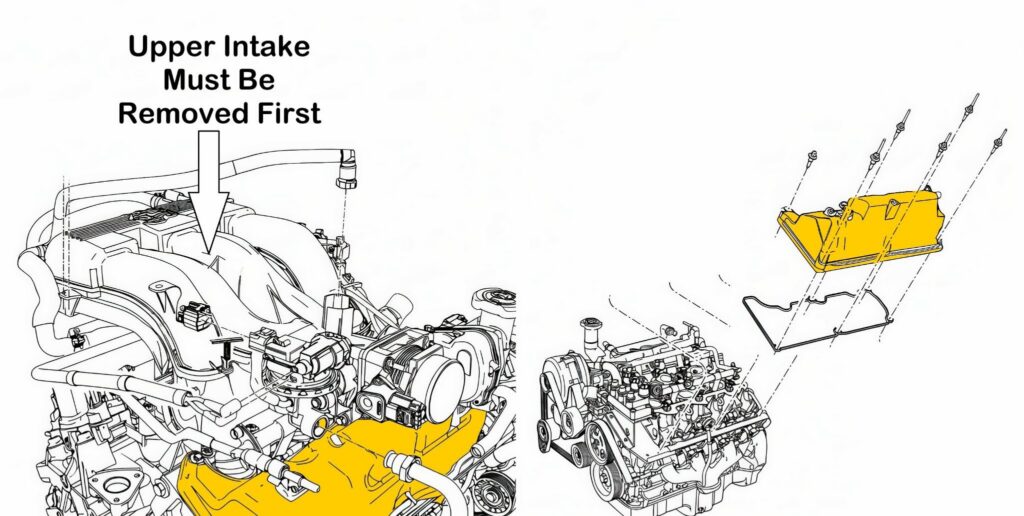
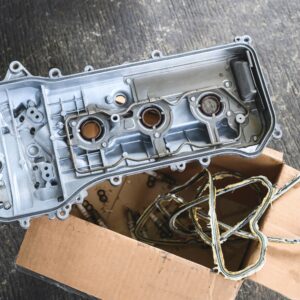
Valve cover gaskets are sold in several configurations: bare perimeter gaskets, gasket sets that include spark plug tube seals and grommets, and sometimes as part of a valve cover assembly with the gasket preinstalled. Knowing which format you’re ordering is the first real decision.
Choose Your Cart Size
1. Minimum Viable Repair
Your vehicle has a confirmed perimeter leak, the spark plug tube seals are fine, and the valve cover itself isn’t warped or cracked.
Choose it if:
- The leak is clearly from the perimeter gasket only
- Spark plug wells are dry
- The valve cover is in good shape and you plan to reuse it
- The vehicle is lower mileage or the gasket was recently replaced with the wrong part
Typical cart:
- Valve cover gasket (or gasket set, if tube seals are bundled)
- Replacement valve cover grommets, if the originals are crushed or missing
- A tube of RTV sealant for the half-moon areas or end seals, depending on application
- Fresh spark plugs, only if you’re pulling them anyway and they’re near interval
2. Smart Same-Access Refresh
You’re already pulling the valve cover and want to address everything under it that’s cheap and accessible while the top of the engine is open.
Choose it if:
- Your vehicle has 80,000+ miles
- You see oil weeping around the spark plug tubes or grommets
- You want to avoid pulling the valve cover again in a year
- You’re doing spark plugs at the same time
- Your vehicle has 80,000+ miles
- You see oil weeping around the spark plug tubes or grommets
- You want to avoid pulling the valve cover again in a year
- You’re doing spark plugs at the same time
Typical cart:
- Valve cover gasket set (with spark plug tube seals and grommets)
- Spark plugs
- Ignition coil boots or seals, if applicable
- PCV valve or grommet, if accessible under or near the valve cover
- RTV sealant
- Replacement valve cover bolts, if the originals are stretched or corroded
3. High-Mileage / Do-It-Once Reset
The engine has significant miles, the valve cover itself is damaged or warped, or the baffle is broken. You want to button up the top end, not revisit it.
Choose it if:
- Your vehicle has 120,000+ miles
- The valve cover is cracked, warped, or has a broken oil fill neck or baffle
- Multiple sealing surfaces under the cover are leaking
- You’re prepping the engine for long-term ownership
Typical cart:
- Complete valve cover assembly (with gasket and seals pre-installed)
- Spark plugs and ignition coils or coil boots
- PCV valve and grommet
- Any vacuum hoses or breather hoses routed through the valve cover
- RTV sealant
- Fresh valve cover bolts
- Oil fill cap, if the original is cracked or doesn’t seal
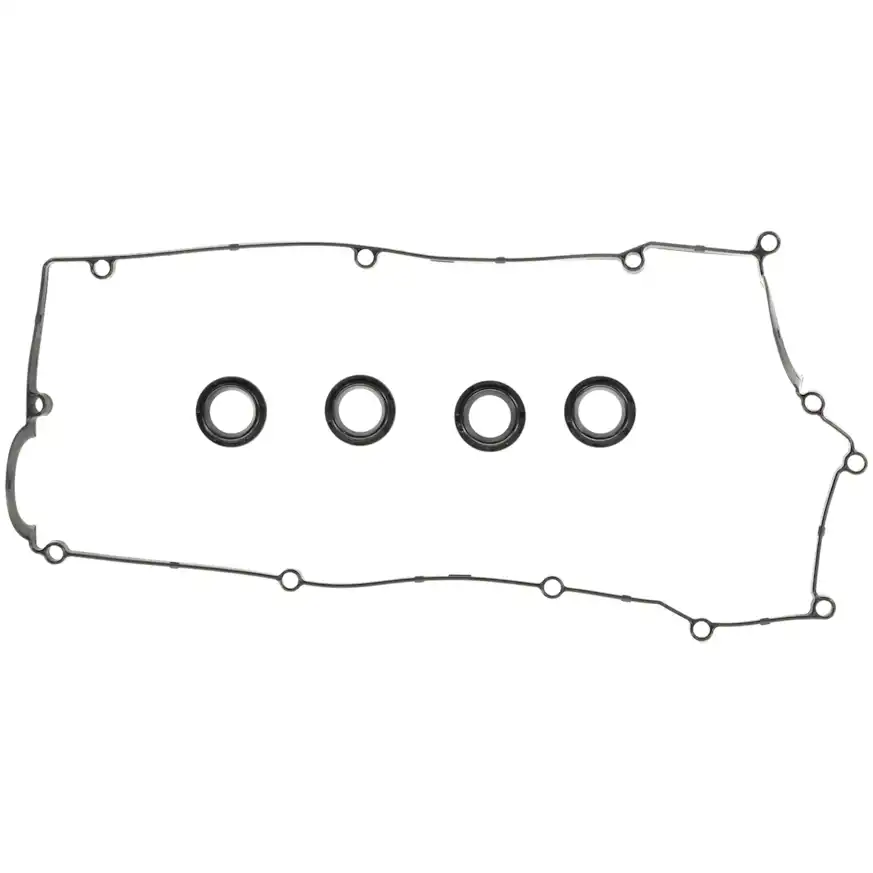
What Is Commonly Ordered Together on This Job
Sealing Items
The perimeter gasket is only one of the sealing surfaces under the valve cover. Most engines also use spark plug tube seals, bolt grommets, half-moon end seals, or cam cap seals. Some gasket sets include all of these, while others don’t. If your listing says “gasket” and not “gasket set,” verify exactly what’s in the box before assuming you’re covered.
Hardware and Grommets
Valve cover bolts pass through rubber grommets that isolate vibration and prevent over-torque. But these grommets are crushed over time and lose their ability to distribute clamping force evenly. If you reuse flattened grommets, the new gasket won’t seat properly and you’ll chase the same leak. Some gasket sets include grommets, but many don’t.
Sealant and Prep Materials
Most valve cover gasket jobs require a small amount of RTV silicone sealant at specific points, usually the corners where the cylinder head meets the timing cover or cam cap. You’ll also want a gasket scraper or plastic razor and a clean rag. Don’t skip the prep. Old sealant residue left on the sealing surface is a top cause of repeat leaks.
Spark Plugs and Ignition Components
On many engines, the spark plugs sit directly below the valve cover in recessed tubes. If oil has been leaking past the tube seals, it pools around the plug boots and can damage ignition coils. Since you’re already in the neighborhood, replacing plugs and inspecting coil boots while the cover is off costs almost nothing in extra labor.
PCV Valve or Grommet
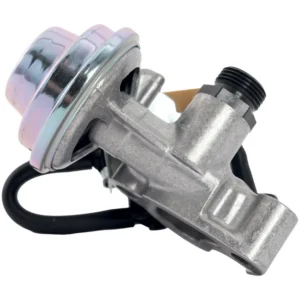
The PCV valve or its grommet is often mounted in or on the valve cover. A stuck or failed PCV valve increases crankcase pressure, which accelerates gasket failure. Replacing it during this job is cheap insurance against a repeat leak.
Pro Tips are nuggets of information direct from ASE-certified automobile technicians working with CarParts.com, which may include unique, personal insights based on their years of experience working in the automotive industry. These can help you make more informed decisions about your car.
Pro Tip: Some Jeep 4.0L inline-six engines use a grommet with a metered orifice that serves the same crankcase ventilation function and can clog, so watch for that. Valve cover gaskets can leak due to a PCV system that isn’t keeping the crankcase vented.
Valve Cover Assembly vs. Bare Gasket
Some applications offer a complete valve cover assembly with the gasket, seals, and hardware preinstalled. This makes sense when the cover itself is warped, cracked, or has a broken integrated baffle or PCV port. It’s also a faster installation. If you’re only replacing the gasket on a good cover, a bare gasket set is the right call.

What People Forget Until the Vehicle Is Already Apart
This is the shortlist of things that stall a valve cover gasket job mid-repair.
- Did you confirm whether your engine has one valve cover or two? V-engines and boxer engines have separate covers for each bank.
- Does the gasket set include spark plug tube seals, or are these sold separately for your application?
- Are the bolt grommets included, or do you need to order them separately?
- Does your application require RTV sealant at specific joints, and do you have the correct type (usually black or gray high-temp RTV)?
- Is the PCV valve integrated into the valve cover on your vehicle’s engine? If so, does the replacement cover include it?
- Are there vacuum lines, breather hoses, or wiring harness clips attached to the valve cover that need to be transferred or replaced?
- Do you need to remove the intake manifold, ignition coils, or other components to access the valve cover? If so, are the gaskets for these components on hand?
- Have you checked whether the valve cover bolts on your engine are torque-to-yield (single use)?
When Replacing Only the Valve Cover Gasket Is False Economy
If the leak is clearly from the perimeter gasket, the tube seals are dry, and the valve cover is straight, replacing just the gasket is a perfectly sensible repair. Not every job needs to become a top-end refresh.
But here’s the labor-overlap logic that matters. For many engines, pulling the valve cover means moving ignition coils, disconnecting hoses, and sometimes partially removing the intake manifold or wiring harness. That’s real access time. If the spark plug tube seals are original and your vehicle has 80,000 to 100,000 miles on it, they’re likely hardened enough that they’ll start leaking within a year or two. Replacing them now, while the cover is off, adds a few dollars to the cart and zero extra labor.
The same applies to the PCV valve and its grommet. A failed PCV valve increases crankcase pressure, which pushes oil past even a brand-new gasket and can blow other seals as well. If you reseal the cover but leave a stuck PCV valve in place, you could be back under the hood sooner than expected.
If the adjacent sealing parts are cheap, accessible right now, and original at high mileage, it’s almost always smarter to replace them. If they’re recent or the vehicle is low mileage, skip them without guilt.
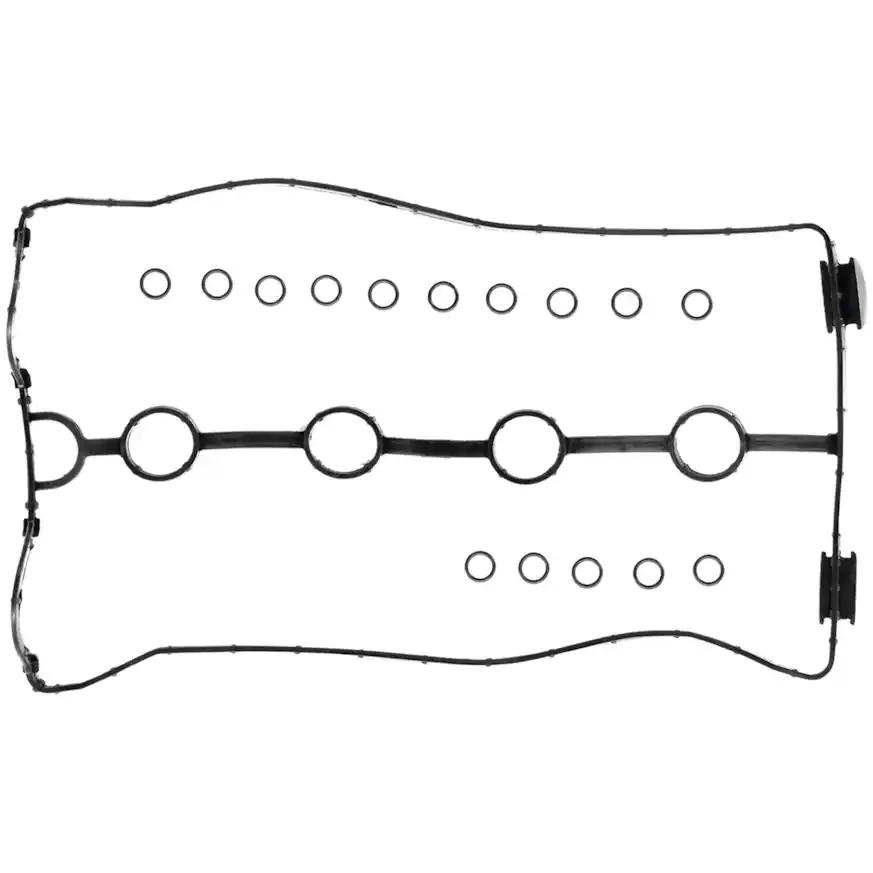
The Fitment Splits That Break Valve Cover Gasket Orders
Engine Differences
This is the biggest trap in this category. The same vehicle sold with different engine options will use completely different valve cover gaskets. A four-cylinder and a V6 in the same model year and trim will have different gasket shapes, bolt patterns, and tube seal counts. Always confirm the engine, not just the year, make, and model.
Bank Position on V-Engines
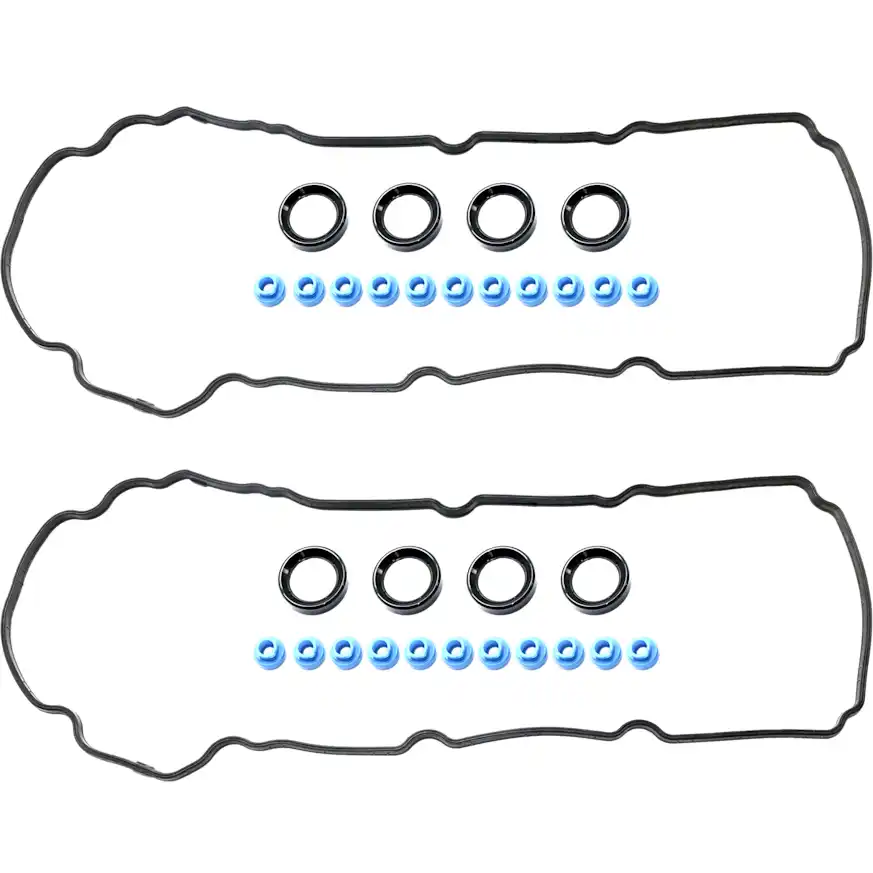
V6, V8, and boxer engines have two valve covers, one per bank. The gaskets aren’t always interchangeable between the left (driver) and right (passenger) side. Some are mirror-image, while some are identical. If you need both, make sure you’re ordering the correct set or two individual gaskets for the correct positions.
Gasket Set Contents
Two listings that both say “valve cover gasket set” for the same engine can include different components. One may bundle the tube seals and grommets, while another may include only the perimeter gasket. This isn’t a fitment split in the traditional sense, but it’s the most common reason shoppers end up with an incomplete order.
PCV Valve Integration
On some engines, the PCV valve is built into the valve cover. Replacement valve covers for these applications may or may not include a new PCV valve. If yours is integrated, confirm whether the replacement assembly accounts for it or whether you need to transfer the old one.
For example, later 2000s Chevrolet 5.3L family engines have the PCV orifice built into the valve cover.
Production-Date Split
Some applications changed gasket design or valve cover bolt patterns mid-model-year. This is less common but does occur, particularly for engines that transitioned between gasket materials (cork to rubber, for example) or changed tube seal design. If your vehicle’s VIN falls near a production-date boundary, double-check the listing notes.
Delivery-Day Inspection Checklist
Before you pull the old valve cover off, compare what arrived to what’s on the engine.
- Lay the new gasket over the old valve cover or against the cylinder head mating surface and confirm that the bolt holes, shape, and perimeter match exactly.
- Count the spark plug tube seals in the box and verify that they match the number of tubes on your vehicle’s engine.
- Check that grommets are included if your application requires them.
- Confirm any half-moon or end seals are present and match the profile of the originals
- Inspect the gasket material for shipping damage, tears, or deformation.
- If you ordered a complete valve cover assembly, verify the PCV port, oil fill opening, breather fittings, and baffle are correct for your application.
- Compare the bolt hole count and spacing to the original cover.
- Check that sensor provisions or wiring clip mounts on a replacement cover match your engine.
Your One-Job Order Sheet for a Valve Cover Gasket
- Confirm the vehicle and engine. Year, make, model, and engine size. On V-engines, confirm which bank or whether you need both sides.
- Confirm the repair scope. Perimeter leak only? Tube seals weeping? Valve cover damaged? Let the scope set the cart size.
- Confirm what the listing includes. Perimeter gasket only, gasket set with tube seals and grommets, or complete valve cover assembly? Read the listing contents, not just the title.
- Add the consumables. RTV sealant, replacement grommets if not included, and a gasket scraper. If you’re doing plugs, add those too.
- Check the PCV valve. If it’s mounted on or in the valve cover and your vehicle’s at high mileage, add a replacement PCV valve or grommet.
- Account for access components. If removing the intake or coils is required for your vehicle’s engine, have replacement gaskets or seals on hand for anything you’ll disturb. If the intake must come off, review what is involved in an intake manifold gasket job before teardown.
- Choose the right ownership logic. Minimum repair for a confirmed single-point leak. Same-access refresh for a vehicle you’re keeping. Full reset for high-mileage or damaged-cover situations.
The Smart Way to Shop Valve Cover Gaskets
The cheapest valve cover gasket in the search results might be exactly the right part for your job, or it might be a bare perimeter gasket that leaves you short on tube seals and grommets with the engine half-apart. The difference between a frustrating order and a clean one isn’t price. It’s knowing what the job actually requires before you click.
Start with the repair scope. Match the cart to the job, not the other way around. Confirm the engine, confirm the bank, confirm what’s in the box. Valve cover gasket jobs are simple repairs that go sideways when the order is incomplete.
The best valve cover gasket order is the one that finishes the job once, keeps oil where it belongs, and doesn’t send you back to the parts store with a half-assembled engine in the driveway.
Keep Reading: Related Posts




Any information provided on this Website is for informational purposes only and is not intended to replace consultation with a professional mechanic. The accuracy and timeliness of the information may change from the time of publication.