An air suspension compressor isn’t a part you want to order twice. It’s one of the higher-dollar components in the suspension category, and the wrong version can look nearly identical to the right one until you’re staring at a mismatched connector or a missing dryer port under your vehicle. The difference between a smooth transaction and a frustrating return often comes down to decisions made before checkout.
Instead of starting with price or thumbnail resemblance, start with one question: what exactly needs to go in the cart for this job? A smart shopper will begin with make, model, year, etc.
Air suspension compressor orders go sideways for predictable reasons. Bare compressors get ordered when assemblies with integrated dryers are needed. Dryer assemblies get skipped entirely unless they’re integral with the compressor assembly.
Electrical connectors don’t match. Mounting configurations differ between model years of the same vehicle. These aren’t rare edge cases. They’re the most common returns in this category.
This article helps you build the correct, complete order for an air suspension compressor job so that your repair finishes in one pass.
The Job in One Sentence
You’re restoring the vehicle’s ability to pressurize, regulate, and maintain the air supply that keeps the suspension at ride height.
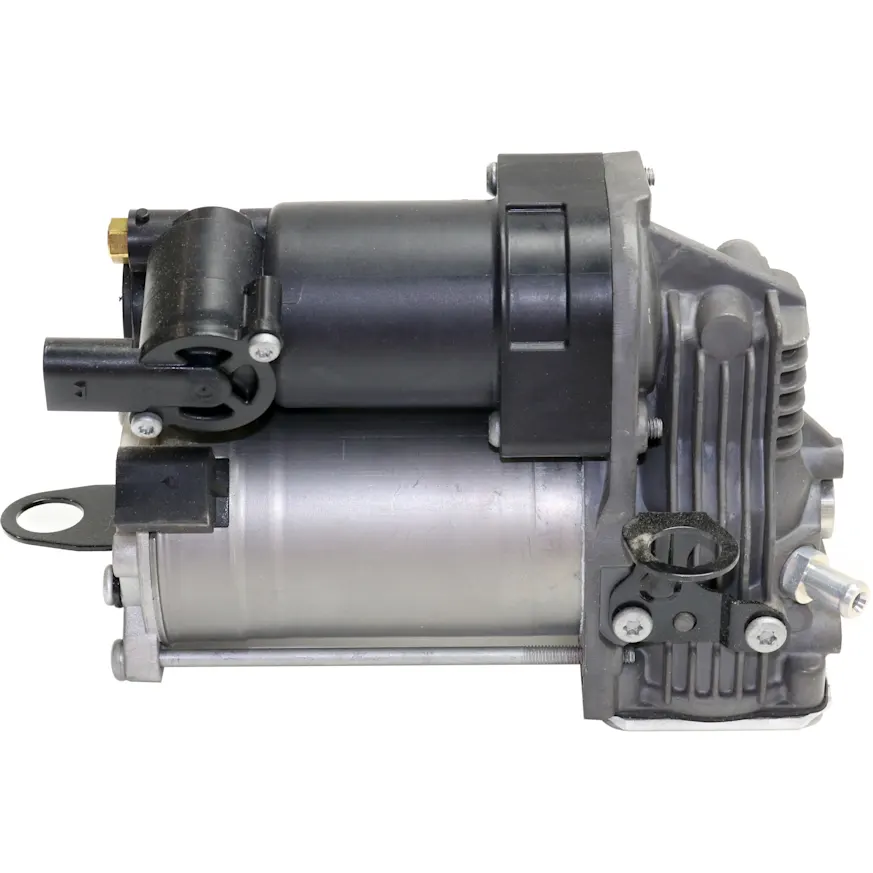
The air suspension compressor is the pump that feeds the entire system. It draws in ambient air, compresses it, passes it through a dryer to remove moisture, and delivers it to the air springs (bags) or a reservoir. When the compressor fails, the system can’t inflate or maintain ride height, and your vehicle sags, sometimes unevenly.
The order is about more than the compressor motor itself. Depending on the application, the compressor may be sold as a bare pump, as a compressor-and-dryer assembly, or as a more complete unit that includes the mounting bracket, relay, or valve block. What’s included in the box changes what else you need to add to the cart, so confirming the assembly level is the first real purchase decision.

Pro Tips are nuggets of information direct from ASE-certified automobile technicians working with CarParts.com, which may include unique, personal insights based on their years of experience working in the automotive industry. These can help you make more informed decisions about your car.
Pro Tip: Don’t forget to check those air springs. Old ones just about always leak. More about that a bit later.
Choose Your Cart Size
1. Minimum Viable Repair
The compressor is confirmed failed and nothing else in the system is damaged or degraded.
Choose it if:
- The vehicle is relatively low-mileage and the air springs still hold pressure once inflated
- The dryer is in serviceable condition or was recently replaced
- You’re addressing a single confirmed failure, not chasing a slow leak
Typical cart:
- Air suspension compressor, confirming assembly level: bare vs. with dryer
- Dryer, if not included and due for replacement
- Mounting hardware, if not included
- Relay, if yours is suspect and not included
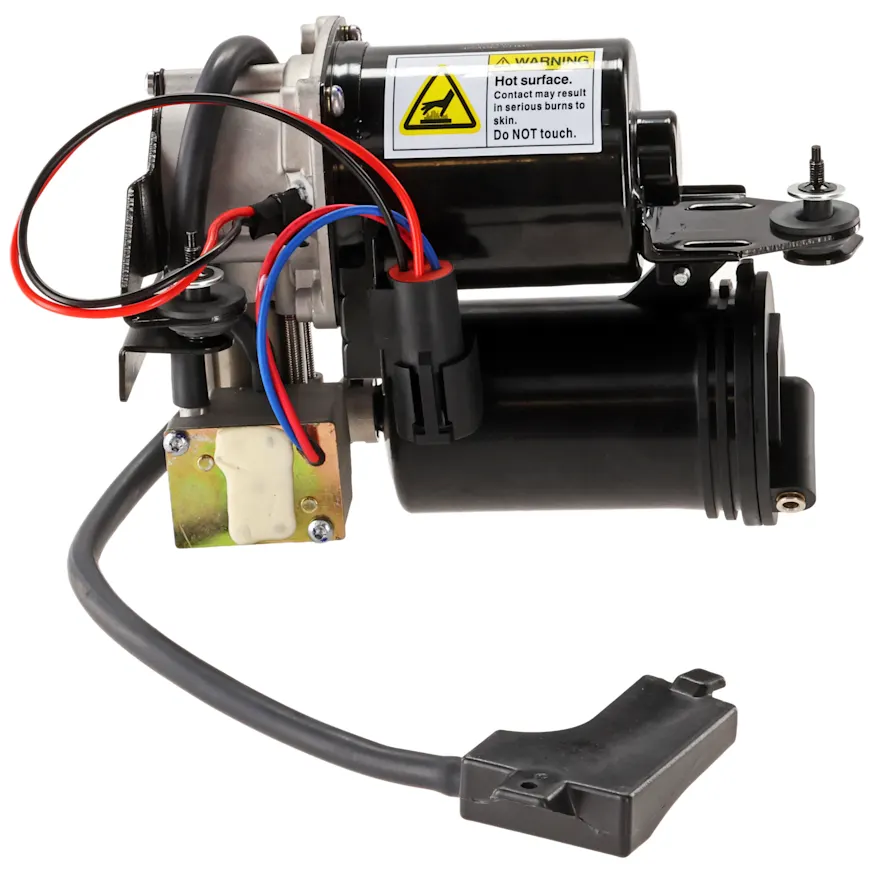
2. Smart Same-Access Refresh
The compressor is being replaced and the system has moderate age or mileage. Access is already open.
Choose it if:
- The vehicle has 80,000+ miles on the original air suspension components
- The dryer has never been replaced
- One or more air springs are soft, slow to inflate, or cracked at the fold
- You’d rather not revisit this area of the vehicle for a while
Typical cart:
- Air suspension compressor assembly with dryer, if available
- Replacement dryer, if buying a bare compressor
- Air springs for any corner showing wear
- Suspension air line fittings or sections, if brittle or cracked
- Relay
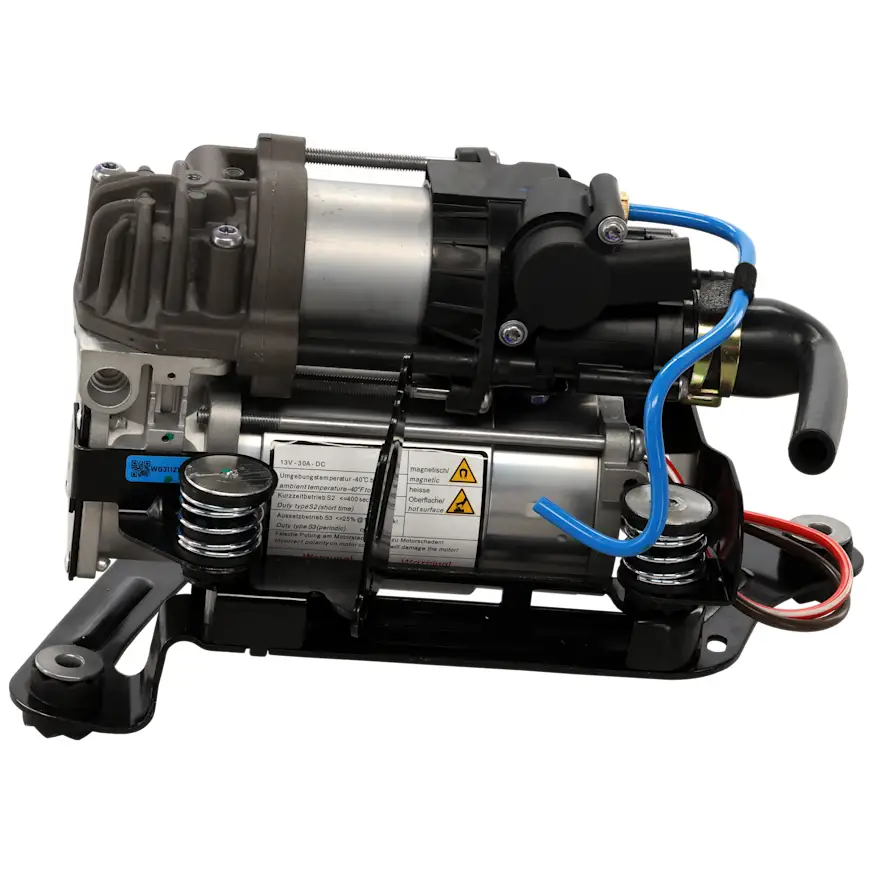
3. High-Mileage / Do-It-Once Reset
The vehicle is older, has significant mileage, or the entire air suspension system is showing age across multiple corners.
Choose it if:
- You’re recommitting to the air suspension system rather than converting to passive springs
- Multiple air springs are cracked, leaking, or collapsed
- The compressor is cycling excessively because of system-wide leaks
- You want to reset the system once and be done
Typical cart:
- Air suspension compressor assembly with dryer
- Full set of air springs for all corners
- Air line sections or fittings as needed
- Height sensors, if faulty or damaged
- Relay
- All relevant mounting hardware and connectors
What Is Commonly Ordered Together on This Job
Dryer / Desiccant Assembly
The dryer removes moisture from compressed air before it enters the system. A saturated dryer lets moisture into the air springs and valve block, accelerating corrosion and causing freeze-ups in cold climates. If your compressor doesn’t include an integrated dryer, order one separately. If it does, you’re covered, but confirm it’s actually in the box.
Air Springs
A failing compressor is frequently a symptom of a leaking air spring that forced the compressor to run continuously until it burned out. Replacing the compressor without addressing a leaking spring means the new compressor will overwork and fail early. Inspect every air spring before ordering.
For more context on how air springs, compressors, and reservoirs work together, read this guide on air suspension in trucks.
Relay
The relay handles high-current switching for the compressor. In many applications, the relay is a separate component that lives near the compressor or in the fuse box. A weak or corroded relay can mimic compressor failure or cause intermittent operation. It’s inexpensive and worth adding to the cart if the system has been down for a while. But if it’s a plug-in relay, make sure to check the contacts for corrosion and damage.
Air Lines and Fittings
Nylon or rubber air lines run from the compressor and valve block to each air spring. In older vehicles, these lines become brittle and crack, especially at fittings. A cracked line creates a slow leak that kills the new compressor the same way the old one died. Inspect lines at connections and along any section exposed to road debris or heat.
Height Sensors
Ride-height sensors tell the system when to add or release air. A faulty or misadjusted sensor can cause one corner to overinflate or underinflate, putting uneven demand on the compressor. If your vehicle has been riding unevenly, don’t assume the compressor is the only issue
Pro Tips are nuggets of information direct from ASE-certified automobile technicians working with CarParts.com, which may include unique, personal insights based on their years of experience working in the automotive industry. These can help you make more informed decisions about your car.
Pro Tip: Side note: When raising the vehicle for any reason, disable the air suspension, or it may let the air out of the springs and cause the car to “trap” the lift when you lower it. Opening and closing the door on some vehicles can trigger air suspension operation.
Mounting Hardware and Grommets
Some compressor listings include the mounting bracket, while others don’t. Rubber isolation grommets and mounting bolts can corrode or deteriorate. Confirm what’s included and order hardware separately if needed. If there’s a missing splash shield, make sure you replace it to prevent road salt from ruining things again.
If the repair involves worn hardware around the air spring, check whether an air spring hardware kit is available for your application.

What People Forget Until the Vehicle Is Already Apart
Most of these are five-dollar oversights that turn into five-day delays.
- Dryer not included. Many compressor listings are bare units. If the listing doesn’t explicitly say “with dryer,” assume it doesn’t have one.
- Electrical connector mismatch. Connector pin count and shape can differ by model year or production date on the same vehicle platform.
- Relay not in the box. The relay is almost never included with the compressor. Check whether yours is functional before starting the job.
- Air line fittings are brittle. You won’t know until you disconnect them. Have replacement fittings or line sections on hand.
- Mounting bracket difference. Some compressors mount on an integrated bracket, while others rely on the vehicle’s existing bracket. Confirm which style your application requires.
- Old dryer not transferable. If you’re moving from a compressor-dryer assembly to a bare compressor, the old dryer may not be compatible or reusable.
- System needs to be bled or recalibrated. After compressor replacement, many vehicles require a ride-height recalibration or system relearn using a scan tool. Confirm whether your vehicle needs this before you button everything up.
- Check valve condition. A failed check valve lets air bleed back through the compressor after shutdown, causing overnight sag. It’s a small part that’s easy to overlook.
When Replacing Only the Air Suspension Compressor Is False Economy
If the compressor failed because of normal wear after 10+ years or high mileage, every air spring holds pressure, and the dryer is in good shape, replacing just the compressor is completely reasonable. Not every job needs to be a full system overhaul.
But if the compressor burned out because it was running nonstop trying to compensate for a leaking air spring, replacing just the compressor is paying for the same failure twice. The new compressor will cycle continuously, overheat, and fail on the same timeline as the old one. In this scenario, the air spring that caused the overwork is the real repair, and the compressor is collateral damage.
This is also why a proper diagnostic check matters before ordering parts. If you need help confirming whether the compressor is actually the failed part, check this guide on testing an air suspension compressor.
The same logic applies to the dryer. A saturated dryer passes moisture into the system, which corrodes valve block internals and degrades air spring rubber. Replacing the compressor but reusing a spent dryer shortens the life of everything downstream. Dryers are relatively inexpensive compared to the compressor, and the access is already open.
For high-mileage vehicles where more than one corner is sagging, consider whether a full air spring set and a fresh compressor-dryer assembly gives you a clean-slate system for less total labor than replacing components one at a time as they fail over the next year or two.
The Fitment Splits That Break Air Suspension Compressor Orders
Vehicle Platform and Model Year
Air suspension compressors are highly vehicle-specific. The compressor for a full-size SUV with a body-on-frame air suspension is a completely different unit than the one for a luxury sedan with an air-sprung independent rear. Even within the same model line, compressor designs can change across generations. Always confirm year, make, model, and submodel.
With Dryer vs. Without Dryer
This is the most common source of confusion. Some listings are bare compressors only. Others include the dryer canister as an integrated assembly. Ordering the wrong configuration means either paying for a dryer you don’t need or discovering you need one you don’t have.
Mounting Configuration
Bracket style, mounting orientation, and bolt pattern can differ between applications that otherwise look similar. Some compressors mount in the engine bay, while others mount under the vehicle on a crossmember or frame rail. The physical packaging has to match the vehicle’s mounting location.
Electrical Connector
Connector type, pin count, and wiring orientation can change by production date, sometimes midyear. If your vehicle is near a model-year transition, confirm the connector configuration. A compressor that bolts up perfectly but has the wrong plug won’t run without splicing.
Valve Block Integration
In some vehicles, the compressor feeds a separate valve block. On others, the valve block is integrated into the compressor assembly. Ordering a compressor without an integrated valve block for a vehicle that requires one (or vice versa) creates a fitment dead end.
Emissions and Market Variants
In limited cases, compressor specifications may differ between vehicles built for different markets. This is less common than with engine or exhaust parts, but worth verifying for European-platform vehicles sold in North America.
For a broader overview of common system failures, read this guide on bad air suspension systems.
Delivery-Day Inspection Checklist
Before you pull the old compressor off your vehicle, unbox the new one and verify the following.
- Mounting bolt pattern and bracket style match the old unit or the vehicle’s mounting points
- Electrical connector matches the old compressor’s plug in shape, pin count, and orientation
- Dryer is present if the listing described it as included
- Air line ports match in number, size, and location
- Check valve is present and correctly oriented, if applicable
- Relay is included, if advertised
- No visible shipping damage, cracked fittings, or broken mounting ears
- Overall physical dimensions and shape are consistent with the original unit
- Any included hardware (bolts, grommets, isolators) is accounted for
Your One-Job Order Sheet for an Air Suspension Compressor
- Confirm the vehicle. Year, make, model, submodel, and production date if near a midyear change. Air suspension compressors are vehicle-specific with very little cross-compatibility.
- Confirm the repair scope. Are you replacing only a failed compressor, refreshing the compressor and dryer, or resetting the entire air suspension system? Your answer determines the cart size.
- Confirm what the listing includes. Bare compressor or compressor-dryer assembly? Mounting bracket or not? Relay or not? Read the listing details, not just the title.
- Add the consumables and adjacent items. Dryer (if not included), relay, air line fittings, and mounting hardware. If an air spring caused the compressor failure, add that too.
- Inspect the old part before teardown. Check the connector type, mounting configuration, port layout, and dryer integration so you can bench-compare on delivery day.
- Choose the right ownership logic. If you’re keeping your vehicle long-term, a compressor-dryer assembly with fresh air springs costs less over time than replacing individual components as they fail one by one.
If you are still comparing system components, this guide to air suspension parts can help you understand what each part does before you order.
The Smart Way To Shop Air Suspension Compressors
The cheapest air suspension compressor on the page isn’t always the cheapest repair. A bare compressor ordered without a dryer, without confirming the connector, and without checking the air springs is how a $200 compressor turns into $600 in parts plus repeat labor.
The correct order starts with your vehicle, the failure, and the repair scope. From there, you confirm the assembly level, add the items that finish the job, and verify fitment before you start pulling bolts. That’s how a compressor replacement stays a one-trip repair.
Air suspension systems aren’t forgiving of partial fixes. Build the order around the job, not the part name, and the repair will hold.
Keep Reading: Related Posts




Any information provided on this Website is for informational purposes only and is not intended to replace consultation with a professional mechanic. The accuracy and timeliness of the information may change from the time of publication.