You might already know that a sagging, clunking, or shifting body means the rubber cushions between your vehicle’s body and frame are finished. What’s harder is figuring out which body mount kit listing to order, because the word “kit” does a lot of different work in this category.
One listing covers a single mount position. The next is sold as a set of two or four. A third looks nearly identical in the thumbnail but’s built for a completely different spot along the frame. Meanwhile, a body-on-frame truck can have 8, 10, or 12 mount positions, and the cushions aren’t all the same shape or height.
That’s the real risk here. Shoppers don’t usually order the wrong part category. They order the right part in the wrong quantity, for the wrong position, or without the through-bolt they were counting on.
This is a preorder check. Work through the vehicle details, the position, the quantity, and the included hardware, and the correct listing becomes obvious.
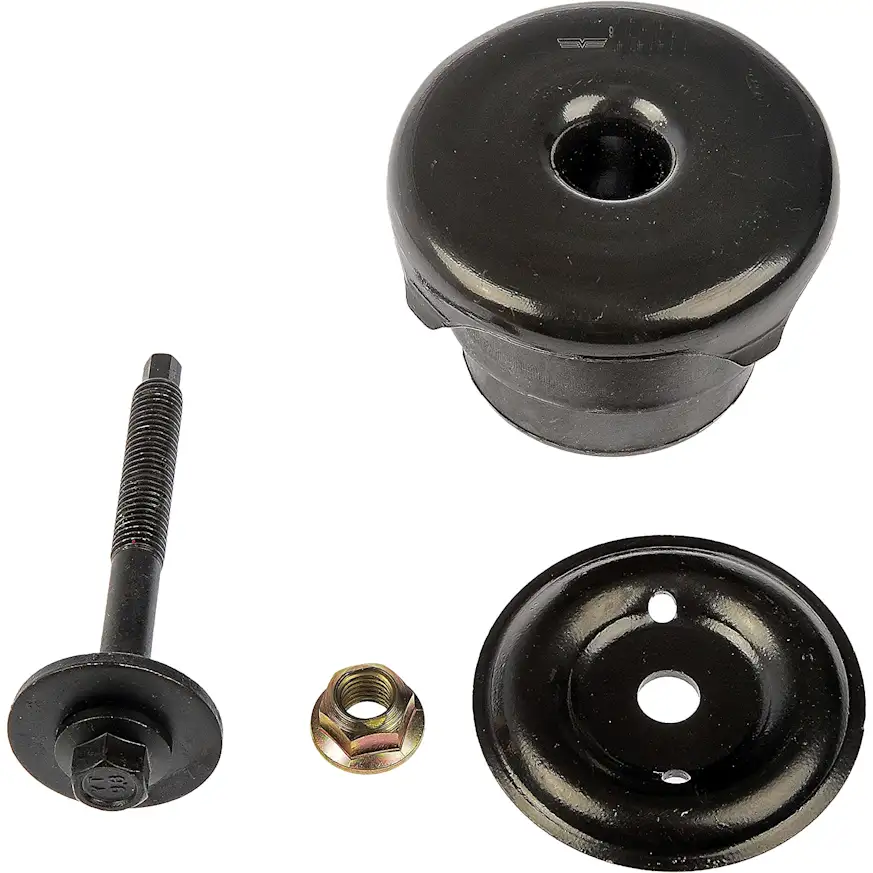
How Do You Choose the Right Body Mount Kit?
Start by confirming your vehicle’s year, make, model, cab or body configuration, bed length if it applies, and drivetrain, since these change body mount spacing and cushion shape. Then pin down which mount position you’re replacing, because front, intermediate, and rear positions often use different parts. Next, check the quantity the listing actually covers, since body mounts are sold individually, in sets of two or four, or as part of a larger kit. Confirm whether the bolt, sleeve, washers, and both upper and lower cushions are included before you commit. Once fitment, position, quantity, and contents are settled, compare the available brands and materials.
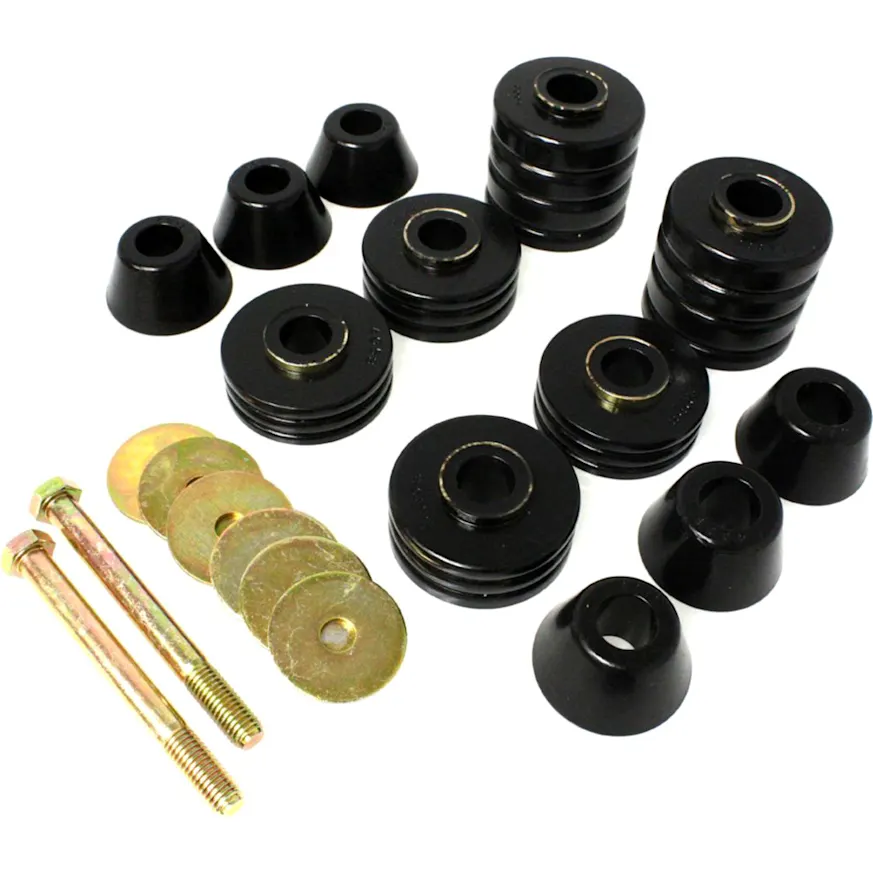
Start With the Vehicle, Not the Product Image
Two body mount cushions can look like the same black rubber puck in a photo and still be different heights, different diameters, and drilled for different bolt sizes. The thumbnail won’t tell you this.
Before you filter anything, check the following:
- Year, make, and model: Body mount designs frequently change mid-generation, so the model year matters even within the same body style.
- Body or cab configuration: Regular, extended, and crew cab trucks don’t share the same mount count or spacing. SUVs and vans have their own layouts.
- Bed or box length: On pickups, box mount positions and cushion sizes can differ between short bed and long bed.
- Drivetrain: Two-wheel drive and four-wheel drive versions of the same truck sometimes use different frame-to-body spacing.
- Production date: Some applications split partway through a model year, so a build date can decide between two similar listings.
- Mount position: Front, intermediate, and rear positions are usually separate part numbers.
- Chassis type: Chassis cab, cutaway, and commercial variants often use heavier mounts than the standard model.
If your vehicle is unibody rather than body-on-frame, read the listing carefully. This category also includes subframe and crossmember cushion assemblies, which serve a similar job but bolt to entirely different points.
Identify the Version Your Repair Actually Needs
Two body mount kits can share the same name and still solve different ordering problems. Here’s where the versions split:
- Individual vs. set of two vs. set of four vs. kit: Some listings cover one mount position. Others are packaged as a set of two or four, with the listing notes spelling out the set components. Larger kits bundle multiple positions together. If you’re replacing a matched left and right pair, a single-unit listing means ordering two of them.
- Cushion-only vs. cushion with hardware: A few listings supply the rubber cushion and nothing else. Others include the through-bolt, sleeve, washer, and retainer.
- Upper and lower cushion vs. one half: A complete mount position usually uses a cushion above and below the body bracket. Confirm whether the listing covers both.
- Rubber vs. steel components: In this category, listings are spec’d with different primary materials. Rubber refers to the cushion itself. Steel usually indicates that the bracket, sleeve, or bolt assembly is the main piece.
- Body mount vs. subframe or crossmember mount: Both appear under this part name depending on the platform. They aren’t interchangeable, and a subframe or crossmember mount is doing a related but different job.
- Position-specific versions: A front cab mount and a rear box mount can carry the same product name and completely different geometry.
Pick the version based on what you’re actually replacing and how many positions you’re doing. If you’re refreshing an entire truck, the quantity math matters more than anything else on the page.
Compare the Details That Make the Part Fit
Use the product image as a starting point, not as the whole match. If you have the old mount out, or you can get under your vehicle with a light and a tape measure, compare these against the listing details:
- Overall cushion height: A mount that’s too short drops the body line. Too tall and the doors and bed gaps stop lining up.
- Outside diameter: Cushions seat inside or against a body bracket, and the diameter has to match.
- Center bore and bolt diameter: The through-bolt size decides whether the new mount works with your vehicle’s existing hardware.
- Sleeve or spacer length: This controls how much the cushion compresses when the bolt is torqued down.
- Cushion profile: Some positions use a flat puck, others a stepped or shouldered cushion, still others a bonded unit with a captured stud.
- Stud or bolt orientation: Certain mounts arrive with the fastener already bonded in at a set angle.
- Bracket or retainer shape: Where a listing includes a steel bracket, the mounting tab shape and hole spacing have to match.
- Upper and lower stack arrangement: Count how many rubber pieces come out of one position so you know how many go back in.
Photograph the old mount before it goes in the trash. A picture of the stack and the fastener makes it much easier to verify a listing later.

Check What Comes in the Box
A listing can be correct for your vehicle and still be incomplete for your repair. Fitment and completeness are separate questions, and body mounts are a category where the gap between them is easy to miss.
Depending on the listing, you might or might not receive the following:
- Upper cushion
- Lower cushion
- Through-bolt
- Steel sleeve or spacer
- Washers or retainer plate
- Nut or captured hardware
- Mounting bracket
Read the product notes and specifications on the listing rather than assuming. Some listings state the set components outright, which tells you exactly how many mounts you’re getting.
Body mount bolts live in road spray and salt, and there’s a real chance the original fastener won’t survive removal. If your chosen listing doesn’t include new hardware, it’s worth adding a replacement bolt to the same order rather than discovering the problem with the vehicle already on stands.
Compare Brands After You Confirm Fitment
Brand matters, but it shouldn’t be the first filter. An Energy Suspension, Dorman, or Prothane body mount kit still has to match the vehicle, the mount position, the quantity, the material, and the hardware you need before it belongs in the cart.
Use brand as a confidence filter once the fitment details are settled. Depending on your application, you might also see Crown, Daystar, Metro Moulded, or Omix listings in this category. What separates them on the page isn’t a badge, it’s configuration: some brands list rubber cushions, others list polyurethane, and the number of mounts and fasteners in the package varies from one product line to the next. Dorman OE Solutions Series listings, for example, are flagged as Direct Fit and carry a lifetime Dorman limited warranty, while other product lines package their contents differently.
That’s why the useful comparison is contents against contents. A brand you recognize doesn’t make a single-mount listing cover two positions.
The better question isn’t “Which body mount kit brand is best?” It’s “Which brand offers the correct configuration and quantity for this vehicle and these mount positions?”
Choose the Right Ownership Lane
The right body mount kit isn’t always the most expensive one. It’s the one that matches how long you need the repair to hold and how many positions you’re addressing.
- Replace only the failed position: You found one collapsed or separated mount and the rest look serviceable. A single-position listing is enough. Don’t buy a multi-mount set to fix one spot, but do confirm the position is the one you actually pulled apart.
- Matched-pair replacement: One side has failed and its opposite number is the same age and mileage, which usually means it’s next. A set of two, or two single listings, keeps the body sitting level, and a set of four covers both sides at two positions if you’re doing front and rear together. Uneven cushion heights across an axle line show up as misaligned door and bed gaps.
- Full-vehicle refresh: A high-mileage body-on-frame truck, visible sag, rust at multiple positions, or a body that shifts when you load it. Here you’re pricing out every position on the vehicle, so count the mounts before you shop and decide whether firmer polyurethane-style cushions suit how you use the truck. This lane also needs the most hardware planning, since old bolts rarely all cooperate.
Make the Final Add-to-Cart Check
Before you add the body mount kit to cart, make sure the listing matches the vehicle, the mount position, the quantity, the included components, and the details you can verify from the original part.
- Year, make, model, and cab or body configuration confirmed
- Bed length and drivetrain confirmed where they apply
- Mount position identified and matched to the listing
- Quantity checked — individual, set of two, set of four, or kit
- Total mounts needed counted against what you’re ordering
- Upper and lower cushion coverage confirmed
- Bolt, sleeve, and washers confirmed as included or sourced separately
- Cushion height, diameter, and bore compared against the old part
- Rubber or polyurethane material matched to how you use your vehicle
- Brand chosen after fitment, position, quantity, and contents are confirmed
- Product notes and specifications read in full
Your Best Starting Point
Enter your vehicle first so the catalog narrows to your platform, then work down from there.
Identify the mount position before you compare listings, because position decides geometry. Read the quantity on every listing you’re considering and multiply it against the number of positions you plan to replace. Confirm the hardware and cushion count in the specifications, then compare the old part if you have it.
Brand and material come last, after the configuration is settled.
The best body mount kit order isn’t the one that looks close enough or carries a familiar brand name. It’s the one that matches the vehicle, mount position, the quantity you actually need, and the hardware required to finish the job.
Keep Reading: Related Posts






Any information provided on this Website is for informational purposes only and is not intended to replace consultation with a professional mechanic. The accuracy and timeliness of the information may change from the time of publication.