You might already know that you need a harmonic balancer. The harder part is figuring out which listing actually matches your vehicle’s engine, its pulley setup, and what’s supposed to come in the box.
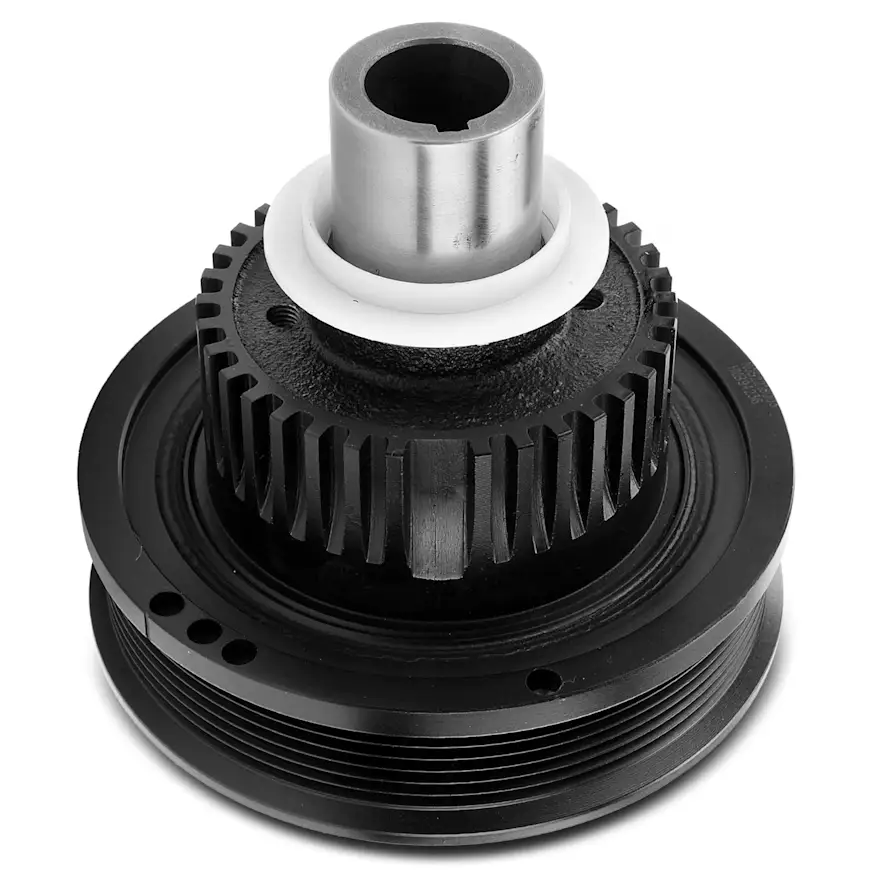
Scroll through a harmonic balancer category page and most of the photos look like the same dark metal disc. But underneath these photos, listings split on groove count, degree markings, mounting hardware, overall size, and even what the product’s called. Some listings are labeled “harmonic balancer,” while others covering the same job are labeled “crankshaft pulley” because the balancer and pulley are combined into one part.
This article isn’t about diagnosing a bad balancer or walking through the swap. It’s a preorder check: a way to confirm you’re about to add the correct listing to cart instead of one that merely looks close.
How Do You Choose the Right Harmonic Balancer?
Start by confirming your vehicle’s year, make, model, and engine, since harmonic balancers are built around a specific crankshaft snout and pulley layout rather than a body style. From there, check whether the listing is a bare balancer or a combined balancer-and-pulley unit, whether it includes degree markings, and whether the mounting bolt and washer are included or sold separately. Compare the groove count and overall diameter against your original part where you can. Once fitment, version, and hardware are settled, use brand as a secondary filter rather than the first decision point.
Start With the Vehicle, Not the Product Image
Start with the vehicle, not the thumbnail. Harmonic balancers are engine-specific, and it’s common for the same year, make, and model to offer more than one engine option, each needing a different balancer.
Before comparing listings, confirm the following:
- Year, make, and model: the starting filter, but not the finish line
- Engine size and engine code: the detail that actually separates one balancer from another on a shared platform
- Production date, where it applies: some engines saw midyear running changes that affect balancer design
If the listing only asks for year, make, and model and never asks about engine, treat this as a reason to double-check the fitment details yourself before adding it to cart.
Identify the Version Your Repair Actually Needs
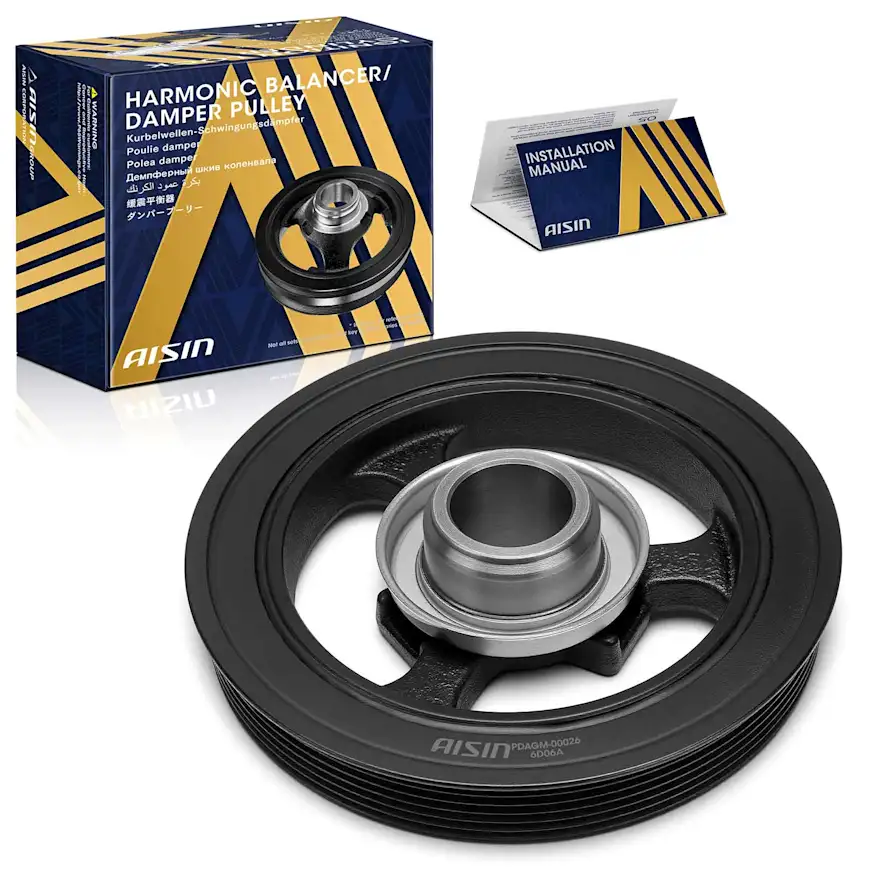
Two harmonic balancers can share the same name and still solve different ordering problems. Before you compare prices or brands, figure out which version your vehicle’s engine actually calls for.
- Bare balancer vs. balancer-and-pulley combination: Some engines use a harmonic balancer as a standalone piece with a separate accessory pulley. Others combine the damper and the pulley into a single unit, which may show up in search results under a “crankshaft pulley” title even though it does the same job. Confirm which configuration your ride’s engine uses before you decide a listing is wrong just because of its name.
- With degree markings vs. without: Some balancers include timing degree markings on the outer ring, while others don’t. If your engine reads timing off the balancer, this detail matters. If it doesn’t, it’s not a deciding factor.
- Groove count and pulley face type: Balancers are machined for a specific number and style of belt grooves. A single-groove and a multi-groove pulley face aren’t interchangeable, even when the center hub looks identical.
- With mounting bolt and washer vs. sold separately: Some listings include the mounting bolt and washer needed to torque the balancer back onto the crank snout. Others assume you’re reusing the original bolt and washer.
Compare the Details That Make the Part Fit
Use the product image as a starting point, not as the whole match. Two balancers photographed from the same angle can differ in dimensions that don’t show up clearly in a thumbnail.
Where you can, compare these details against your original part or your vehicle’s listed specs:
- Overall diameter and width
- Groove count and pulley face style
- Presence or absence of degree markings
- Mounting bolt size and whether a washer is included
- Keyway orientation, so it aligns correctly with the crankshaft snout
If a listing’s specifications section doesn’t mention one of these details, that’s worth checking before you order rather than after.

Check What Comes in the Box
Fitment and completeness are two separate questions. A balancer can be the correct listing for your vehicle and still leave you short on what your repair needs.
Here are commonly included or excluded items:
- Mounting bolt and washer: included on some listings, absent on others
- The pulley itself: included in combination units, sold separately on bare-balancer listings
- A front crankshaft seal: not part of the balancer listing at all, even though it’s a front crankshaft seal many shoppers replace at the same time
If the listing doesn’t include a component your repair needs, such as the mounting hardware or a seal, that’s a reason to add it separately rather than assume it’s bundled in.
Compare Brands After You Confirm Fitment
Brand matters, but it shouldn’t be the first filter. A correctly named brand still has to match the engine, the balancer style, the groove count, and the included hardware before it belongs in the cart.
In this category, you’ll typically see a mix of established aftermarket manufacturers offering multiple part numbers per engine platform, alongside value-focused options aimed at shoppers who want a functional replacement at a lower price point. Warranty coverage also varies by brand and listing: some balancers are backed by multiyear coverage, while others carry shorter, mileage-based terms. This difference is worth noting, but it still comes after fitment and version are confirmed, not before.
The better question isn’t “Which harmonic balancer brand is best?” It’s “Which brand offers the correct balancer configuration, in the version my engine actually needs?”
Choose the Right Ownership Lane
The right harmonic balancer isn’t always the most expensive one. It’s the one that matches how long you need the repair to hold.
- Lowest-Cost Functional Replacement: Fits shoppers who need a working balancer without paying for extras like degree markings or included hardware they don’t need. Reasonable for older or higher-mileage vehicles where the goal is a functional fix rather than a long-term upgrade. Don’t underbuy on the size and groove specs just to save a few dollars, since a mismatched pulley face causes belt problems.
- Daily-Driver OE-Style Replacement: Fits shoppers replacing a worn or leaking balancer in a vehicle they plan to keep for years. A direct-fit listing that matches your balancer’s original degree markings, groove count, and hardware setup, typically backed by a longer warranty, is the practical middle ground here.
- Long-Term Keeper or Complete Assembly Choice: Fits shoppers who’d rather replace the balancer and pulley together in one unit instead of revisiting the front of the engine twice. Costs more upfront, but it can make sense if the original pulley is also worn or if you’re already planning a more thorough front-engine refresh.
Make the Final Add-to-Cart Check
Before you add the harmonic balancer to cart, make sure the listing matches your vehicle’s engine, your pulley setup, and the details you can verify from the original part.
- Vehicle year, make, model, and engine confirmed
- Balancer style confirmed: bare balancer or combined balancer-and-pulley unit
- Groove count and pulley face type matched to your accessory belt setup
- Degree markings confirmed as needed or not needed for your ride’s engine
- Mounting bolt and washer inclusion checked
- Diameter and width compared against the original part where possible
- Quantity confirmed, since these are typically sold individually
- Brand chosen only after fitment, version, and hardware are settled
- Companion items, like a front crankshaft seal, checked separately if not included
- Warranty coverage reviewed for the listing you’re about to order
Your Best Starting Point
Start with fitment: year, make, model, and engine. Narrow by version: bare balancer or combined pulley unit, degree markings or none, included hardware or not. Confirm what’s in the box before you assume the mounting bolt or pulley is included. Compare the physical details against your original part where you can. Use brand as a secondary confidence filter once the rest checks out, and use the vehicle selector or filters to narrow the results as you go.
The best harmonic balancer order isn’t the one that looks close enough or carries a familiar brand name. It’s the one that matches your vehicle’s engine, its pulley setup, and the hardware your repair actually needs. Once you’ve settled those details, CarParts.com makes it easy to filter down to the listing that fits.
Keep Reading: Related Posts





Any information provided on this Website is for informational purposes only and is not intended to replace consultation with a professional mechanic. The accuracy and timeliness of the information may change from the time of publication.