You might already know that your vehicle’s horn has gone quiet, sounds weak, or has stopped working altogether. Naming the part is the easy step. The harder part is figuring out which of several similar-looking horn listings actually belongs in your vehicle.
Search results for a horn can look almost identical at a glance: a small round or spiral part, a couple of terminals, maybe a bracket. But two listings with the same name can differ in tone, connector style, included hardware, and whether the horn is built for your specific vehicle or meant to fit almost anything.
This isn’t a repair walkthrough. It’s a preorder confidence check. The goal is to match the listing to your vehicle, its wiring, and the sound your ride’s supposed to make before you add anything to cart.
How Do You Choose the Right Horn?
To choose the right horn, start by confirming your vehicle’s year, make, model, and engine, then decide whether you need a direct-fit horn built for your vehicle or a universal horn that you’ll adapt. Check the tone or frequency, since many vehicles use a low-note and high-note pair, and confirm the connector or terminal style and whether the listing includes a mounting bracket or wiring harness. Compare these details against the horn you’re removing where you can. Once fitment, tone, connector, and included parts are clear, use brand as a final confidence filter before adding it to cart.
Start With the Vehicle, Not the Thumbnail
Start with your vehicle, not the thumbnail. A horn photo tells you very little about whether the part will bolt in and plug in on your car.
Confirm these details first:
- Year, make, and model: the baseline for any direct-fit listing.
- Engine and trim/submodel: some vehicles mount horns or route horn wiring differently across trims.
- Direct fit vs. universal: a direct-fit horn is built to match your vehicle’s bracket and connector, while a universal horn is designed to fit many vehicles and usually needs its own mounting and wiring work.
- Single horn vs. pair: many vehicles leave the factory with two horns, one lower tone and one higher tone, so confirm how many yours uses.
If a listing is marked universal rather than direct fit for your vehicle, it can still work, but plan for extra mounting and wiring steps instead of a straight swap.
Identify the Version You Actually Need
Two horns can share the same name and still solve different ordering problems. For horns, the version differences that matter most are tone, completeness, and how the part connects.
Here are common version splits:
- Low-note vs. high-note frequency: if your vehicle uses a matched pair, replacing only one means matching the correct tone so both horns still sound right together.
- Single horn vs. matched pair: decide whether you’re replacing one failed horn or the whole set.
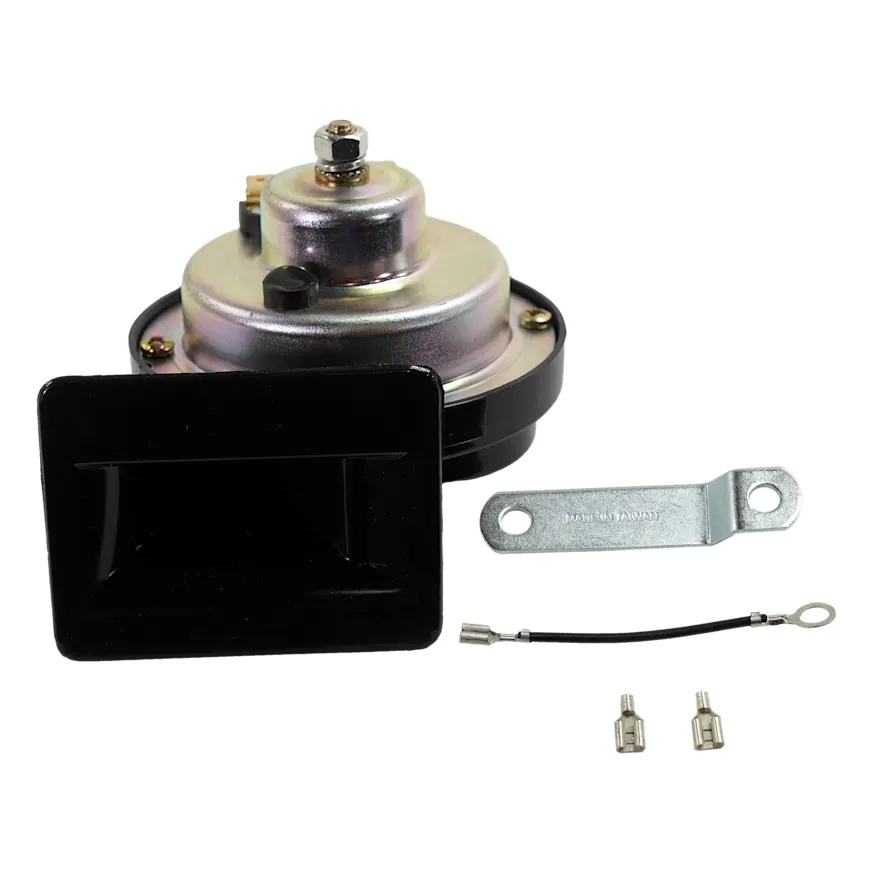
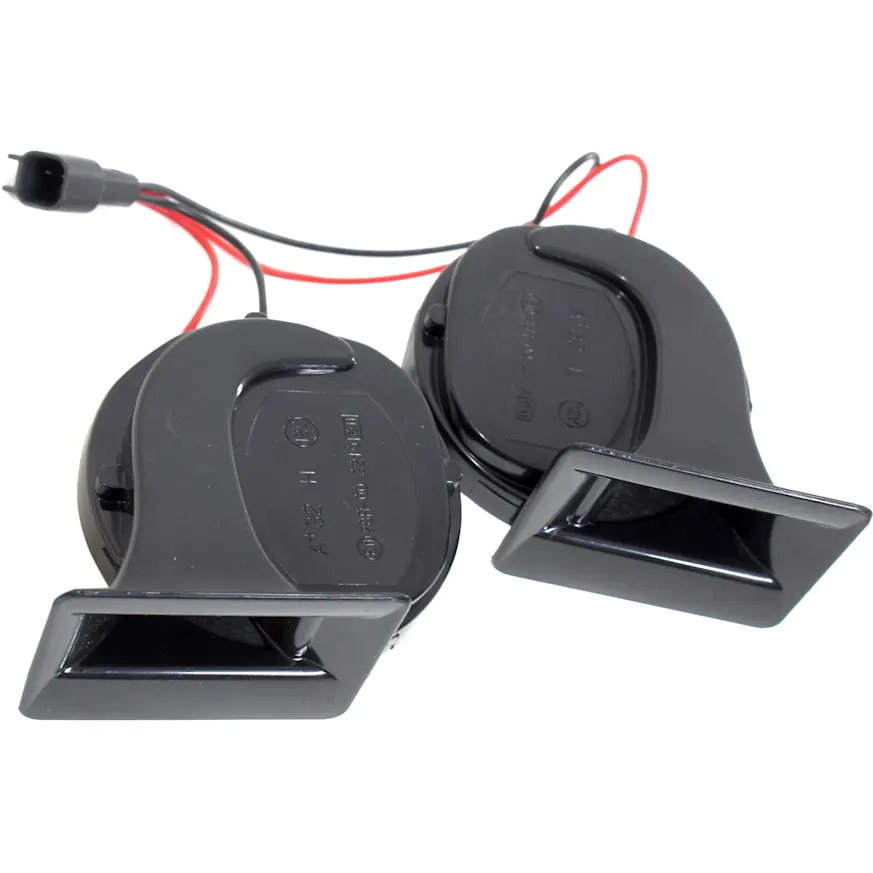
- Bare horn vs. horn with bracket and harness: some listings include a mounting bracket and a wiring harness with a plug-in connector, while others just contain the horn.
- Direct-fit OE-style vs universal: an original-equipment-style horn is meant to match the factory sound, mount, and plug, while a universal horn trades exact fit for broad compatibility.
- Loudness rating: horns are often listed with a decibel rating, so a louder aftermarket horn can sound noticeably different from the factory unit.
Pick the version that matches how your vehicle was wired and how you want it to sound, not just the cheapest round part in the results.
Compare the Details That Make It Fit
Use the product image as a starting point, not as the whole match. The details that decide whether a horn drops in are easy to miss in a thumbnail.
Compare these where you can:
- Connector style: a plug-in-type connector that matches your vehicle lets you reconnect without splicing, while blade or spade terminals may need an adapter.
- Terminal or connector quantity: some horns use a single terminal and ground through the bracket, while others use two terminals, so match how many connections your original horn uses.
- Mounting bracket shape: confirm the bracket matches your vehicle’s mounting point, or that you have a plan to mount a universal unit.
- Tone or frequency marking: if you’re replacing one horn in a pair, match low-note to low-note and high-note to high-note.
- Body size and shape: a compact spiral horn and a larger disc horn can both fit the same car, but only if there’s room where yours mounts.
The fastest way to avoid a wrong-part order is to pull or inspect the old horn and compare its connector, terminals, and bracket directly against the listing details.

Check What Comes in the Box
Fitment and completeness are two different questions. A listing can be correct for your vehicle and still not include everything you expected.
For horns, check whether the listing includes the following:
- a mounting bracket
- a wiring harness or plug-in connector
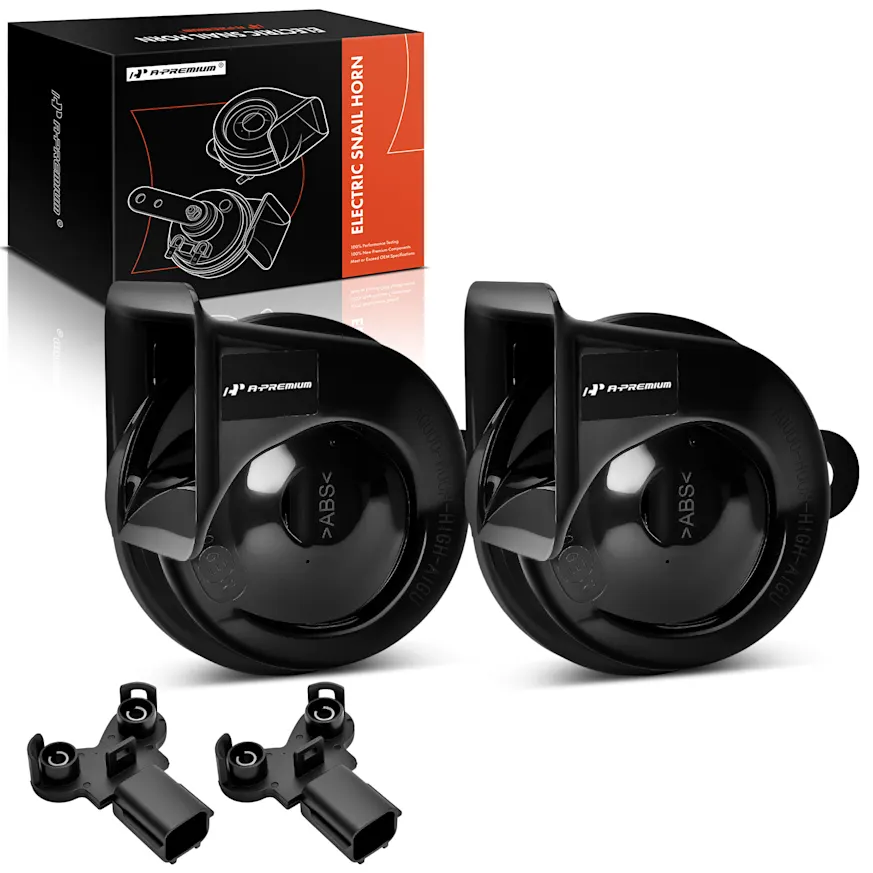
- more than one horn, if you need a pair
- any terminals or connector pieces
A listing might describe a single horn only, so if your vehicle uses a low-and-high pair and you need both, confirm the quantity before checkout. If the horn doesn’t come with a connector that matches your vehicle, you might need to add a wiring pigtail or adapter.
Compare Brands After You Confirm Fitment
Brand matters, but it shouldn’t be the first filter. A Replacement, Dorman, or Mopar horn still has to match your vehicle, tone, connector, and included parts before it belongs in the cart.
You might see original-equipment-style listings alongside universal options and help-line replacements. Different brands and series can mean different things: some lean toward a direct-fit part that matches the factory sound and plug, while others offer universal horns with their own brackets and connectors.
The better question isn’t “Which horn brand is best?” It’s “Which brand offers the correct horn configuration, meaning the right tone, connector, and included parts, for this vehicle?” Confirm the version first, then let brand help you decide between listings that already fit.
Choose the Right Ownership Lane
The right horn isn’t always the most expensive one. It’s the one that matches how your vehicle was set up and how you want it to sound.
- Basic functional replacement: best if you just need the horn working again and aren’t particular about matching the exact factory tone. A single direct-fit or adaptable universal horn can be enough. Don’t overpay for a matched-pair set you don’t need.
- Factory-matched replacement: best if your vehicle uses a low-and-high pair and you want it to sound the way it did from the factory. Match the correct tone and, if needed, replace both so they stay balanced. Don’t underbuy a single horn when the sound depends on the pair.
- Upgraded or louder replacement: best if you want a noticeably louder or different tone. Check the decibel rating and confirm the connector and mounting will still work, since louder aftermarket horns can have different wiring or bracket needs.
Make the Final Add-to-Cart Check
Before you add the horn to cart, make sure the listing matches your vehicle and the horn you’re replacing.
Confirm the following:
- vehicle year, make, model, and engine
- direct-fit vs. universal, and whether this suits your plan
- tone or frequency, especially if you’re replacing one of a pair
- single horn vs. pair, and the quantity you need
- connector style and terminal count
- mounting bracket included or accounted for
- wiring harness or adapter needs
- brand chosen after fitment, tone, and included parts are settled
- product notes read for connector and mounting details
Your Best Starting Point
Start with fitment. Use our vehicle selector or filters to narrow to horns that match your ride’s year, make, model, and engine, or decide up front that you’ll adapt a universal unit.
From there, narrow by version: pick the tone your vehicle uses, decide single vs. pair, and confirm the connector and bracket match. Compare these details against your original horn wherever you can, then use brand as a final confidence filter.
The best horn order isn’t the one that looks close enough or carries a familiar name. It’s the one that matches your vehicle, the correct tone, the connector, and the parts you need to get it sounding right again.
Keep Reading: Related Posts





Any information provided on this Website is for informational purposes only and is not intended to replace consultation with a professional mechanic. The accuracy and timeliness of the information may change from the time of publication.