You might already know that your truck or SUV needs running boards. The harder part is choosing the set that actually bolts to your vehicle’s exact cab configuration and matches how you plan to use them.
Running boards are one of those parts where two listings can look almost identical in the thumbnail and still be wrong for your vehicle.
One set is built for a crew cab, another for an extended cab. One mounts with no drilling, another expects factory mounting points your vehicle might not have.
One is a fixed aluminum board, another is a powered step that deploys when you open the door. Same category, very different orders.
This isn’t a question of which brand is “best.” It’s a question of which listing matches your vehicle’s cab length, its mounting situation, board style, and what actually arrives in the box. Get these right and the installation is straightforward. Get one wrong and you’re shipping a heavy, awkward box back.
Use this as a pre-order confidence check before you click into a product page.
How Do You Choose the Right Running Boards?
Start by confirming your vehicle’s year, make, model, cab style, and bed configuration, because running board length is tied directly to cab length (regular, extended, crew, or double cab). Then decide on board type: fixed boards, nerf bars, or powered retracting steps. Check the board width and material (aluminum or steel) against how you’ll use them, and confirm whether mounting brackets and hardware are included or sold separately. Most listings are sold as a set of two for both sides, but verify this and read the fitment notes before adding to cart.
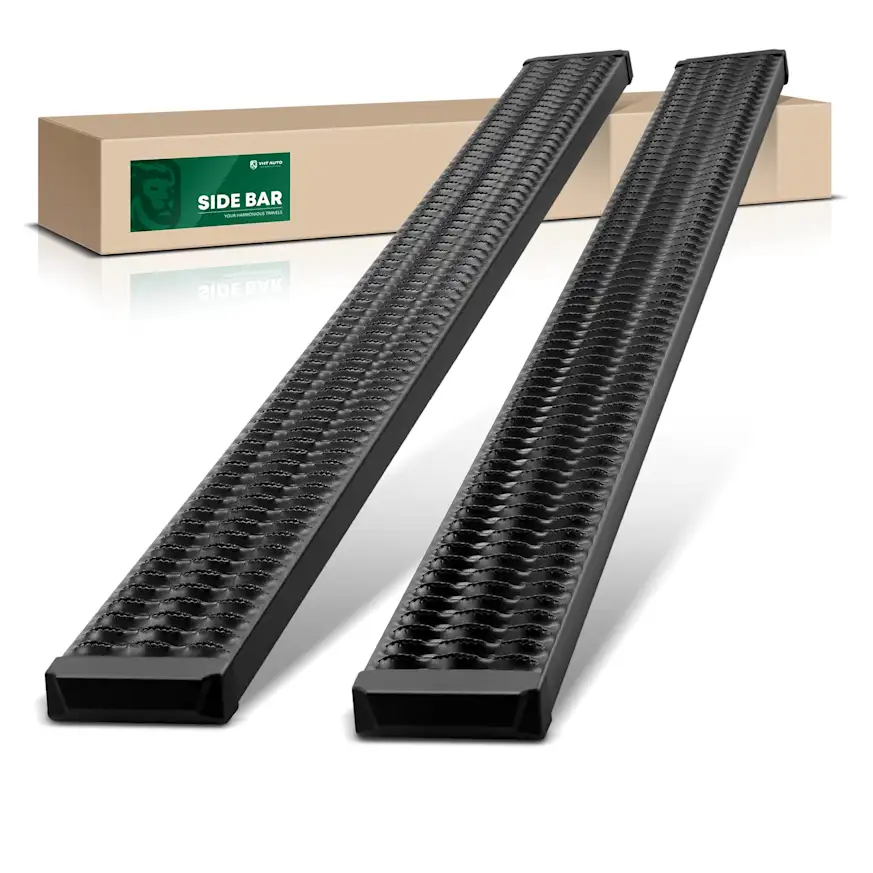
Start With the Cab Style, Not the Thumbnail
Start with your vehicle, not the photo. Running boards are length-specific, and cab style is the detail that shoppers get wrong most often.
A board cut for a crew cab is longer than one cut for an extended or regular cab. Mount a crew-cab board on an extended cab and it overhangs. Mount an extended-cab board on a crew cab and it leaves the rear door uncovered. The thumbnail won’t show you this mismatch.
Before you choose a listing, confirm the following:
- Year, make, and model: the baseline for any fitment filter.
- Cab style: confirm the exact manufacturer-specific cab designation, such as regular cab, extended cab, SuperCab, Double Cab, or Crew Cab. These names are not interchangeable across brands.
- Number of doors: two-door versus four-door changes how far the board needs to run.
- Body style for SUVs: confirm the exact body generation, wheelbase, and trim or application notes. Seating-row count by itself does not determine running board fit.
- Bed length, where relevant: some trucks split fitment by bed configuration.
- Trim or package: a few models offer factory step provisions that affect which aftermarket sets bolt up cleanly.
Use the vehicle selector or the “Add Vehicle to Guarantee Fit” filter to narrow the list to sets cut for your ride’s exact configuration before you compare anything else.
Identify the Type of Running Board You Actually Need
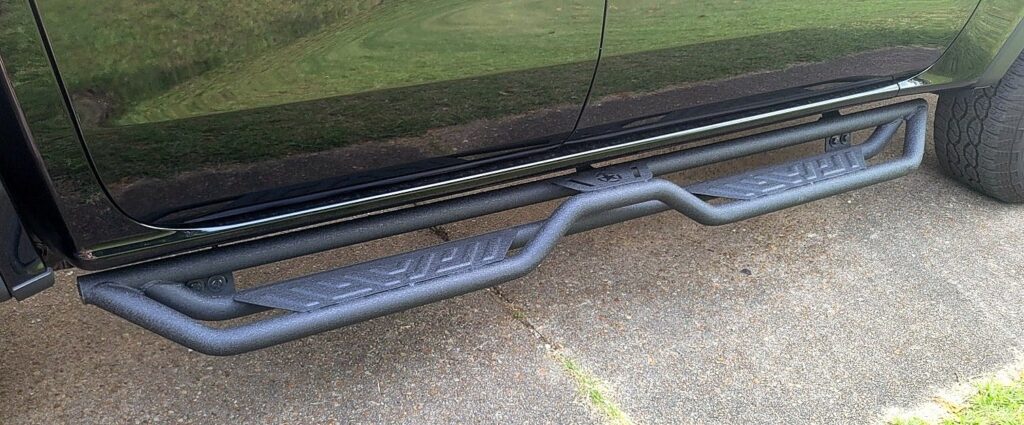
Once fitment is narrowed, decide what style of board fits how you use your vehicle. Two listings can both say “running boards” and serve completely different needs. If you’re still weighing the categories, this breakdown of nerf bars versus running boards can help you settle the distinction before you filter.
- Fixed running boards: a continuous board that stays in place. The most common choice, and the simplest. Good for daily step-up help and a finished look.
- Nerf bars / step bars: tubular bars with step pads rather than a full board. Lighter and more open, often chosen for a sportier profile.
- Powered / retracting steps: electric boards that drop down when you open a door and tuck up when it closes. These are plug-and-play for some applications and need a wiring connection. They cost significantly more and add complexity, so only choose this lane if you specifically want the deploying feature.
Also decide on board width. Wider boards (around 6 inches) give more foot room, while narrower boards (around 5 inches) sit tighter to the body. And confirm material: aluminum is lighter and resists corrosion, while steel is heavier and typically finished in powdercoated black. Two boards can share a model fit and still differ on every one of these points.
Compare the Details That Make Them Fit and Mount
Use the product image as a starting point, not as the whole match. Beyond cab length, the mounting story is what separates a clean installation from a problem order. Some of the same considerations apply when installing a hitch or other bolt-on accessories, where matching factory mounting points matters just as much.
Check the listing notes for the following:
- Mounting method: does the set use existing factory holes, or does it require drilling? This is often the difference between a 30-minute installation and a much harder one.
- Brackets and hardware: some sets include everything, while others note that brackets and hardware are sold separately. Don’t assume they’re in the box.
- Weight capacity: heavier-duty boards list a step capacity. Worth checking if you have larger occupants or expect hard use.
- Tread surface: diamond-tread, textured, or step-pad styles vary in grip and look.
- Finish: powdercoated black, polished, or brushed aluminum. Match it to your vehicle’s trim and body.
- Set quantity: confirm that the listing covers both sides. Most are sold as a set of two, but verify rather than assume.
If you can inspect your current setup or factory mounting points, compare them against the listing notes before you commit.
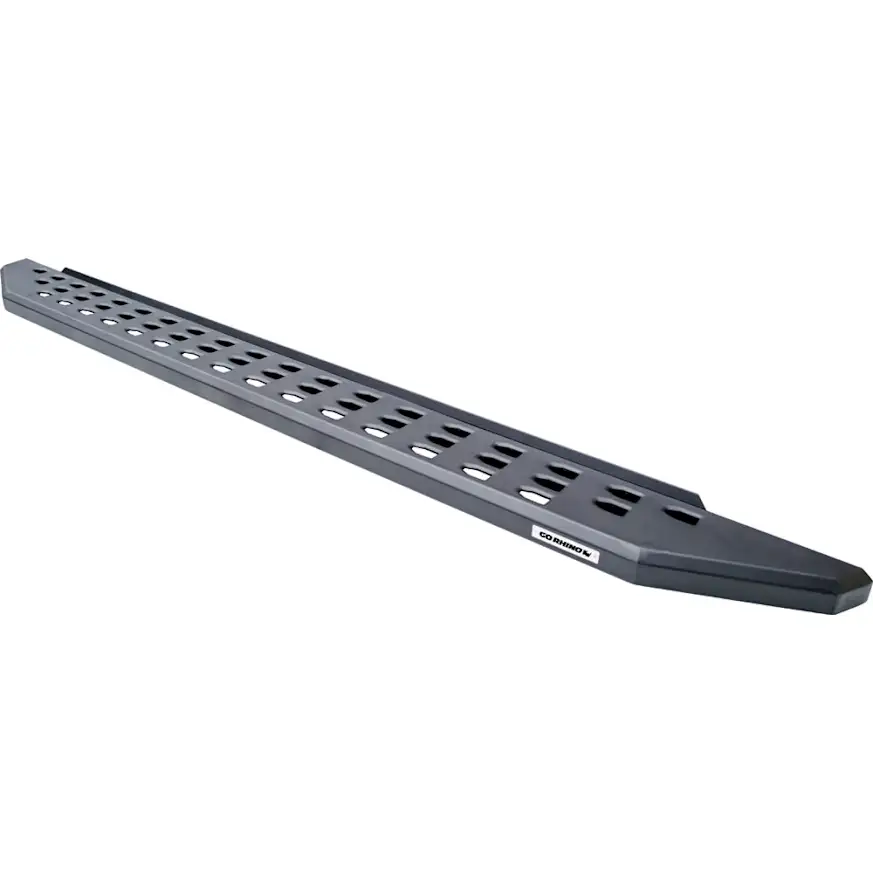
Check What Comes in the Box
Fitment and completeness are two separate questions. A set can be cut perfectly for your vehicle’s cab and still leave you short on installation day.
Watch for these on the listing:
- Mounting brackets: included in many sets, explicitly sold separately in others.
- Hardware kit: bolts, clips, and fasteners. Confirm that they’re listed.
- Wiring harness or controller: required for powered steps. Some are plug-and-play, while others aren’t.
- Both boards: verify that the set covers driver and passenger sides.
- Instructions and templates: especially relevant for any drill-to-fit set.
A listing can be correct for your truck and still be incomplete for the installation. If the notes say that brackets and hardware are sold separately, plan to add the matching bracket kit so that the boards aren’t sitting in your garage waiting on parts.
Compare Brands After You Confirm Fitment
Brand matters, but it shouldn’t be your first filter. On CarParts.com you’ll see names like Dee Zee, AMP Research, and Aries in this category, and each tends to lean toward different board styles and configurations.
A familiar brand name doesn’t make the wrong cab length or the wrong board type correct. A powered AMP Research set, a Dee Zee aluminum fixed board, or a steel Aries set still has to match your vehicle’s cab style, mounting method, board width, and what’s included before it belongs in the cart.
The better question isn’t “Which running board brand is best?” It’s “Which brand offers the right board type and fitment for my vehicle and how I’ll use it?” Settle the fitment and style first, then use brand as a confidence filter among the sets that already fit. For a closer look at how the major makers compare, this rundown of the best running board brands is a useful reference.

Choose the Right Ownership Lane
The right running boards aren’t always the most expensive ones. They’re the ones that match how you’ll use your vehicle and how long you need them to hold up. Here are three practical lanes:
- Basic fixed replacement: for shoppers who mainly want easier step-in and a finished look on a daily driver. A no-drill or factory-mount aluminum or steel fixed board does the job without paying for features you won’t use. Don’t overbuy a powered set here.
- Daily-driver standard set: for owners who want durable boards matched to their trim and grip needs. Step up to a heavier-duty board, a specific tread surface, or a wider width if foot room matters. Confirm bracket and hardware inclusion so that the installation is clean.
- Powered or severe-use choice: for those who specifically want retracting electric steps, or who need maximum capacity and corrosion resistance for hard use. This is the most expensive lane and adds wiring and moving parts, so choose it deliberately, not by default.
Make the Final Add-to-Cart Check
Before you add the running boards to cart, make sure the listing matches your vehicle, cab configuration, board type, and what you can verify about your mounting setup. Whether you’re outfitting a Ford F-150 or a Toyota 4Runner, run through this checklist:
- Year, make, and model confirmed
- Cab style and door count confirmed
- Board type chosen (fixed, nerf bar, or powered)
- Board width and material confirmed
- Mounting method checked (no-drill vs. drill-to-fit)
- Brackets and hardware confirmed as included or added separately
- Wiring/controller confirmed for powered sets
- Set quantity confirmed (both sides)
- Brand selected after fitment and style are settled
- Product notes and fitment details read
Your Best Starting Point
The smartest way to order running boards online is to work in order: start with fitment, then narrow by type.
- Use the vehicle selector to filter to sets cut for your vehicle’s exact cab style.
- Decide between fixed boards, nerf bars, or powered steps.
- Confirm board width, material, and finish.
- Check the mounting method and whether brackets and hardware are included.
- Use brand as a secondary filter among the sets that already fit.
- Add the matching hardware or bracket kit if the boards don’t include it.
The best running board order isn’t the one that looks close enough or carries a familiar brand name. It’s the one that matches your vehicle’s cab style, mounting setup, and the way you actually use your truck, with everything you need to finish the installation in the box.
Keep Reading: Related Posts






Any information provided on this Website is for informational purposes only and is not intended to replace consultation with a professional mechanic. The accuracy and timeliness of the information may change from the time of publication.