You might already know that your vehicle needs a new thermostat. What’s less obvious is whether the correct listing is a bare thermostat, a complete thermostat housing assembly, or a housing with an integrated sensor provision. Two listings can share the word “thermostat” in the title and still solve completely different ordering problems.
This gap is where wrong-part orders happen. A shopper compares a couple of product photos, picks the one that looks closest to the old part, and finds out after it arrives that the housing shape, material, or included hardware doesn’t match. This isn’t about diagnosing why the old thermostat failed. It’s about making sure the listing you add to cart actually matches your vehicle and your repair before you check out.
This guide walks through what actually separates one thermostat listing from another, so you can order with confidence the first time.
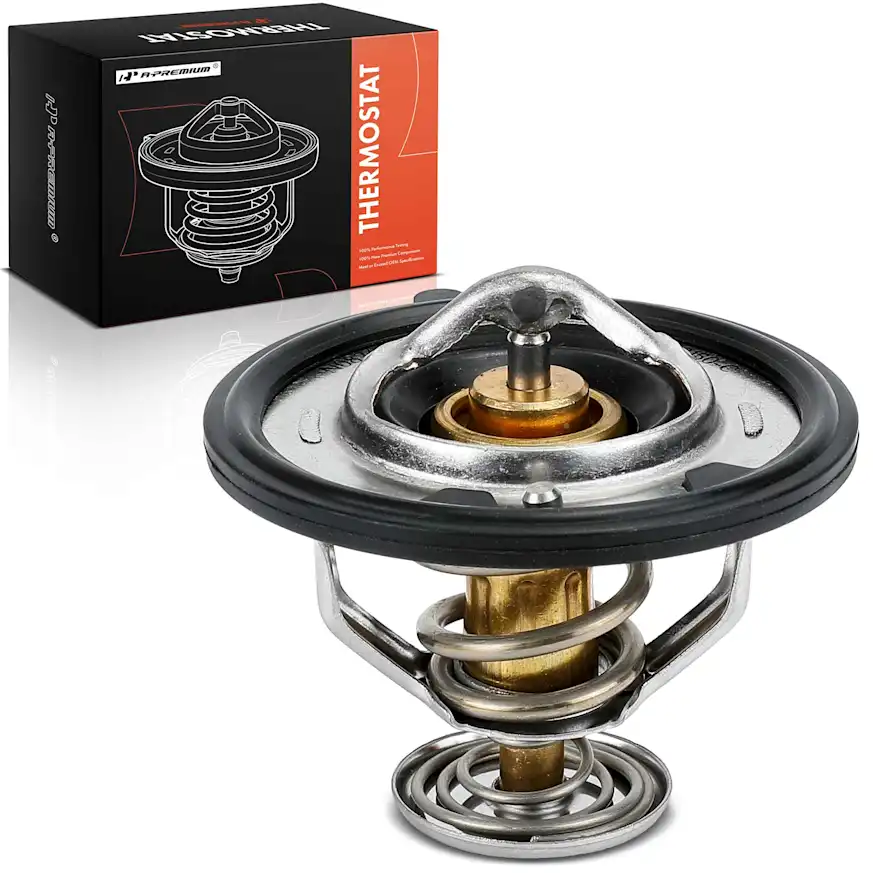
How Do You Choose the Right Thermostat?
Start by confirming your vehicle’s year, make, model, and engine, since thermostat housings and opening-temperature ratings often vary by engine even within the same model. Then decide whether you need a bare thermostat or a complete housing assembly, since aftermarket listings offer both, and the two aren’t interchangeable line items. Check the listing’s material (plastic or aluminum housing) and confirm what’s included, such as a sealing gasket or O-ring, before assuming it matches your original part. Once fitment and version are settled, use brand as a secondary confidence filter rather than the first decision point.
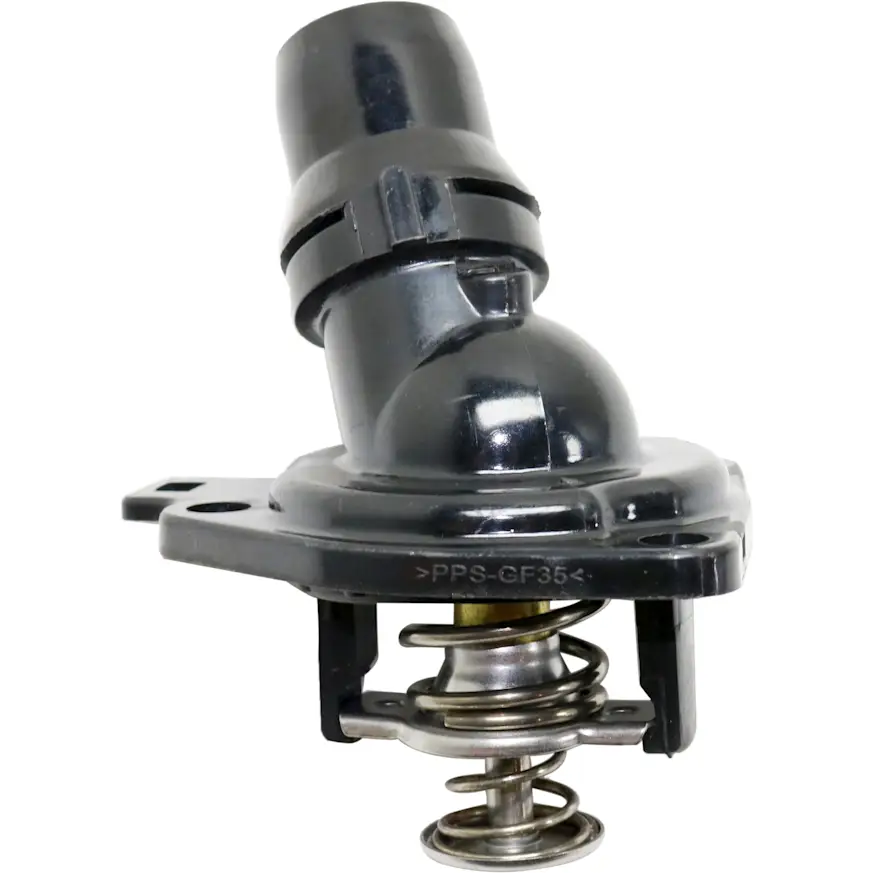
Start With the Vehicle, Not the Product Image
Thermostat housings can look nearly identical in a thumbnail while fitting completely different engines. Start with the vehicle, not the thumbnail.
Before comparing listings, confirm the following:
- Year, make, and model: the basic starting filter for any listing
- Engine size or engine code: many models offer more than one engine option, and thermostat housings frequently differ between them
- Submodel or trim, if applicable: some trims pair with a different engine or cooling configuration than the base model
- Opening temperature rating: the number stamped on your original thermostat is one of the fastest ways to confirm you’re looking at the right replacement
Using your vehicle’s year, make, model, and engine to filter listings (most category pages include a vehicle selector for this) narrows the results before you ever start comparing individual product photos.
Identify the Version Your Repair Actually Needs
Two thermostat listings can share the same name and still solve different ordering problems. Before you compare brands or prices, figure out which version your repair calls for.
- Bare thermostat versus housing assembly: A bare thermostat replaces only the valve component and reuses your vehicle’s existing housing. A thermostat housing assembly includes the housing itself, which matters if your original housing is cracked, warped, or corroded rather than just worn at the valve. If you haven’t inspected the old housing yet, this is the first version question to answer, since ordering the wrong one means a second order.
- Plastic versus aluminum housing: Housing assemblies are commonly offered in plastic or aluminum. The material affects how the housing behaves under repeated heat cycling and is worth noting when you compare listings, even though it isn’t a reason by itself to assume one option is automatically better for your situation.
- With or without an integrated sensor provision: Some housing assemblies include a bore or mount for a coolant temperature sensor, while others don’t. If your vehicle’s engine relies on a sensor mounted at the housing, confirm the listing accounts for it before adding it to cart.
- Opening temperature: Depending on application, thermostats are rated for different opening temperatures. Matching this rating to your original part (or your vehicle’s specification) is part of confirming you have the correct listing, not just a part that looks similar.
Compare the Details That Make the Part Fit
Use the product image as a starting point, not as the whole match. Housings and thermostats that look similar in a photo can differ in ways a thumbnail won’t show.
Compare these details against your original part or vehicle specs:
- Housing shape and overall silhouette
- Bolt pattern and mounting points where the housing meets the engine block or water pump
- Hose neck angle and outlet direction, since routing varies by engine layout
- Sealing surface where the gasket or O-ring sits
- Sensor bore location and size, if your engine uses a housing-mounted sensor
- Valve and spring design of the thermostat itself, which relates to the opening-temperature rating
If you still have the old part in hand, laying it next to the listing’s specifications (rather than just the photo) is the more reliable comparison.

Check What Comes in the Box
Confirming the right listing and confirming it’s complete for your repair are two separate checks. A listing can be correct for your vehicle and still be incomplete for your repair.
Here are commonly included or excluded items to check on the listing:
- Gasket or O-ring: many housing assemblies include a new sealing gasket or O-ring; bare thermostats sometimes do and sometimes don’t
- Mounting bolts or hardware: occasionally included with a full housing assembly, rarely included with a bare thermostat
- Coolant temperature sensor: if your housing has a sensor bore, the sensor itself is typically a separate part, not part of the thermostat listing
- Coolant: replacement coolant is almost never included and is worth adding separately if your vehicle’s system needs a refill
If the listing doesn’t include something your repair needs, such as a new gasket, it’s worth adding this item separately rather than assuming it’s bundled in.
Compare Brands After You Confirm Fitment
Brand matters, but it shouldn’t be the first filter. A correctly named thermostat or housing assembly still has to match your vehicle’s engine, version, material, and included components before brand becomes a meaningful decision point.
On CarParts.com, A-Premium is one of the brands you’ll commonly see across both bare thermostats and complete housing assemblies, offered in multiple materials and price points within the same category. You might see other brands available for this part category as well, depending on your specific vehicle application, but the brand should come after fitment, version, and included-component checks, not before them.
The better question isn’t “Which thermostat brand is best?” It’s “Which brand offers the correct thermostat configuration, material, and included components for this vehicle and repair?”
Choose the Right Ownership Lane
The right thermostat isn’t always the most expensive one. It’s the one that matches how long you need the repair to hold and what condition your vehicle’s existing housing is in.
Lowest-Cost Functional Replacement: A bare thermostat makes sense if your existing housing is in good condition and only the valve itself has failed. This lane is about replacing the failed component, not the whole assembly, so don’t pay for a full housing you don’t need.
Daily-Driver OE-Style Replacement: A complete housing assembly in the material that matches your vehicle’s original (plastic or aluminum) covers you if the housing shows any wear alongside the thermostat itself. This is a reasonable middle lane for most daily-driven vehicles.
Long-Term Keeper or Severe-Use Choice: If you’re keeping your vehicle long-term or the housing has failed more than once, a complete assembly with attention to material durability and included sensor provisions can reduce the odds of revisiting this repair soon. Don’t assume the highest-priced listing automatically belongs in this lane. Confirm the material and included components first.
Make the Final Add-to-Cart Check
Before you add the thermostat to cart, make sure the listing matches your vehicle, the version, the included components, and the details you can verify from the original part.
- Vehicle year, make, model, and engine confirmed
- Bare thermostat or housing assembly decided based on the condition of your vehicle’s existing housing
- Opening temperature rating matches your original part or vehicle specification
- Housing material (plastic or aluminum) matches your intended repair
- Sensor bore or provision confirmed, if your engine requires one
- Included gasket, O-ring, or hardware checked against what your repair needs
- Quantity confirmed (one thermostat or assembly per vehicle in almost all cases)
- Brand chosen after fitment, version, and inclusions are already settled
- Product notes and specifications reviewed, not just the photo
Your Best Starting Point
Start with your vehicle’s year, make, model, and engine. Narrow by version, deciding between a bare thermostat and a complete housing assembly based on the condition of your ride’s existing housing. Confirm what’s included, particularly the gasket or O-ring and any sensor provision. Compare these details against the original part where you can. Then use brand as a secondary confidence filter, not the deciding factor.
The best thermostat order isn’t the one that looks close enough in a thumbnail or carries a familiar brand name. It’s the one that matches your vehicle’s engine, the version its housing condition calls for, and the components your repair actually needs.
Keep Reading: Related Posts




Any information provided on this Website is for informational purposes only and is not intended to replace consultation with a professional mechanic. The accuracy and timeliness of the information may change from the time of publication.