Ford is one of the first names many drivers think of when they hear “American car.” The company’s long history, Dearborn roots, and the popularity of the Ford F-Series all reinforce that reputation.
But the question “Is Ford American-made?” is not as simple as it sounds. A vehicle can come from an American company, be assembled in a US plant, and still use parts sourced from other countries. A foreign-brand vehicle can also be assembled in the US and contain a high percentage of US or Canadian parts. That’s why discussions about American-made vehicles usually look at more than the badge on the grille.
Is Ford American Made?
Yes, Ford is still an American automaker. Ford Motor Company has been operating since 1903, and it remains based in Dearborn, Michigan.
However, “American-made” can mean different things:
- The company is American. Ford was founded in the US and remains headquartered in Michigan.
- The vehicle is assembled in America. Many Ford models sold in the US are assembled in US plants, but not all of them.
- The parts are American-made. Parts content varies by model, trim, engine, transmission, and model year.
So the most accurate answer is this: Ford is an American automaker, and many Ford vehicles are American-assembled, but not every Ford vehicle or Ford part is made in the US..
Where Are Ford Vehicles Made?

Ford is a global company with manufacturing and business operations in multiple countries. For US shoppers, the final assembly country depends on the model.
Several Ford and Lincoln vehicles are assembled in the US, including major nameplates like the Ford Explorer, Ford Bronco, Expedition, Mustang, Escape, and F-Series trucks. Other models, including the Ford Maverick, Bronco Sport, and Mustang Mach-E, are assembled in Mexico. Some specialty or limited-production models can also have different assembly locations.
That means it is not accurate to say every Ford sold in the US is made in America. A better way to put it is this: many Ford vehicles sold in the US are assembled in North America, and several major Ford nameplates are assembled in the US.
If country of assembly matters to you, check the window sticker or the American Automobile Labeling Act information for the specific model and year you’re shopping for. Don’t rely on the brand name alone. Even among non-American cars, assembly location and parts sourcing can be more complicated than the badge suggests.
Is Lincoln Still Part of Ford?
Yes. Lincoln is Ford’s luxury brand.
Mercury, however, is no longer an active Ford brand. Ford phased out Mercury after the 2010 model year and refocused its US lineup around Ford and Lincoln vehicles.
Who Owns Ford?
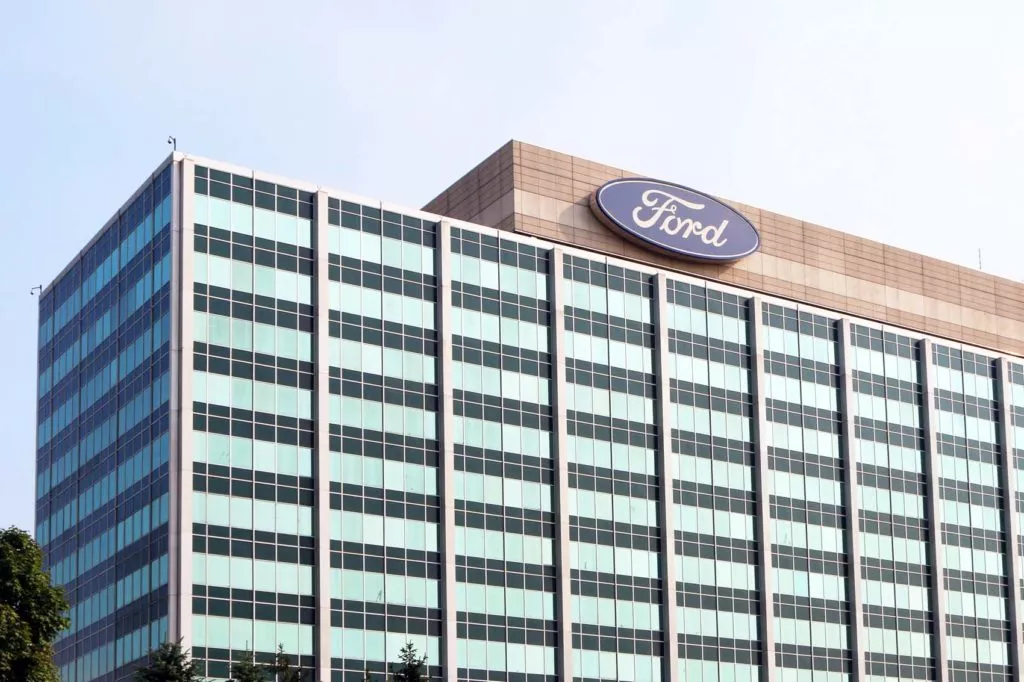
Ford is a publicly traded company, so it is owned by shareholders. It is not privately owned by the Ford family.
That said, Ford has a dual-class stock structure. Ford common stock represents most of the company’s voting power, while Class B stock represents a large minority of the voting power. The Class B stock is closely associated with the Ford family and gives the family significant influence over major company decisions.
This is an important distinction. The Ford family does not own most of Ford’s common stock, and it does not hold a majority of total voting power. However, its voting influence remains unusually strong for a publicly traded automaker.
Ford’s largest institutional shareholders can change over time, but major investment firms such as Vanguard, BlackRock, and State Street are typically among the company’s largest common-stock holders. For the most accurate ownership figures, check Ford’s latest proxy statement or SEC filings.
Are Ford Vehicles Still a Good Buy?
A Ford can be a good buy, but it depends on the model, year, price, condition, and your needs. The brand name alone should not be the deciding factor.
Ford’s strengths are clear in trucks, SUVs, vans, hybrids, and commercial vehicles. The F-Series remains one of the strongest-selling truck lines in the US, while models like the Explorer, Bronco, Maverick, Transit, and Escape continue to play major roles in Ford’s lineup.
Still, it’s better not to make a blanket claim that Ford is one of the most reliable auto brands. Reliability varies by model year, powertrain, maintenance history, and how the vehicle was used. Before buying, research the exact model and year you’re considering. Look for common problems, ownership costs, service records, and open vehicle recalls.
If you already own a Ford, watch for warning signs like an illuminated Ford wrench light, unusual noises, fluid leaks, braking issues, or steering problems. When repairs are needed, the wide availability of replacement parts, performance parts, and model-specific resources like Ford truck parts can be a practical advantage.
The Future of Ford
Ford’s future is not tied only to whether it is “American-made.” The company is balancing several priorities at once: gas-powered trucks and SUVs, hybrids, EVs, commercial vehicles, software, and connected services.
Its strongest advantage remains trucks. The F-Series continues to be central to Ford’s identity and sales performance, while the Maverick has helped Ford compete in the smaller pickup segment. Ford’s hybrid lineup has also become more important as some buyers look for better fuel economy without fully switching to EVs.
That does not mean Ford’s path is risk-free. Like every major automaker, Ford faces pressure from changing emissions rules, EV demand uncertainty, software development costs, recalls, tariffs, labor costs, and global competition. Its American identity still matters, but buyers should judge each vehicle by where it is assembled, how it performs, what it costs to maintain, and whether it fits their needs.
Bottom Line
Ford is still an American automaker, and many of its most important vehicles are assembled in the US. But not every Ford vehicle is built in America, and not every Ford part comes from the US.
The cleanest answer is this: Ford is American by origin, headquarters, and brand identity, but “American-made” varies by model. If that matters to you, check the exact vehicle’s final assembly location and parts-content label before you buy.
Keep Reading: Related Posts





Any information provided on this Website is for informational purposes only and is not intended to replace consultation with a professional mechanic. The accuracy and timeliness of the information may change from the time of publication.