Your tailgate takes more abuse than almost any other panel on your truck or SUV. It gets loaded with lumber, sat on at tailgate parties, stepped on during bed access, and slammed shut a few thousand times over the life of your vehicle. Two small steel cables carry all of that weight, and when one lets go, the tailgate drops, the latch binds, or the whole panel hangs crooked.
Tailgate cables are cheap, they’re widely available, and most drivers can swap them in under an hour with basic hand tools. Here’s what they do, how to tell when yours are failing, and what to look for when you buy replacements.
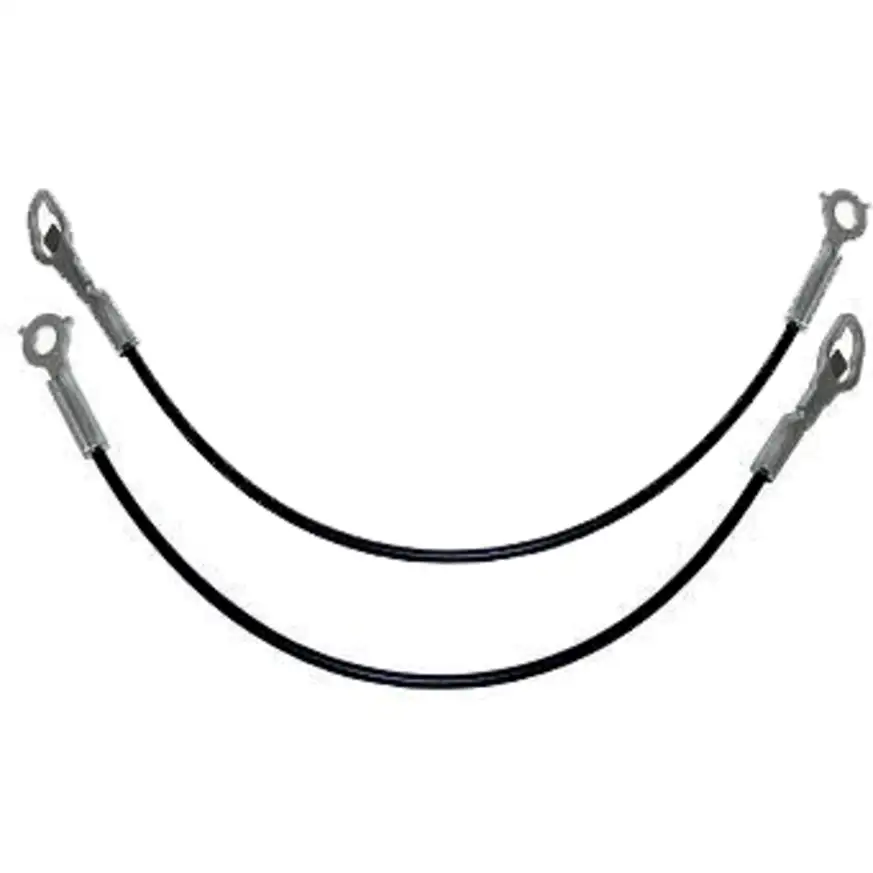
What Is a Tailgate Cable?
A tailgate cable, sometimes called a tailgate support cable or tailgate strap, is a short length of braided steel wire with a formed loop or hook on each end. Most trucks and SUVs use a pair, one on the driver side and one on the passenger side. The cable connects the inside edge of the tailgate to a stud or bracket on the bed side, and it stops the tailgate at a horizontal position when you open it.
Older trucks used flat metal straps or chains. Modern applications almost always use a vinyl-coated or plastic-sheathed steel cable, which resists rust and keeps the cable from scratching paint. Some Jeep, Nissan, and Toyota SUV applications use a similar cable on a hatch or liftgate assembly rather than a pickup bed.
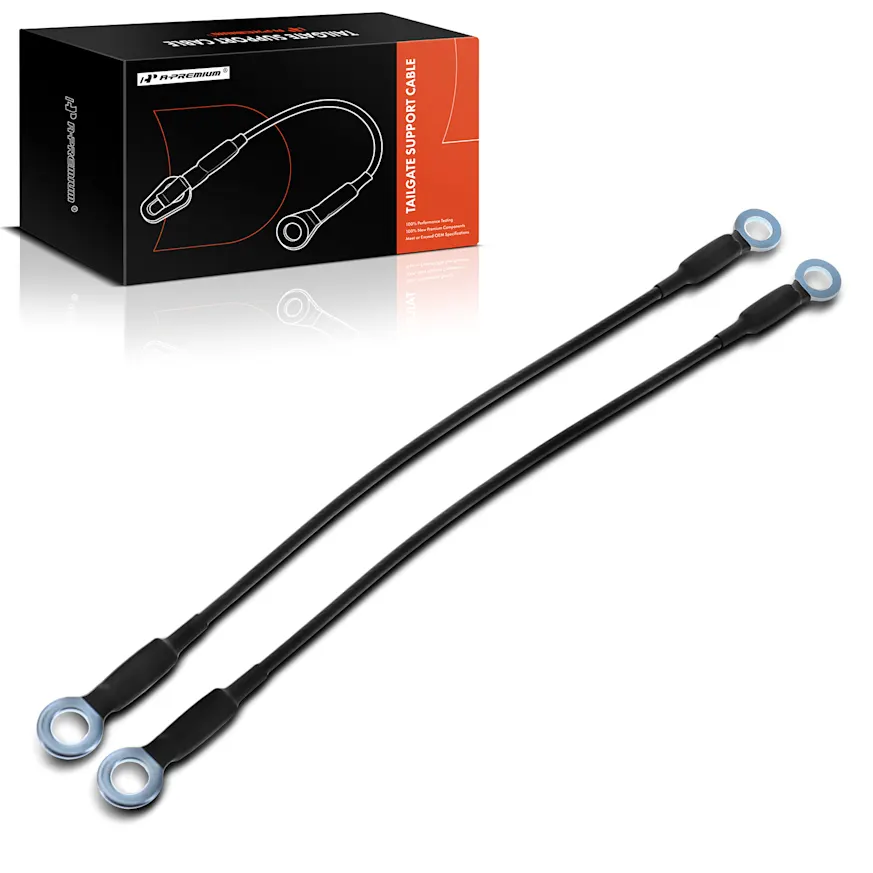
What Does a Tailgate Cable Do?
The cable does three jobs at once. First, it acts as a stop, holding the tailgate level with the bed floor so you can slide cargo across it. Second, it carries load, supporting whatever weight sits on the open tailgate. Third, it protects the hinges. Without a working cable, the tailgate swings down past its designed range and puts all the stress on the hinge pins and the latch assembly.
This last point matters more than people realize. A hinge or a latch costs a lot more than a cable, and bent sheet metal at the tailgate corner isn’t cheap to fix.
Signs of a Bad or Broken Tailgate Cable
Cable failures are usually visible, but the early symptoms are easy to ignore.
- The tailgate drops past level: If one side sags when you open the gate, this cable has stretched or snapped. This is the most common complaint.
- Fraying at the loop ends: The cable almost always fails where it wraps the stud. Look for broken strands poking through the vinyl coating or rust bleeding through a cracked sheath.
- The tailgate won’t sit flush when closed: A stretched cable can pull the gate out of alignment, which leads to latch rattle and wind noise on the highway.
- Popping or clunking when you open the gate: That’s often a partially failed cable letting go strand by strand under load.
- Torn or cracked vinyl coating: Once the coating splits, moisture reaches the steel core and corrosion accelerates fast, especially in salt-belt states.
If one cable has failed, replace both. They’ve seen identical mileage and identical load cycles, and the surviving cable is usually close behind.
What Causes Tailgate Cables To Fail?
Corrosion is the number one cause. Road salt, brake dust, and standing water attack the cable at the loop ends where the coating is thinnest.
Overloading is a close second. Standing on the tailgate, loading a heavy toolbox onto it, or using it as a work bench puts loads well past what the cables were designed to hold.
Age and cycling matter too. Every open and close flexes the cable at the same spot. After a decade of use, metal fatigue does the rest.
Finally, aftermarket accessories can shorten cable life. Tailgate assists, bed extenders, and heavy-duty tonneau hardware can change the load path and stress the cables in ways the factory never intended.
Can You Drive With a Broken Tailgate Cable?
You can, but you shouldn’t leave it that way. With the tailgate closed and latched, a broken cable doesn’t affect drivability. The problem shows up the moment you open the gate. The panel free-falls, the hinges take the shock, and the loose cable end can whip against the bumper or quarter panel and chip paint.
A dangling tailgate can also drop below the bumper line, which is a hazard if you back up without closing it. Given how inexpensive parts are, there’s no good reason to put this repair off.

How Much Does It Cost To Replace a Tailgate Cable?
This is one of the most affordable repairs for your vehicle. Individual replacement cables commonly start in the single digits, and two-piece sets are often priced in the low teens, depending on the application. Dealer prices for the same OE part number can run several times that.
Labor is minimal. Most shops quote a fraction of an hour, and the job is well within reach for a first-time DIYer, which means you can keep the entire cost to just the parts.
How To Replace a Tailgate Cable
The exact steps vary by vehicle, so check your service manual, but the general procedure looks like this:
- Open the tailgate and support it. Have a helper hold it or prop it level so it doesn’t drop when the cable comes off.
- Remove the retaining hardware. Depending on the design, you’ll pop a plastic cap, remove a Torx or hex bolt, or slide the cable loop off a shouldered stud.
- Detach the cable at the bed side. Same process, though some applications require you to rotate the loop to a specific angle to clear the bracket.
- Compare old to new. Match overall length center to center, loop diameter, and coating type before you install anything.
- Install the new cable. Attach the bed side first, then the tailgate side, and torque the fasteners to spec.
- Cycle the tailgate. Open and close it several times, confirm the gate sits level when open and flush when closed, and check that the cable isn’t rubbing the bed rail.
Cable length is the specification that matters most. A cable that’s even slightly long lets the gate droop, and one that’s too short strains the hinges and prevents the gate from opening fully.
What To Look For in a Replacement Tailgate Cable
- Direct-fit design: A direct-fit cable matches the OE length, loop size, and mounting geometry, so you don’t have to modify brackets or drill anything.
- OE number cross-reference: The most reliable way to confirm fitment is to match the replacement against your factory part number. Many listings at CarParts.com show the OE numbers a part replaces, which takes the guesswork out of ordering.
- Corrosion-resistant construction: Look for a vinyl or plastic-coated steel core. If you drive in a salt-belt or coastal region, this is the single most important durability feature.
- Sold as a set: Buying a two-piece set costs a little more up front and saves you a second repair a few months later.
- Guaranteed fitment: Enter your truck’s year, make, and model before you check out so the catalog filters for parts confirmed for your vehicle.
Where To Buy Tailgate Cables
CarParts.com stocks tailgate cables for a wide range of pickups and SUVs, including Chevrolet Silverado, Ford F-150 pickups, Toyota Tacoma and Tundra, Nissan Frontier, and Jeep Cherokee and Liberty applications, in both single and two-piece set configurations. Listings include manufacturer part numbers, OE cross-references, and length specs, so you can verify fitment before you order. Our vehicle selector filters the catalog down to parts confirmed for your trucks’s exact year, make, and model.
A sagging tailgate is a five-minute fix once the right part is in your hands, so don’t let a frayed cable turn into a bent hinge or a cracked bed rail. Head to CarParts.com, plug in your truck’s year, make, and model, and pull up direct-fit tailgate cables built to match your vehicle’s factory specs at a fraction of dealer pricing. With fast shipping, hassle-free returns, and a lowest price guarantee, getting your tailgate back to level has never been easier.
Keep Reading: Related Posts






Any information provided on this Website is for informational purposes only and is not intended to replace consultation with a professional mechanic. The accuracy and timeliness of the information may change from the time of publication.