Coil springs look like one of the simpler suspension parts to order until the box shows up and the wire diameter, free length, or end style doesn’t match what came off your vehicle. By then, the strut’s already apart, the alignment appointment’s on the calendar, and the wrong-looking spring is sitting on the bench.
The smart way to shopcoil springs isn’t to start with “What’s cheapest?” or “What looks close enough to the old one?” It’s to start with a clearer question: What exactly needs to go in the cart so this job finishes once?
Coil springs create more wrong-order risk than most suspension parts because they’re position-specific, rate-specific, and often trim-specific, and because the listing rarely includes the isolators, bump stops, or hardware that the job actually needs. A complete one-job order is what keeps your vehicle off jack stands twice.
The Job in One Sentence
You’re restoring correct ride height, spring rate, and load support for a defined corner of the vehicle, and replacing the wear items that sit in the same access zone while the suspension’s apart.
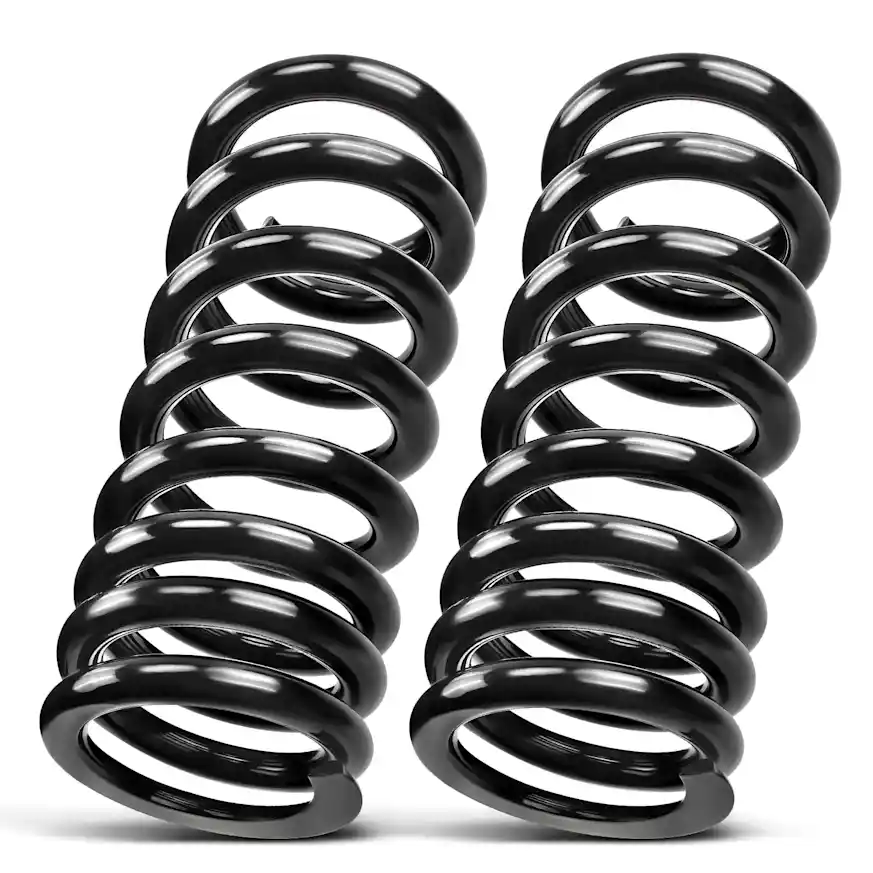
A coil spring’s job is to hold your vehicle at its designed ride height and absorb load through compression. When a spring sags, cracks, or breaks, ride height drops, the shock or strut starts working outside its intended stroke, and tire wear, alignment, and handling all drift off spec. Replacing the spring restores the corner geometry the rest of the suspension was engineered around.Coil springs are typically sold as bare springs, in matched pairs, or as part of acomplete strut assembly. The cart logic changes a lot depending on which format fits the job and the vehicle’s suspension design.
Choose Your Cart Size
Three legitimate carts cover most coil spring jobs. The right one depends on mileage, ownership plans, and what else is worn in the same access zone.
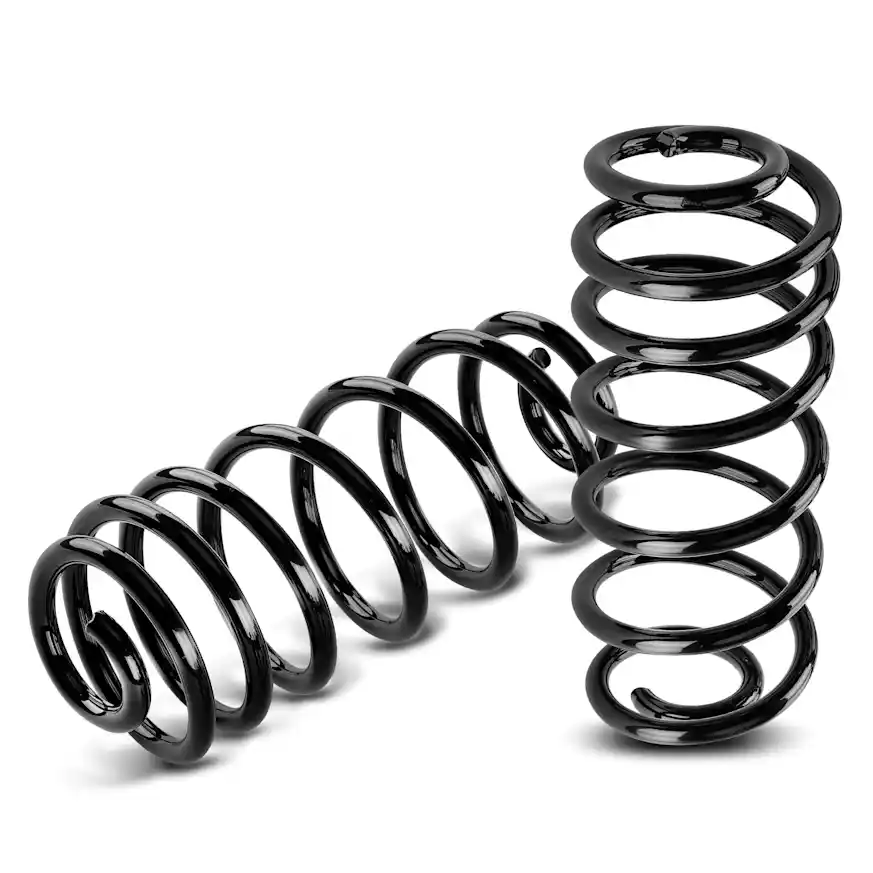
Minimum Viable Repair
Replace the failed spring and its pair on the same axle. Nothing more.
Choose it if:
- One spring is cracked, broken, or visibly sagged, but the rest of the suspension is healthy
- Mileage is moderate and the struts or shocks were replaced recently
- You’re keeping your vehicle short-term and just want it road-safe and even
Typical cart:
- Pair of coil springs for the affected axle
- Newspring isolators or pads if yours are torn or compressed
- Replacement bump stops if the old ones are crumbling
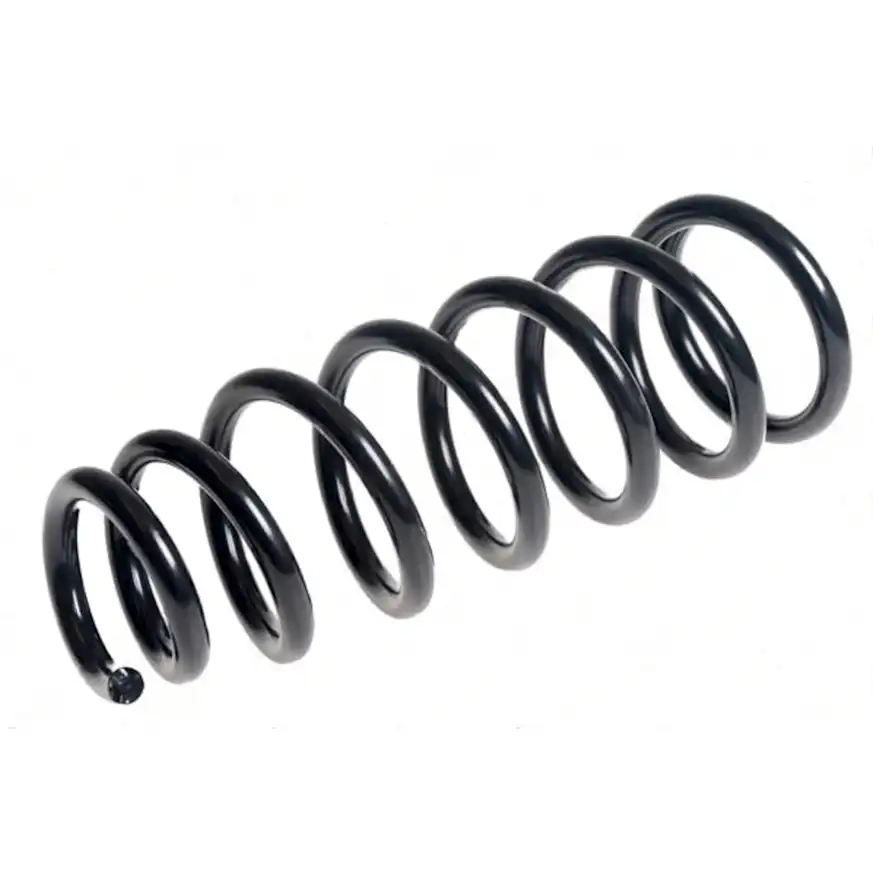
Smart Same-Access Refresh
Replace the springs along with the wear items that share the same teardown.
Choose it if:
- The struts or shocks are original or high-mileage
- The strut mounts or upper bearings click, bind, or feel rough
- The car has uneven ride height and you want one clean reset
Typical cart:
- Pair of coil springs for the axle
- Matching pair of struts or shocks
- Strut mounts and bearing plates on MacPherson designs
- Spring isolators, dust boots, and bump stops
- Sway bar end links if they share the access path
High-Mileage Do-It-Once Reset
Reset the whole corner so you aren’t back under your vehicle in a season.
Choose it if:
- Your vehicle’s well past 100,000 miles
- You tow, haul, drive on rough roads, or live somewhere salty
- You want the suspension to feel new and stay that way
Typical cart:
- Complete loaded strut assemblies, or matching pair of springs plus struts
- Strut mounts, bearings, isolators, boots, and bump stops
- Sway bar end links and bushings in the same access zone
- Lowercontrol arm bushings or ball joints if they’re showing age
- Alignment after installation
What’s Commonly Ordered Together on This Job
Coil springs rarely ship alone in a complete repair. A few item groups belong in almost every cart.
Isolators, Pads, and Boots
Rubber spring isolators sit between the spring and the perch. They quiet the suspension and stop metal-to-metal contact. They tear, compress, and harden, and they’re almost never reused successfully in a high-mileage vehicle. Learning todiagnose a bad coil spring insulator helps you decide whether yours are still serviceable before reassembly. Dust boots that protect the strut shaft tear at the same rate. These are low-cost items that prevent noise complaints after the job’s done.
Bump Stops
Thebump stop limits suspension travel at full compression. It crumbles with age, especially in cars that have ridden on tired springs. A fresh bump stop on a fresh spring keeps the strut from bottoming on its own shaft. If you’ve noticed clunks over rough roads, thesigns of a bad bump stop are worth a quick read before you reassemble.
Strut Mounts and Upper Bearings
On MacPherson strut suspensions, the spring sits on a perch that rides on abearing inside the strut mount. If the mount’s worn, the steering binds, clunks, or makes popping sounds at full lock. The classicbad strut mount bearing symptoms are easy to miss until the suspension’s already apart. Since the strut’s already coming apart to swap the spring, the mount and bearing belong in the same order on any high-mileage car.
Struts or Shocks
If the spring’s sagged, the strut or shock has likely been damping outside its intended stroke for thousands of miles. Pairing fresh springs with tired dampers gives a stiff, harsh ride that wears the new springs faster. For any high-mileage replacement, struts or shocks belong in the cart unless they’re genuinely recent.
Hardware and Fasteners
Some upper strut nuts, pinch bolts, and ball joint nuts are one-time-use by design. Aspring compressor rental or purchase belongs on the tool list for any bare-spring job, since wrestling a compressed spring out without the right tool is the most common way this job goes wrong.
Full Assembly vs. Bare Spring
A loaded strut assembly includes the spring, strut, mount, bearing, isolators, and boot, pre-assembled. It costs more per corner but skips the spring compressor entirely and cuts installation time roughly in half. For DIYers without a compressor, complete assemblies often turn out to be the cheaper path once tool rental and labor risk are counted.

What People Forget Until the Vehicle Is Already Apart
A short list of the things that strand carts mid-job:
- Whether the listing is for one spring or a pair. Many product pages sell one spring, and you almost always need two.
- The spring’s free length, wire diameter, and end type. “Looks the same” isn’t a specification.
- Whether your suspension is MacPherson strut, double wishbone, or solid axle. Thespring format and adjacent parts differ a lot between suspension types.
- Whether the strut mount, bearing, and isolator are reusable. For anything past 80,000 miles, the answer’s usually no.
- The spring compressor. You can’t safely swap a bare strut spring withoutthe right compressor tool.
- Trim and payload differences. Heavy-duty, tow package, and sport trims often run different rates.
- Whether your vehicleneeds an alignment after installation. Ride height changes pull camber and toe.
- One-time-use upper strut nuts and lower pinch bolts called out by the service manual.
When Replacing Only the Coil Spring Is False Economy
A minimum viable cart is honest work when the rest of the suspension’s genuinely healthy. A broken spring on a recently rebuilt strut is one of those cases. So is a sagged spring on a low-mileage vehicle with fresh mounts and good dampers. There’s nothing wrong with putting in just what failed.
The minimum cart becomes false economy fast for high-mileage vehicles. The struts are already coming apart to access the spring. The mount, bearing, isolator, and boot are right there. The labor cost of going back in to replace these items separately is almost always higher than the parts cost of doing them now. A few small items in the cart today save a full re-teardown later.
The same logic applies to sway bar end links and lower control arm hardware in many platforms. If they’re in the access path and visibly worn, adding them costs minutes and a few dollars now, or an evening and a second alignment later.
The honest test is simple: if any adjacent part is more than half-worn and sits inside the same teardown, it belongs in this cart. If everything around the failed spring is recent and healthy, the small cart’s the right cart.
The Fitment Splits That Break Coil Spring Orders
Replacement coil springs have more variant traps than most shoppers expect.
Position
Front and rear springs are almost never the same part. Some vehicles also run different springs left and right because of engine offset, fuel tank position, or driver-side load bias. Always confirm position before ordering.
Trim, Submodel, and Payload
Base, sport, heavy-duty, and tow-package trims often run different spring rates even for the same model year. A sport-suspension spring in a base-trim car rides harsh and sits too high. A base spring in a tow-package truck sags under load.
Drivetrain
All-wheel-drive and four-wheel-drive variants frequently run different front spring rates than two-wheel-drive versions because of the added front-axle weight. The part numbers usually split accordingly.
Engine
Heavier engines load the front springs harder, and many vehicles split front spring rates by engine option. Six-cylinder and V8 variants often need stiffer front springs than four-cylinder versions of the same car.
Suspension Design
MacPherson strut, double wishbone, multi-link, and solid-axle suspensions all use different spring formats. Even within MacPherson vehicles, end types vary, with some using pigtail ends, others using flat or tangential ends. The spring has to seat correctly on its perch.
Free Length, Wire Diameter, Coil Count, and Rate
These four specs define a spring. A spring with the right diameter but wrong wire gauge will sit at the wrong height. A spring with the right height but wrong rate will ride wrong and wear other parts faster. Reputable listings publish these numbers.
Stock Height vs. Lifted or Lowered
If your vehicle has a lift kit, leveling kit, or lowering springs already installed, stock-replacement springs will reverse that ride height. Confirm what’s currently in your vehicle before ordering.
Coil-Over Springs vs. Conventional Coils
Coil-over springs are a separate category with their own diameter, length, and rate specs, sized to fit a specific coil-over body. They aren’t interchangeable with conventional vehicle coil springs and shouldn’t be cross-shopped against them.
Bare Spring vs. Loaded Assembly
The same corner can be served by a bare spring, a spring with isolators, or a complete loaded strut. Confirm which format the listing is and which one fits the rest of the cart.
Delivery-Day Inspection Checklist
Before any teardown starts, compare the new spring to the old one and the listing spec.
- Free length matches the listed dimension within tolerance
- Wire diameter matches the old spring
- Coil count matches
- End type matches: pigtail, flat ground, or tangential
- Inside and outside diameters match the perches
- Spring is sold as a pair when a pair was ordered
- Powder coating or finish is intact, with no chips at the ends
- Isolators, boots, or hardware listed as included are actually in the box
- For loaded assemblies, the strut, mount, bearing, and bump stop are pre-installed and seated correctly
- No shipping damage to the coils, end loops, or finish
Your One-Job Order Sheet for Coil Springs
A six-step pre-purchase checklist:
Confirm the Vehicle
Year, make, model, trim, engine, drivetrain, and any suspension or payload package. Coil springs split on most of these.
Confirm the Repair Scope
One spring, a pair, a full axle, or all four corners. Decide whether you’re matching what failed or resetting the whole suspension.
Confirm What the Listing Includes
Single spring or pair. Bare spring or loaded assembly. Whether isolators, boots, or bump stops are included or sold separately.
Add the Consumables and Adjacent Items
Isolators, bump stops, dust boots, strut mounts, bearings, and any one-time-use hardware the service manual calls out. Add struts or shocks if they’re due.
Bench-Check the Old Part Logic
Pull the old spring’s free length, wire diameter, coil count, and end type. Make sure the new part matches before anything goes on the car.
Choose the Right Ownership Logic
Match the cart size to how long you’re keeping your vehicle and how hard it gets driven. Don’t oversize a short-term repair, and don’t undersize a long-term reset.
The Smart Way To Shop Coil Springs
Coil springs reward shoppers who order by repair scope and punish shoppers who order by thumbnail. The cheapest-looking pair often turns into the most expensive job once the wrong rate, wrong length, or missing isolators show up at the strut.
The correct cart depends on your vehicle, the suspension design, and how long you plan to keep your ride. A single sagged spring in a low-mileage vehicle can be a small, honest order. A pair of broken springs in a 150,000-mile daily driver almost always wants the matching dampers, mounts, and small hardware in the same box.
The best coil spring order is the one that gets the suspension back to spec and stays there. Build the cart around the job, not around what looked close enough at checkout.
Keep Reading: Related Posts


Any information provided on this Website is for informational purposes only and is not intended to replace consultation with a professional mechanic. The accuracy and timeliness of the information may change from the time of publication.