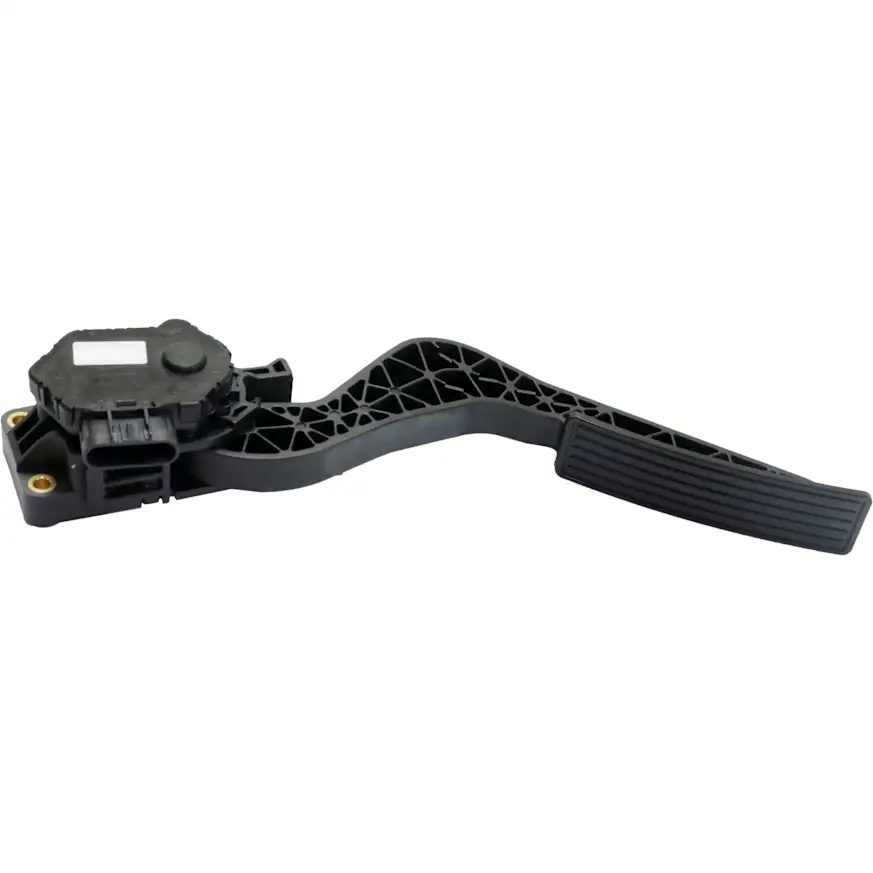
Picture a new sensor sitting on your workbench next to a pedal assembly that won’t accept it. That’s a common mistake with an accelerator pedal position sensor. Some vehicles use a standalone sensor, while others use a full pedal assembly with the sensor built in.
So skip the question of what’s cheapest or what looks close enough. Start with what needs to go in the cart to finish this job once.
The Job in One Sentence
The job is replacing the accelerator pedal position sensor that reports your pedal input to the engine control module.
On drive-by-wire vehicles, no throttle cable links the pedal to the engine. The module reads the sensor signal and commands the throttle, so the replacement has to match its expectations. Don’t confuse it with the throttle position sensor, which reads throttle plate angle.
Many designs use two or three internal sensing tracks. Some are contact-type potentiometers, and others are contactless Hall effect designs. Listings may sell the sensor alone, with the pedal arm, or as a full pedal assembly. That’s why the part name alone isn’t enough to order from.
Choose Your Cart Size
Most shoppers land in one of three lanes. Each one is a legitimate choice, and the biggest cart isn’t automatically the best.
Minimum Viable Repair
Choose this lane if the pedal feels solid, the connector looks clean, and the hardware is intact. Your typical cart is the sensor, or the correct pedal and sensor unit, for your application.
Smart Same Access Refresh
Pick this lane if the pedal pad is worn, the connector shows corrosion, or the hardware looks rusty. Your cart adds a pedal pad, mounting hardware, or a connector pigtail where they’re available for your vehicle. A worn brake pedal pad nearby can join the order too.
High Mileage Reset
Choose this lane if you’re keeping an older vehicle and the pedal pivot feels loose. Your cart is the complete pedal assembly with the sensor, plus a fresh pad, hardware, and a connector pigtail.
What Buyers Commonly Add to the Order
A few small items often decide whether the repair wraps up in one trip.
Assembly Versus Bare Sensor
This is the biggest cart decision. Some vehicles let you replace the sensor alone, while others build it into the pedal. Buyers often assume a sensor listing includes the pedal arm, so confirm what the listing covers.
Pad, Hardware, and Connectors
Pedal pads, nuts, and bolts don’t always ship with the pedal. Check the listing for a pedal pad, and replace corroded hardware. A connector pigtail or terminal repair kit protects the new sensor from a tired harness.
Relearn Requirements
Some vehicles, including certain Nissan models, need a pedal position relearn after installation. Others need nothing. Check your vehicle’s requirement, and have a scan tool ready if it calls for one.
What People Forget Until the Vehicle Is Already Apart
These questions come up as soon as the old unit hits the bench. Run through them before you check out.
- Does the old pedal pad transfer, or does the new unit need its own?
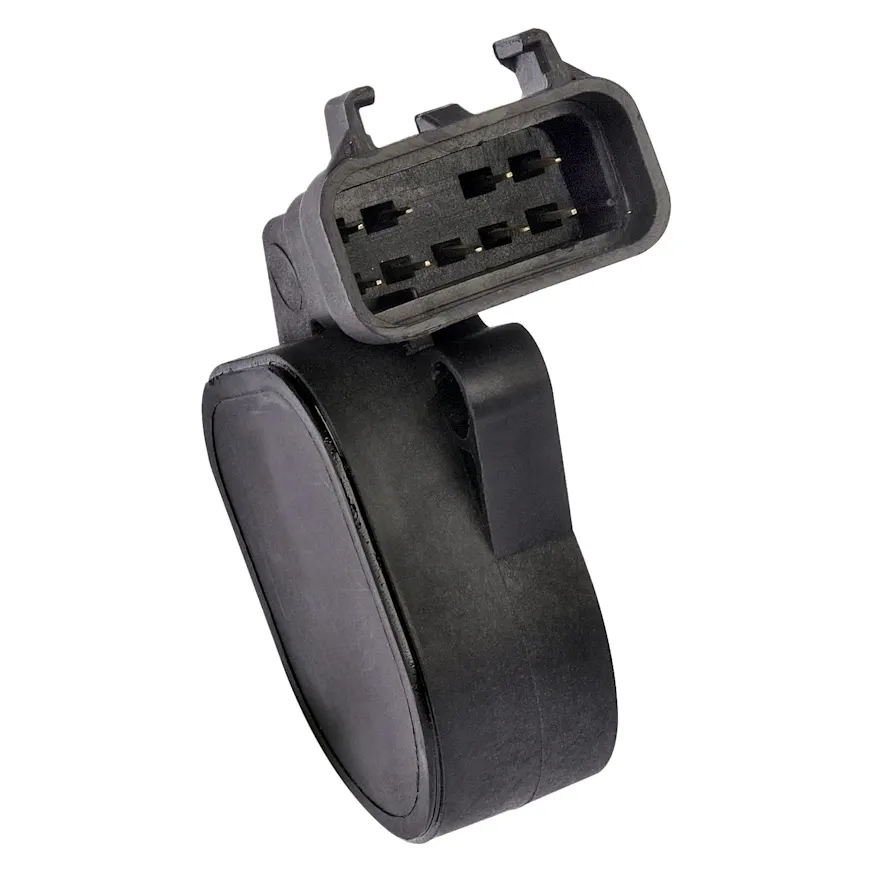
- Do the connector shape and pin count match the old one?
- Can you reuse the mounting hardware?
- Does the application split by engine, transmission, or production date?
- Are the connector terminals clean?
When Replacing Only the Accelerator Pedal Position Sensor Is False Economy
A bare sensor order is a smart choice when the pedal, connector, and hardware are in good shape. In that case, a bigger cart just adds cost. It becomes false economy when a nearby part is the weak link. A loose pad or tired connector can send you back under the dash.
The pedal area is tight, and the dash work is the same for one part or three. When the pedal arm is worn, the full pedal assembly beats repeating the job. Add only what’s visibly worn.

The Fitment Splits That Break Accelerator Pedal Position Sensor Orders
Fitment splits cause most wrong orders. Match each one before you buy.
Assembly Type
Some applications use a bare sensor, a sensor with a pedal arm, or a full pedal assembly. On some older cable vehicles, the sensor mounts on the throttle body or in the engine bay. Ordering the wrong form is the most common mistake.
Mounting Style
Floor-mounted and firewall-mounted pedals aren’t interchangeable. Bracket and pivot geometry often differ, even when the sensor looks identical.
Connector and Pin Count
Housing shape and pin count vary by application. Two connectors can look alike and still carry different circuits. If the key or pin count differs, skip that listing.
Sensor Type and Signal
Contact-type potentiometers and contactless Hall effect sensors send different signals. The engine control module expects a specific one. Depending on application, a mismatch can trigger codes or reduced power.
Engine, Transmission, and Production Date
Some models split by engine, transmission, or production date. Treat any listed VIN or date range as real, since mid-year changes can swap the pedal or connector.
Delivery Day Inspection Checklist
Compare the new part to the old one before you start teardown. A two-minute check can save a full dash removal.
- Connector shape, pin count, and latch style match the old unit.
- Mounting holes and bracket points line up with the original.
- The pedal arm shape and length match, if the listing includes the pedal.
- The listing includes the pedal pad, or you know to transfer the old one.
- Listed hardware and pigtails are actually in the box.
- Housings and terminals arrived undamaged.
Your Order Sheet for an Accelerator Pedal Position Sensor
Work through these steps in order, and you’ll order once.
Confirm the Vehicle and Assembly Type
Enter your year, make, model, engine, and transmission, and check for production date notes. Then decide between a bare sensor, a sensor with a pedal arm, or a full pedal assembly.
Confirm What the Listing Includes
Look for the pedal pad, hardware, and connector details. Don’t assume anything comes bundled.
Add Adjacent Items and Bench Check
Add a pad, hardware, or pigtail if the old ones look worn. Then compare the connector, mounting points, and pedal geometry against the old part before teardown.
Choose Your Ownership Logic
Pick the smallest cart if everything else is healthy, a same-access refresh if you see wear, or the full assembly for long-term ownership. Check whether your vehicle needs a relearn before you start.
The Smart Way to Shop Accelerator Pedal Position Sensors
Shop by repair scope, not by thumbnail. Quality aftermarket sensors match the original’s connector, mounting style, and signal type. That makes them a dependable way to finish the job once.
The cheapest-looking order saves money only if it arrives complete. The right order includes the correct form of the part and the small items that protect it. Match your vehicle, application, and ownership goals to the right accelerator pedal position sensor.
Keep Reading: Related Posts




Any information provided on this Website is for informational purposes only and is not intended to replace consultation with a professional mechanic. The accuracy and timeliness of the information may change from the time of publication.