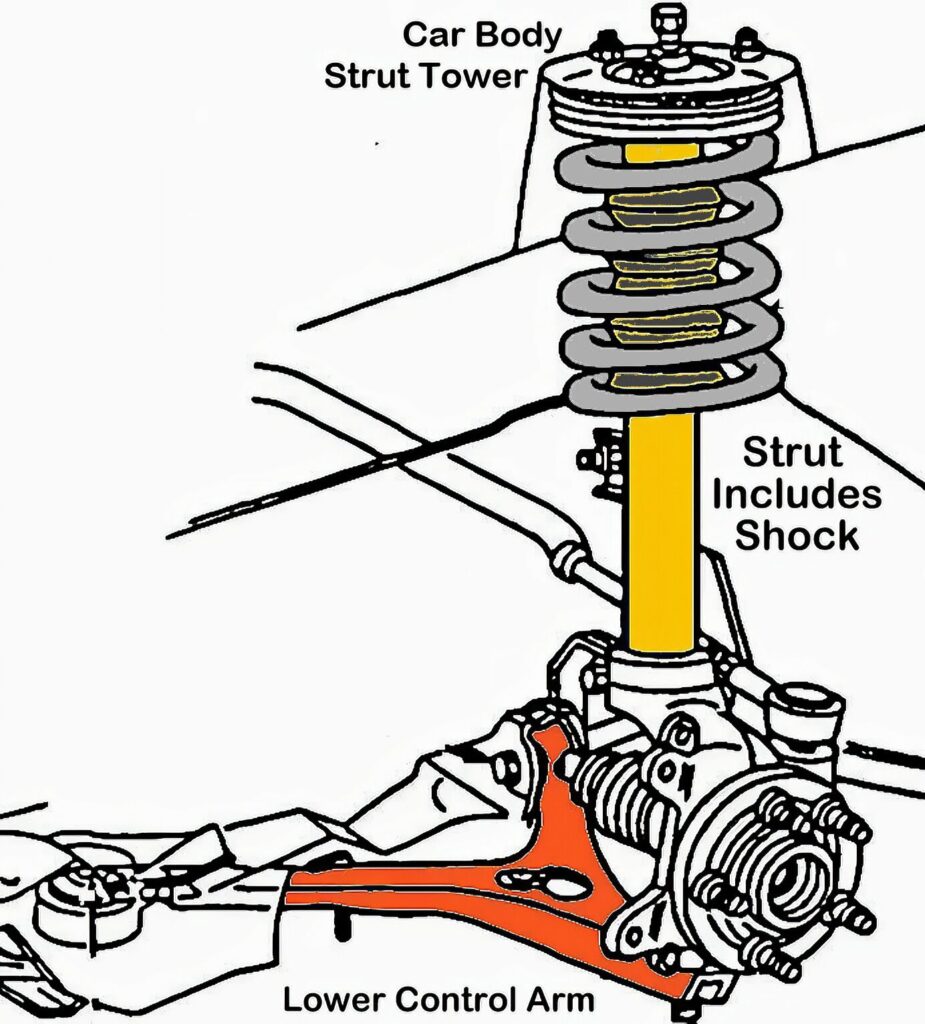
A car strut is a long, tube-shaped part that looks like a thick metal stick. Most vehicle struts have a spring wrapped around them to provide better support and absorb more shocks.
Most car struts combine a shock absorber and a coil spring. The top of the strut has a flat, round mount that’s bolted to the vehicle’s body and receives its weight. Meanwhile, the bottom part of the strut connects to the steering knuckle or wheel hub.
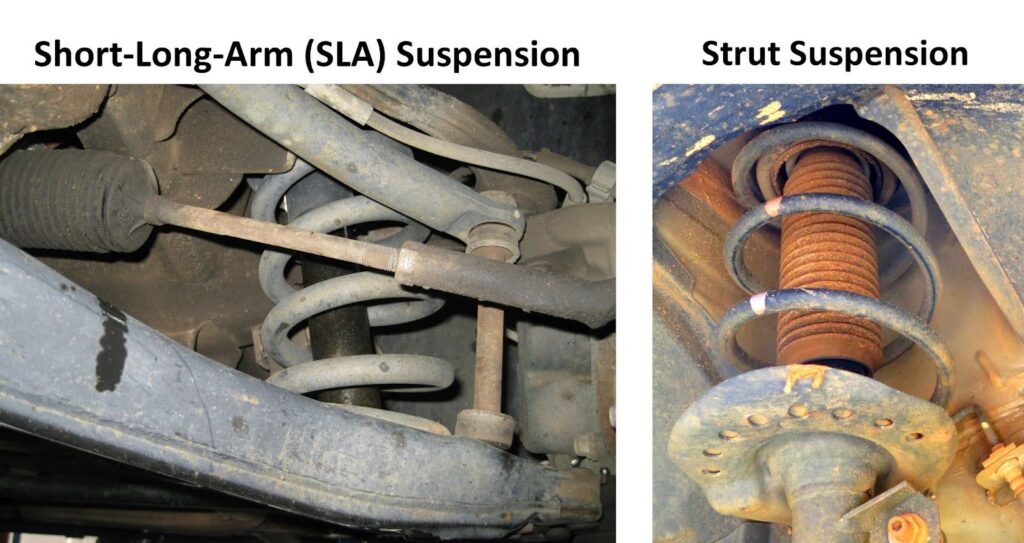
You might think a shock absorber and strut are the same components, but they have key differences that set them apart.
Shock absorbers provide spring and suspension movement while dampening the movement into heat. They’re composed of a fluid-filled tube and a piston that helps dampen vibrations.

Pro Tips are nuggets of information direct from ASE-certified automobile technicians working with CarParts.com, which may include unique, personal insights based on their years of experience working in the automotive industry. These can help you make more informed decisions about your car.
Pro Tip: Standard shock absorbers are different from the spring, which is a separate part that supports the weight of the car. Without shock damping, the vehicle will just keep on bouncing after it goes over a bump.
Warning: Don’t try to disassemble a strut without the proper tools and training. The spring is under extreme tension and can cause serious injury or even be fatal if released suddenly.

Tips On Accessing a Car Strut
The car strut is typically found between the vehicle’s wheel hub and wheel well. A wheel’s strut is readily exposed. You just need to peek into the gap between the wheel and the fender.
You can remove the entire strut by disconnecting the assembly from the knuckle and removing the three nuts from the studs that pass through the strut tower, which is typically accessible when you open the hood.
Warning: Do not remove the center nut because it will release the spring.
If you intend to remove the strut, you must lift your vehicle with a jack and jack stands, remove the corresponding wheel, and unscrew the bolts that keep the strut firmly in place. These bolts might be corroded and seized, given their exposure to the elements. You’ll need penetrating fluid to loosen them.
You’ll also need to disconnect other steering and suspension components from the wheel hub, like the sway bars and tie rod ends.
Keep Reading: Related Posts




Any information provided on this Website is for informational purposes only and is not intended to replace consultation with a professional mechanic. The accuracy and timeliness of the information may change from the time of publication.