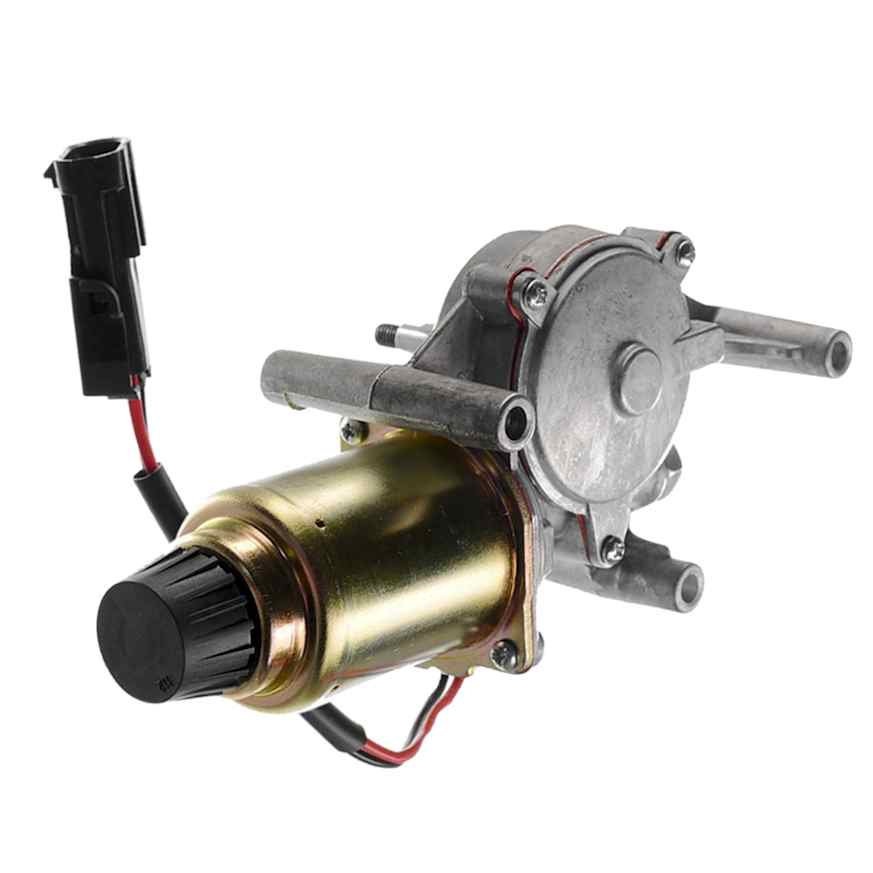
A headlight motor is the small electric actuator that physically moves a headlight assembly or its internal reflector. Depending on the vehicle, it raises pop-up housings out of the fender, tilts the beam up or down to compensate for vehicle load, or swivels the projector left and right when the steering wheel turns. So when buyers ask what is a headlight motor, the short answer is: it is the mechanism that makes it possible to move the headlights on their own.
It is a self-contained gearmotor with a worm drive, a set of plastic or brass gears, a position sensor in newer vehicles, and a two- or four-wire connector. When the gears strip or the motor windings fail, the headlight stops moving correctly, and that single failure can pull a car off the road in some states because aim and height are part of vehicle inspection.
A Brief History of Hidden and Pop-Up Headlights
The 1936 Cord 810, designed by Gordon Buehrig and introduced at the New York Auto Show in November 1935, is widely credited as the first production vehicle with hidden headlights. Buehrig originally wanted electric motors to flip the lights open, but cost restrictions led to a mechanical system. The driver manually cranked each headlight open and closed using separate handles beneath the dashboard.
One of the earliest powered examples was Harley Earl’s 1938 Buick Y-Job concept car, which used power-operated hidden headlamps.
The 1942 DeSoto’s “Airfoil” headlights were another early production application. A dashboard handle operated a push-pull rod and cross-shaft that opened the sheet-metal covers while the sealed-beam lamps remained stationary. U.S. passenger-car production stopped soon afterward during World War II.
Hidden headlights became far more common in the 1960s, with cars such as the 1963 Corvette Sting Ray and 1965 Buick Riviera helping popularize the look. Some late-1960s Ford and Mercury systems used vacuum-operated actuators to open and close headlight doors.
Inside the Gearmotor: What a Headlight Motor Actually Does
Inside the housing you have a permanent magnet DC motor coupled to a reduction gearset. Voltage from the body control module or a dedicated relay reverses polarity to drive the output shaft in either direction. The shaft connects to a linkage, a threaded rod, or a worm gear, depending on what the headlight needs to do.
Three jobs cover almost every application:
- Retraction. On pop-up cars like the Mazda Miata NA, the C4 Corvette, and the third-gen Firebird, a single motor per side rotates the headlight bucket through roughly 90 degrees.
- Vertical aim. On most modern sedans and crossovers, a headlight leveling motor pushes the reflector up or down a few degrees to keep the cutoff line steady when the trunk is loaded or the suspension squats.
- Adaptive steering. On AFS-equipped cars, a swivel motor turns the projector horizontally based on steering angle and vehicle speed.
Note: The headlight actuator handles motion only. If your bulbs are dim, your low beams are dead, or your DRLs flicker, the motor is almost never the cause. Chase the bulb, the fuse, and the ground first.
Failure Modes Every Owner Should Learn to Spot
Knowing how these units die helps you avoid buying the wrong replacement. The same symptom can come from three different parts.
Common Pop-Up Headlight Motor Control Designs
[RED]Not all pop-up headlight systems stop the motor in the same way. Two common approaches are shown below, but wiring and control logic vary by application.[/RED]
| Feature | Internal limit-switch designs | Current-sensing designs |
| Stop detection | Copper tracks or contacts inside the gearbox indicate the park position or interrupt the circuit when the mechanism reaches its stop. | The control module detects the rise in motor current when the mechanism reaches a mechanical stop. |
| Typical wiring | Often three to five wires for power, ground, and park or position circuits. | Simple reversible-motor layouts often use two motor wires, with the module reversing polarity. Other systems can have additional sensor wiring. |
| Common failure | Contacts can become dirty or burned, and conductive tracks can wear or become damaged. | Worn gears, a seized linkage, or failed plastic torque bushings in some GM-style motors can prevent normal operation. |
- Stripped output gear. The most common failure on pop-up systems. You hear a grinding or whirring sound while the headlight stays put. Brass replacements last longer than the original nylon gears, but they can still chew up if the metal motor housing has loosened from the plastic gear case.
- Burned-out windings. The motor draws current but does not move. Often happens on cars that sit for months because seals dry out and bearings seize before the owner runs the lights again.
- Failed limit switch. The motor runs past its stop, slams into the mechanical end, and either grinds or pops the gear. On Nissan 300ZX and similar designs, this often points to the timing control module rather than the motor itself.
- Corroded connector. Salt, road spray, and condensation eat the pins. The motor tests fine on the bench but does nothing in the car. Cleaning and dielectric grease fix this for the cost of nothing.
- Sticky linkage. The pivot bushings on pop-up cars dry out, and the motor strains against the binding until something breaks. Lubricating the pivots before replacing the motor saves a lot of money.
Warning: A grinding sound that lasts more than two seconds will eat a brand new gear in a single cycle. Stop using the headlights, raise them manually, and diagnose before turning the switch again.

Pinpointing the Fault Before You Order Parts
Before you spend money, narrow it down. The diagnostic order matters because the cheap stuff fails far more often than the motor itself.
- Pull the headlight fuse and the dedicated retractor or leveling fuse. Inspect both. A blown fuse points to a short, not a worn motor.
- Swap the headlight relay with an identical relay from a noncritical circuit, provided the pin layout and current rating match. A proper bench procedure can also help you test a relay.
- Listen at the headlight while a helper toggles the switch. A click followed by silence usually means the motor is dead. A grind means gears. No sound at all means power is not reaching the unit.
- Probe the motor connector with a multimeter. You should see battery voltage on one wire and ground on the other while the switch is active, with the polarity flipping when the headlight reverses direction.
- If voltage is present and the motor does not move, the unit has failed. If voltage is absent, the problem is upstream in the headlight switch, the body control module, or the harness.
Tip: On vehicles with adaptive front lighting, scan the body control module for codes before touching anything. A failed height sensor or steering angle sensor will set the headlight system into a default position and mimic a dead motor.
Finding the Right Pop-Up Headlight Motor for Your Car
Headlight motors are not universal. Two cars from the same model year can take different parts based on trim, lighting package, or production date. Get this wrong and you will spend a Saturday returning the box.
- VIN match. Buy by VIN whenever the seller offers it. Halogen and HID trims often use different motors because HID housings are heavier.
- Side specific. Driver and passenger units are mirrored on most pop-up cars. Confirm the part number for your side rather than assuming they swap.
- Connector style. Two-pin reversible motors and four-pin motors with internal limit switches are not interchangeable. Photograph your old connector before ordering.
- Mounting bracket. Aftermarket actuators sometimes ship without the bracket. If your old bracket is rusted, factor a separate bracket or a full headlight assembly purchase into the budget.
- Country of original sale. European-spec leveling motors on imported cars use different control logic than US-spec units. Match the market your car was sold in.
Why Should You Consider an Aftermarket Headlight Motor?
Steer clear of NOS (new old stock) motors that have been sitting on a shelf for fifteen years. The grease inside hardens, the rubber seals fail, and you will replace the part again within a year. A current-production aftermarket headlight motor from a trusted source like CarParts.com outlasts a shelf-aged OEM almost every time.
How to Install a Replacement Headlight Motor the Right Way
Most jobs take between thirty minutes and two hours. Pop-up systems run longer because access often requires removing the headlight bezel, the bucket, or the fender liner. The same general approach applies to a full headlight assembly swap if your old housing is also damaged.
1. Disconnect the negative battery terminal. Headlight motors carry full battery voltage, and a slipped probe can short the body control module.
2. Manually rotate the old motor to the up position using the override knob if your car has one. This relieves spring tension on the linkage.
3. Unplug the connector and inspect the pins. Replace the pigtail if you see green corrosion.
4. Remove the mounting bolts. On many pop-up cars there are three, and the lower one is hidden behind the headlight bucket.
5. Transfer the bracket and any rubber isolators from the old motor to the new one. Skipping isolators causes vibration that strips gears in months.
6. Bolt the new motor in place, plug it in, and reconnect the battery.
7. Cycle the headlights ten times before closing everything up. A defective new motor is rare but not impossible, and you want to catch it before you reinstall the bezel. Once the motor is confirmed good, finish the job by checking headlight aim against a wall.
Tip: Lubricate the linkage pivots with white lithium grease while you have access. Dry pivots are the single most common reason a fresh motor fails inside the first year.
Weighing Repair Cost Against Junkyard Pulls and Full-Assembly Swaps
On an older pop-up-headlight vehicle, a used motor from a salvage car can cost less than a new replacement. However, its age, internal wear, storage history, and remaining service life might be unknown. Before choosing a used part over a new aftermarket unit, compare the total price, verified fitment, condition, and warranty.
Current replacement-motor listings can start below $40 and rise into the hundreds, depending on the vehicle, brand, side, and whether the part is sold individually or as a pair. Labor commonly ranges from one to two hours per side, but difficult access, damaged fasteners, or additional wiring repairs can increase the total.
If both headlights stop moving at the same time, inspect shared power supplies, grounds, fuses, control circuits, and a possible bad headlight relay before ordering two motors. If only one side fails and both motors are the same age, inspect the other side, but replace both only when similar wear, overlapping labor, or paired-part pricing makes it worthwhile.
Keep Reading: Related Posts



Any information provided on this Website is for informational purposes only and is not intended to replace consultation with a professional mechanic. The accuracy and timeliness of the information may change from the time of publication.