A tie rod assembly is the linkage that connects your car’s steering rack to the steering knuckle at each front wheel, turning the motion of your vehicle’s steering wheel into an actual change in wheel direction. Every front wheel has its own tie rod assembly, built from an inner tie rod and an outer tie rod end joined by a threaded adjustment sleeve that sets toe angle. If a tie rod assembly wears out or breaks, you’ll lose direct steering control on that wheel, and your vehicle’s alignment starts drifting no matter how often you get it corrected.
Key Takeaways
- A tie rod assembly links the steering rack to the steering knuckle on each front wheel.
- It’s made up of an inner tie rod and an outer tie rod end, connected by an adjustable sleeve.
- Worn tie rods cause uneven tire wear, a loose or wandering steering wheel, and clunking noises over bumps.
- Tie rods don’t follow a strict mileage schedule. Road conditions, potholes, and driving habits determine how long they actually last.
- A failing tie rod is a steering safety concern, so have it inspected as soon as you notice symptoms.
What Is a Tie Rod?
A tie rod is a steering component that links your vehicle’s steering gear to the steering knuckle, letting the front wheels pivot left and right when you turn the wheel. You’ll find tie rods on both rack-and-pinion systems and older recirculating-ball setups. Every time you turn the steering wheel, the tie rods transmit this motion out to the wheels, so they’re working on nearly every drive you take. Because of this constant use, tie rods are one of the first steering parts to show wear when a vehicle’s alignment or handling starts to feel off.
How Tie Rods Work
In a rack-and-pinion system, turning the steering wheel rotates a pinion gear, which slides the steering rack side to side inside its housing. That rack motion pushes or pulls the inner tie rods, which in turn move the outer tie rod ends and pivot the steering knuckles, turning the wheels. Recirculating-ball systems work a little differently. Instead of a rack, they use a center link and pitman arm to move the tie rods, but the end result is the same: the tie rods carry steering input out to the wheels and let them turn smoothly and predictably.
Inner Tie Rod vs. Outer Tie Rod
Each tie rod assembly has two halves that handle different jobs, and both need to work together for accurate steering.
What Does the Inner Tie Rod Connect To?
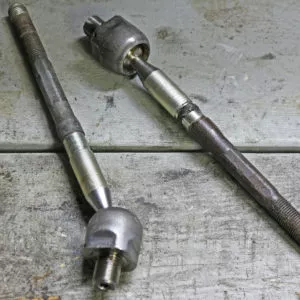
The inner tie rod threads into the steering rack (or the center link on a recirculating-ball system) on one end, and it connects to the outer tie rod end on the other through an adjustable sleeve. This sleeve is what technicians turn to set toe alignment, so the inner tie rod plays a direct role in how your vehicle’s front wheels track down the road.
What Does the Outer Tie Rod Connect To?
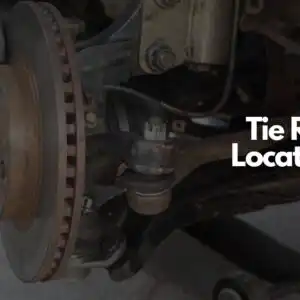
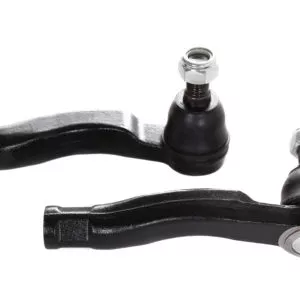
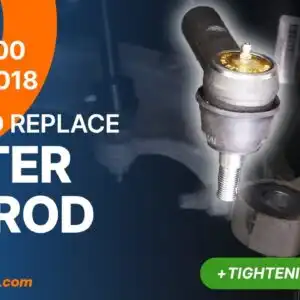
The outer tie rod end connects to the steering knuckle through a ball joint. This ball joint lets the wheel pivot side to side for steering while still moving up and down with the suspension as you drive over bumps and dips.
Signs of a Bad Tie Rod
Watch for these common warning signs:
- Uneven or cupped tire wear, especially on the inside or outside edge of one front tire.
- Loose, wandering, or “play” in the steering wheel, where the wheel feels vague before the tires respond.
- Clunking or rattling noises from the front end, especially over bumps or when turning at low speed.
- Vibration in the steering wheel, which often gets worse as speed increases.
- Alignment that won’t hold, even shortly after a fresh alignment service.
Any one of these on its own doesn’t confirm a bad tie rod, but two or more together are a strong signal it’s time for an inspection.

How Long Do Tie Rods Last?
Tie rods don’t have a fixed replacement interval. Some vehicles run the original tie rods for well over 100,000 miles, while others need attention much sooner. Rough roads, frequent pothole impacts, aggressive driving, and corrosion from road salt all speed up wear on ball joints inside the tie rod ends. Regular alignment checks are a good way to catch tie rod wear early, since a technician measuring toe angle will often spot excess play before it turns into a noticeable symptom.
Tie Rod Replacement: What To Expect
A technician typically starts by checking for play in each tie rod end by hand, with the wheel off the ground or the suspension unloaded. If a tie rod end shows excess movement, they’ll measure the current toe setting before removing the worn part, so the new one can be installed at roughly the same position. After the replacement, an alignment is nonnegotiable. Tie rod installation changes toe angle even when a technician tries to match the old setting closely, and skipping the alignment afterward leads right back to uneven tire wear.
Because tie rods are part of your vehicle’s steering system, a failure while driving can mean a sudden loss of control over that wheel. It’s not a part to put off once you’ve noticed real symptoms. If you suspect a bad tie rod, get it inspected before you keep driving on it regularly, particularly at highway speeds.
FAQs
Driving short distances at low speed with a slightly worn tie rod is common, but it’s not something to rely on. A tie rod that fails completely can cause a sudden and dangerous loss of steering control on that wheel, so treat any of the warning signs here as a reason to get it checked soon.
Cost varies by vehicle and whether you’re replacing just the outer tie rod end or the full assembly, plus the follow-up alignment. Parts alone are usually inexpensive, while labor and the required alignment make up most of the total bill.
Yes. The inner tie rod’s adjustment sleeve is what sets toe angle, so any wear or looseness in the tie rod directly changes how your vehicle’s front wheels track and wear.
Normal wear inside the ball joints is the most common cause, sped up by potholes, curb impacts, aggressive driving, and road salt corrosion. A worn boot that lets dirt and moisture into the joint can also accelerate failure.
Not always. Many shops replace just the worn side, usually the outer tie rod end since it sees more direct impact, but it’s common practice to inspect both when one shows wear.
Keep Your Steering Sharp
A worn tie rod rarely fixes itself, and the symptoms tend to get more noticeable the longer you wait. Shop CarParts.com for tie rod ends and full assemblies that fit your vehicle’s specific make and model, backed by fitment guarantees and fast shipping. Whether you’re tackling the replacement yourself or picking up parts for your shop, CarParts.com makes it easy to get your ride’s steering back to feeling tight and predictable.
Keep Reading: Related Posts


Any information provided on this Website is for informational purposes only and is not intended to replace consultation with a professional mechanic. The accuracy and timeliness of the information may change from the time of publication.