A wheel bearing problem usually brings noise along with the vibration, while a tire problem often doesn’t. The bearing might be the problem if you hear a hum or growl that changes when you turn, or the wheel rocks when you grab it at the top and bottom. If the shaking comes in at certain speeds without any growl, shows up after a muddy ride, or follows a pressure change, check the tire and wheel. Lift the wheel on your ATV, UTV, dirt bike, or street bike, and you’ll usually know after a few minutes which part needs to be replaced.
Key Takeaways
- Tire and wheel issues usually cause vibration without grinding or growling.
- Bearing noise builds with speed and changes as the load shifts in turns.
- Rocking a lifted wheel at 12 and 6 o’clock checks for bearing play.
- Packed mud inside a rim can mimic a failing part, so clean the wheels first.
- Stop riding and inspect your machine if you find heavy play, a hot hub, or a visible wobble.
Why Wheel Bearing and Tire Vibration Feel Alike
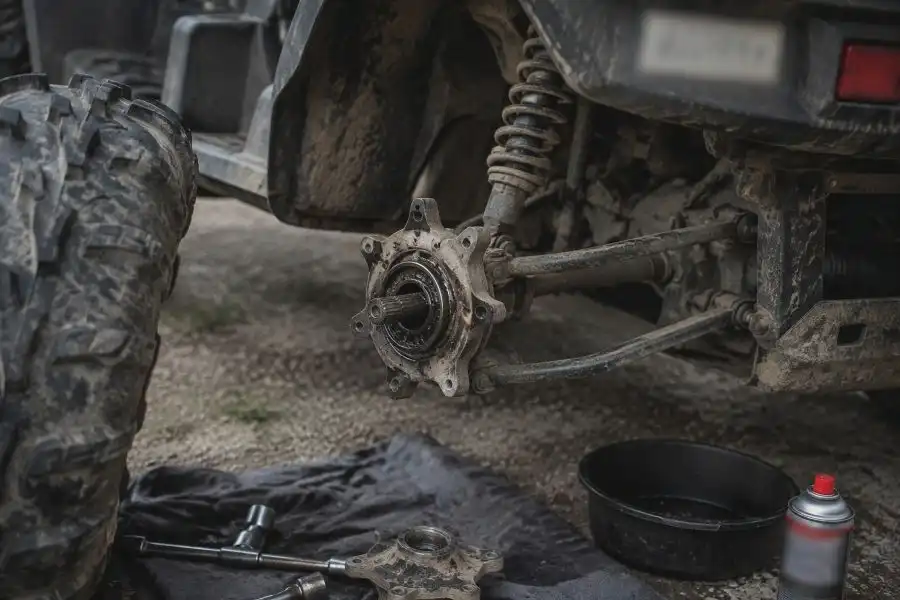
Both problems start at the same corner, so they send vibration through the same path into the bars or seat. Once water and grit get past a bearing seal, the grease breaks down, the races pit, and the bearing stops rolling cleanly. An unbalanced tire creates a pulse that travels the same route. But problematic tires only shake, while problematic bearings shake, make noise, and react to load.
Tire and Wheel Problems That Cause Vibration
Tire and wheel problems usually produce a rhythmic shake that appears at certain speeds and doesn’t come with a growl.
Packed Mud and Wheel Imbalance
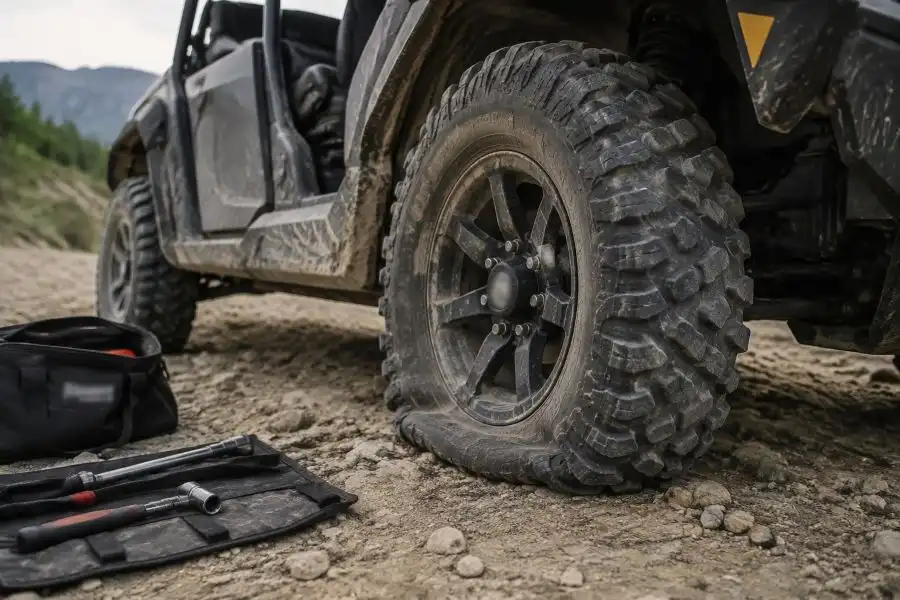
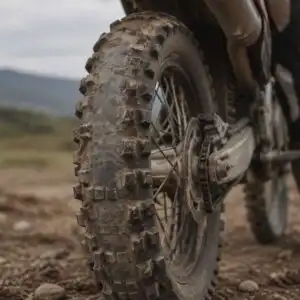
Off-road, mud, clay, or ice packed inside the rim can quickly throw a wheel out of balance. A small clump on one side can make a side-by-side shake at trail speed. If the shake started after a wet ride, wash every wheel first.
Low or Uneven Tire Pressure
ATV and UTV tires run low pressure, so a small difference between sides changes how your machine tracks. Check every tire with a low-pressure gauge and set it to the spec in your owner’s manual.
Tire Damage and Bent Rims
Spin each wheel and watch the tread and rim edge. A hop, side-to-side wobble, chunked lugs, or a sidewall bulge points to the tire. Cupped wear on a motorcycle front tire can feel like a bearing problem on the road, but the wheel still spins smoothly on the stand.
Loose Lug Nuts
Loose lug nuts let the wheel shift on the hub, which causes a wobble or clunk. Torque them to spec and recheck after the first ride.
Wheel Bearing Problems That Cause Vibration
You’ll usually hear the sound produced by a worn wheel bearing before you feel its effect. The common signs of a bad wheel bearing are a hum, growl, or grind that builds with speed, steering that feels loose, and a wheel that moves on the hub.
Noise That Changes When You Turn
Bearing noise changes with load. In a turn, weight shifts to the outside wheels, so a bad left-side bearing often gets louder during a right-hand turn. On a motorcycle, the noise might change as you lean. Aggressive tread hums too, but tread noise usually stays steady through turns.
Wheel Play and Vague Steering
As the bearing wears, the wheel starts moving on the hub. You’ll feel it as wander or a shimmy at the bars that grows over rough ground. This play also wears the tire unevenly, so a bearing problem can leave you with a tire problem too.

Heat and Grease at the Hub
A hub that’s clearly hotter than the others after a ride points to a binding bearing. Hold your hand near the hub, not on it, since it can burn. Grease weeping past the seal tells you water has likely gotten in.
How To Tell Which Part Is Causing It
A test ride plus two hands-on checks sorts out most cases.
Start With a Test Ride
On a safe, open surface, note the speed where the vibration starts and whether the noise changes in turns. Vibration that only shows up under braking points to warped rotors instead. If it changes with throttle, look at the CV axles and U-joints.
Check for Play at the Wheel
Lift the corner so the tire’s off the ground, and support the machine on a stand or jack stands. Grab the tire at 12 and 6 o’clock and push and pull. A clunk or movement points to bearing play or a loose axle nut. Then grab it at 3 and 9 o’clock. Movement there usually points to faulty tie rod ends.
Spin the Wheel by Hand
Spin the wheel with your other hand on the knuckle or fork leg. A rough, gritty, or notchy feel points to the bearing. A smooth, quiet spin with a visible hop or wobble points to the tire or rim. If both checks come up clean, wash the wheels, set pressures, and have the tires balanced before you replace anything.
Park your machine if you find heavy play, grinding, or a hot hub. A badly worn bearing can overheat, damage the spindle, and in severe cases let the wheel wobble loose. If you aren’t sure what you’re feeling, have a qualified shop inspect it before the next ride.
When To Replace a Wheel Bearing
Replace the wheel bearing once you confirm play, roughness, or noise from that corner. Wheel bearings symptoms tend to show up sooner on machines that see deep water crossings, thick mud, or a pressure washer aimed at the hub seals, because water pushes past the seal and washes out the grease.
On most ATVs and UTVs, the bearing presses into the knuckle or hub, so plan for a press or bearing driver set. Buy a kit with new seals for your machine’s exact year, make, and model, and use a new cotter pin when you torque the axle nut.
FAQs
Yes. Aggressive mud tires and cupped motorcycle tires can hum at speed. Tread noise usually stays steady in turns, though, and the wheel spins quietly by hand.
Not for long. A short, slow ride to the trailer is one thing, but continued riding risks heat, hub damage, and in severe cases a loose wheel.
Imbalance often shows up in a narrow speed range and smooths out on either side of it. Packed mud, a lost wheel weight, or a bent rim are common causes.
Both cause play at 12 and 6 o’clock. Check the axle nut torque first. If the play stays after you torque it to spec, the bearing’s worn.
Once you know whether the shake starts at the tire or the hub, you’ll know which part to replace. When buying online, match the bearing kit, seals, or tires to your machine’s exact year, make, and model, and grab parts for the truck and trailer that get you to the trailhead while you’re at it. Shop the JC Whitney Performance Hub for parts to get your machine running smoothly again.
Keep Reading: Related Posts



Any information provided on this Website is for informational purposes only and is not intended to replace consultation with a professional mechanic. The accuracy and timeliness of the information may change from the time of publication.