The battery isn’t the problem. Riders who go through two or three in a season are usually chasing a symptom while the real fault sits somewhere in the charging circuit or a connection they haven’t touched. A decent Absorbent Glass Mat (AGM) battery in a machine with a working stator and clean grounds can last for three to five years. So when a fresh one is flat by week three, stop buying batteries and start measuring voltage. Two readings will narrow it down to a short list.
Key Takeaways
- A new battery dying quickly means the machine has a fault, not the parts counter.
- Undercharging from a weak stator or regulator kills batteries slowly, which is why people miss it.
- Something staying powered with the key off will flatten a parked side-by-side in days.
- Corrosion at the posts and a loose ground strap add resistance, and the machine reads as if the battery is weak
- Resting voltage and charging voltage split the problem in half.
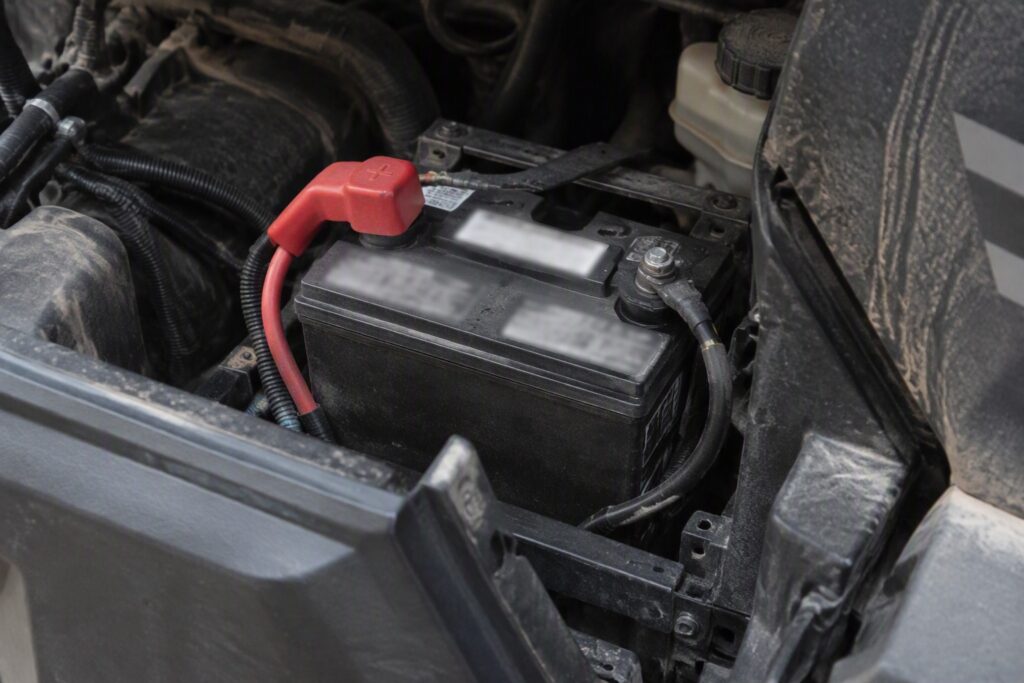
Start by Ruling Out the Battery
Put it on a smart charger until it’s full. Pull it off, leave it overnight, and read it in the morning.
A 12-volt AGM at full charge sits somewhere around 12.6 to 12.8 volts at rest. Drop to 12.4 and you’re at roughly three-quarters. At 12.0 or under, it’s been down long enough that sulfation has probably taken hold, and while some smart chargers have a desulfation mode that occasionally brings one back, don’t count on it. If it can’t hold a charge overnight with nothing connected to it, the battery’s finished and nothing you do to the machine changes that.
Does the battery hold its charge overnight? Then something on the machine is draining the battery.
(Assumption: these numbers are for lead-acid and AGM. Lithium sits higher at rest, usually in the 13.2 to 13.4 range, and it also hides a dying cell better, so go by your manufacturer’s spec rather than these figures.)
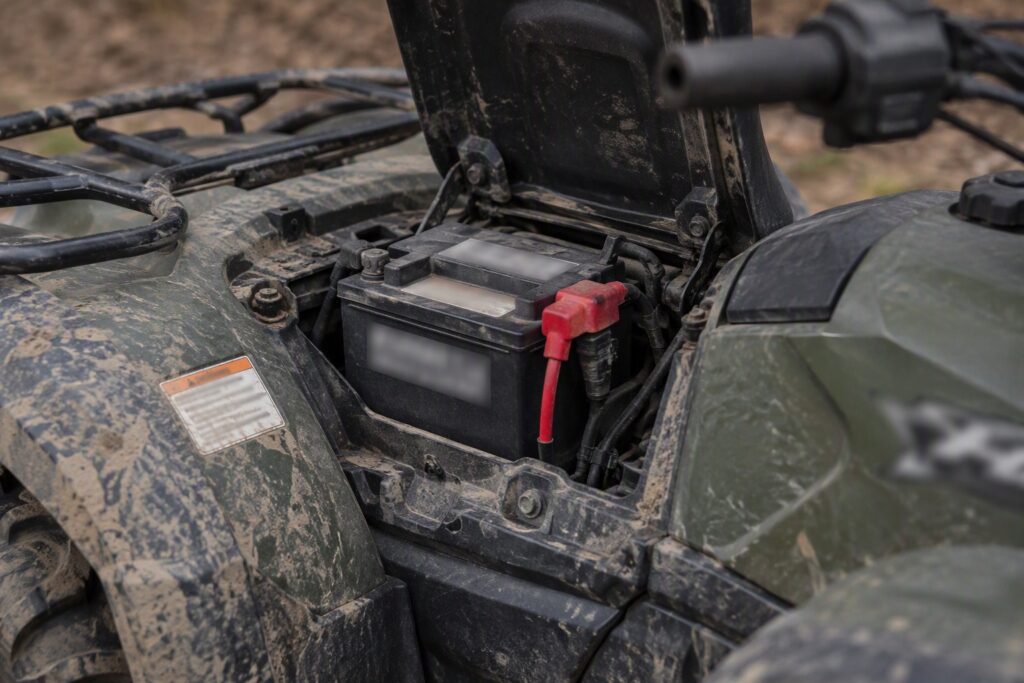
The Real Causes of Repeat Battery Failure
A Failing Stator or Voltage Regulator
This is the cause of most repeat failures. The stator makes the power, the regulator turns it into something the battery can take, and when either quits, your battery is quietly running the entire machine by itself until there’s nothing left. Total failure announces itself but partial output doesn’t, and that’s the version that eats batteries for a whole season before you can figure out what’s wrong.
Before you order a stator, look at the plug between the two. In a lot of machines it’s a three-prong connector tucked near the parking brake or up under the seat, and it can get very hot. Heat plus resistance melts the housing, sometimes fusing the pins into one lump. Some owners cut the whole thing out and solder the wires straight through. If you drop in a new regulator without dealing with a burnt connector, expect to buy another regulator.
Something Drawing Power With the Key Off
Check your machine’s winch contactors, stereo head units, GPS, alarm modules, light controllers, and the engine control unit (ECU), which keeps a small memory load alive. A few milliamps is normal and expected, but half an amp will put you on a tender permanently.
The usual culprit is an accessory wired straight to the battery post. A relay that stays closed after the key is off keeps its circuit live, and the only way to catch it is with the meter.
Terminals, Grounds, and Cables
This is the most affordable repair. Resistance at a connection can mimic a weak battery. The starter labors, the charging system can’t push a full charge past the corrosion, and the meter readings can wander.
Scrape the posts to bright metal, hit the ground strap where it bolts to the frame or engine case, and snug everything down. It only takes around 10 minutes.

Short Rides and Long Storage
Cranking pulls a serious slug of current. Riding around the yard for five minutes doesn’t replace it, so each start takes the battery a little lower than the last one, and eventually it doesn’t come back.
Improper winter storage can also cause problems. A battery left from October through March with nothing connected can self-discharge past recovery, so make sure to keep a tender in your garage.
Accessories the Charging System Can’t Feed
Your machine’s stator has a ceiling. Run a winch, a light bar, heated grips, and a stereo at the same time and you can pull more than the machine makes, at which point the battery covers the shortfall until it’s empty. Total what your accessories draw and check it against your machine’s rated output before adding anything else.
Heat, Cold, and Plain Old Age
Heat speeds up the chemistry that can wear a battery out. Cold cuts cranking power right when the engine is stiffest and needs the most. Meanwhile, trail vibration works the internals loose over time. If your battery the already four year old, it must also struggle to hold a full charge.
Testing the System in Your Garage
Turn the key off, make sure that your machine sat overnight, and put a meter on the posts. That’s your resting number.
Now fire your machine up and take another reading with the engine at roughly 3,000 rpm. Somewhere in the 13.5 to 14.5 range means the charging system is doing its job. If the reading sits at battery voltage or falls, nothing’s going in. Above 15 volts and the regulator has lost control, which boils electrolyte and will quickly ruin a battery.
For a draw test, switch the meter to current, pull the negative cable, and run the meter in series between that cable and the post. The number should be tiny if everything’s off. Pull fuses one by one and wait for it to drop. Whichever circuit drops it is the one you should check.
A load test answers a different question, which is whether the battery can actually deliver cranking amps when asked. Most parts counters run one for free. Keep sparks away from the vents while you work, and if you see melted connectors, scorched insulation, or that hot-plastic smell, get the charging harness looked at before your next ride.
Habits That Make Batteries Last
Here are some tips for sensible ATV battery maintenance: Tender on anything sitting for more than two weeks. Clean the terminals twice per season. Check the charging voltage whenever you change the oil. If you’ve added accessories, run them through a switched, fused circuit rather than off the battery post.
Buying a replacement? Match the case size and terminal layout to the tray first. Buy an AGM battery if you want a sealed and vibration-tolerant battery. Go for lithium if the weight savings matter more than cold-weather behavior.
FAQs
Three to five years with normal use and a tender in the off-season. But rough trail vibration, heat, and repeated deep discharges can quickly shorten this interval.
No, but a shorted regulator or rectifier can. If a battery’s dying overnight with the key off, run the draw test first.
The issue is most probably undercharging or a draw. If you put a new battery into a machine with a bad regulator, it will also fail.
Lights that dim or flicker, a charging voltage that’s low or over 15 volts, a regulator body too hot to touch, and batteries that either stay flat or swell.
It keeps a good one topped off, and a smart charger sometimes recovers a mildly sulfated battery, but it won’t do anything for a shorted cell.
Find the fault once and stop buying batteries every year. Whether you need the battery, the tender, a regulator, or the connector and wire to do the repair properly, the JC Whitney Performance Hub fits parts to your specific machine. One garage, one source, for the rig that hauls and the machine it hauls.
Keep Reading: Related Posts







Any information provided on this Website is for informational purposes only and is not intended to replace consultation with a professional mechanic. The accuracy and timeliness of the information may change from the time of publication.