Need car parts? Select your vehicle
Reading Time: 2 minutes
Summary
  • CV boots are located on the inner and outer ends of the drive shafts, where they connect the transmission to the wheels. They are common on front-wheel-drive axles and on rear shafts in all-wheel drive and some rear-wheel-drive vehicles.
  • They protect the CV joints by sealing out dirt, water, and debris. They preserve smooth, constant-velocity rotation and are usually made of flexible, durable rubber. 
  • They are accessible only from the undercarriage and require lifting and securing the vehicle. Inspection or replacement typically involves disconnecting the spindle and strut, removing the axle nut, and using a puller to free the splined joint; a torn boot often leads to replacing the entire CV axle.

The CV boots are typically located on the ends of a vehicle’s drive shaft/axles. They’re on both the inner and outer drive shafts, connecting the transmission to the wheels.
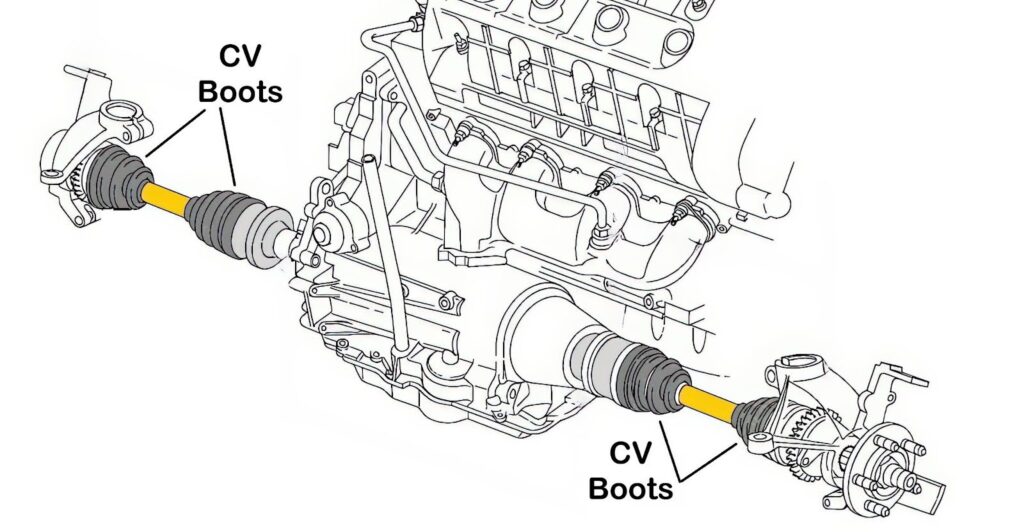
cv boots diagram
CV boots on the inner and outer ends of the drive axles, sealing the CV joints between the transmission and wheel hubs. | Image Source: Richard McCuistian

CV boots are often found on front-wheel-drive axle shafts and rear-wheel shafts in all-wheel drive and some rear-wheel drive vehicles.

See also  A Beginner’s Guide to CV Boot Replacement

The CV boots protect the vehicle’s CV joints, which connect the axles to the wheels and allow for smooth, constant-velocity rotation. They keep dirt, water, debris, and other contaminants from damaging or corroding the CV joints. They’re usually made of flexible, durable rubber.
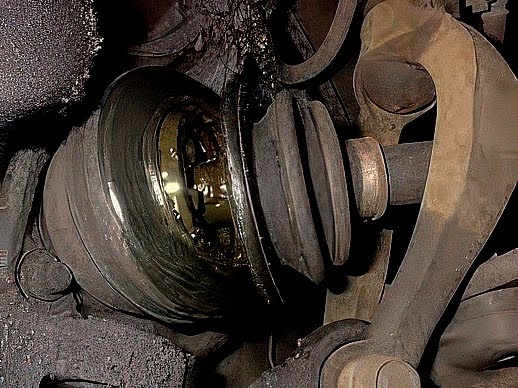
busted cv boot
A busted boot (see photo) spells trouble for the CV joint, but most of the time, the entire CV axle will be replaced rather than just replacing the boot. | Image Source: Richard McCuistian

Tips on How to Access the CV Boots

The CV boots can only be accessed through the vehicle’s undercarriage. If you need to inspect or replace them, you’ll need to lift your vehicle with jack stands and keep it still with wheel chocks and the spindle and strut will need to be disconnected.

The big nut on the end of the CV axle where it goes through the hub will need to be removed and you may need a puller to force the splined CV joint out of the wheel hub.

It’s a pretty big job. Even bigger if you haven’t done it before, so be advised.

About The Authors
Written By Automotive and Tech Writers

The CarParts.com Research Team is composed of experienced automotive and tech writers working with (ASE)-certified automobile technicians and automotive journalists to bring up-to-date, helpful information to car owners in the US. Guided by CarParts.com's thorough editorial process, our team strives to produce guides and resources DIYers and casual car owners can trust.

Reviewed By Technical Reviewer at CarParts.com

Richard McCuistian has worked for nearly 50 years in the automotive field as a professional technician, an instructor, and a freelance automotive writer for Motor Age, ACtion magazine, Power Stroke Registry, and others. Richard is ASE certified for more than 30 years in 10 categories, including L1 Advanced Engine Performance and Light Vehicle Diesel.

Any information provided on this Website is for informational purposes only and is not intended to replace consultation with a professional mechanic. The accuracy and timeliness of the information may change from the time of publication.

File Under : Suspension , Auto Repair , DIY Tagged With :
CP Mobile App
Subscribe
Notify of
guest
0 Comments
Oldest
Newest Most Voted
Inline Feedbacks
View all comments
expand_more
CarParts.com Fix-It-Forum BE PART OF OUR COMMUNITY: Share your knowledge & help fellow drivers Join Now