Need car parts? Select your vehicle
Reading Time: 2 minutes

Summary

  • The camshaft is usually located in the engine’s cylinder head, while cam-in-block engines place it inside the engine block. It becomes visible on overhead cam engines once the valve cover is removed.

  • The camshaft rotates in sync with the crankshaft. Its lobes open the intake and exhaust valves, making it a key part of the valvetrain that controls gas flow in and out of the combustion chamber.

  • Accessing the camshaft requires removing the valve cover on overhead cam engines. Cam-in-block engines require additional steps, and proper gasket installation is essential to avoid oil leaks.

On most vehicles, the camshaft’s location will be in the engine’s cylinder head or the top part of the engine that contains the engine’s valvetrain. On overhead camshaft engines, the camshaft is typically visible as soon as you remove the engine’s valve cover, which is the cover for the engine’s valvetrain. 

That said, cam-in block engines will have the camshaft somewhere inside the engine block. An engine can have one or two camshafts, depending on whether an engine is a single overhead or dual overhead cam. 
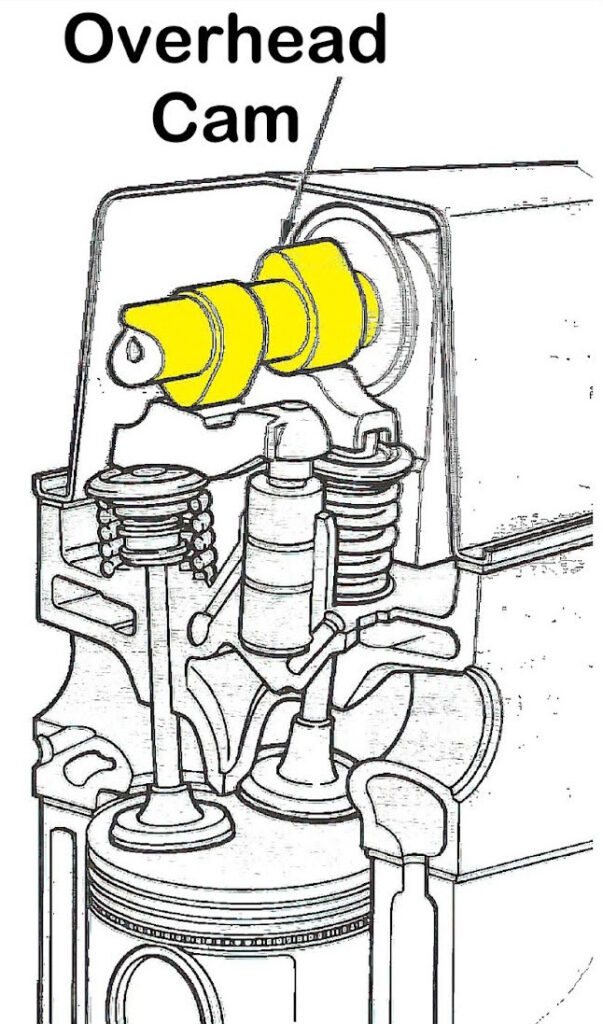
overhead camshaft location diagram
Overhead camshaft positioned in the engine’s cylinder head, operating the intake and exhaust valves directly. | Image Source: Richard McCuistian
cam in block engine layout diagram
Cam-in-block engine layout with the camshaft positioned inside the engine block and driving the valvetrain through lifters and pushrods. | Image Source: Richard McCuistian

The camshaft is a rod-like component that rotates in sync with your engine’s crankshaft. When the camshaft spins, its lobes push the engine’s intake and exhaust valves open. 

The camshaft is a critical part of an engine’s valvetrain, which is the component responsible for opening and closing the cylinder valves, effectively controlling when gases enter and leave the combustion chamber. 

Tips on How to Access the Camshaft

You’ll have to open the engine’s valve cover to reach the camshaft. The engine must be cool before you attempt to access the camshaft. That’s if it’s an overhead cam engine. Cam in block engines require the removal of the rocker arms, pushrods, lifters, and front cover. 

Warning: The distributor will need to be removed (if equipped). Don’t try this if you don’t know how and you expect the engine to run again without asking for help.
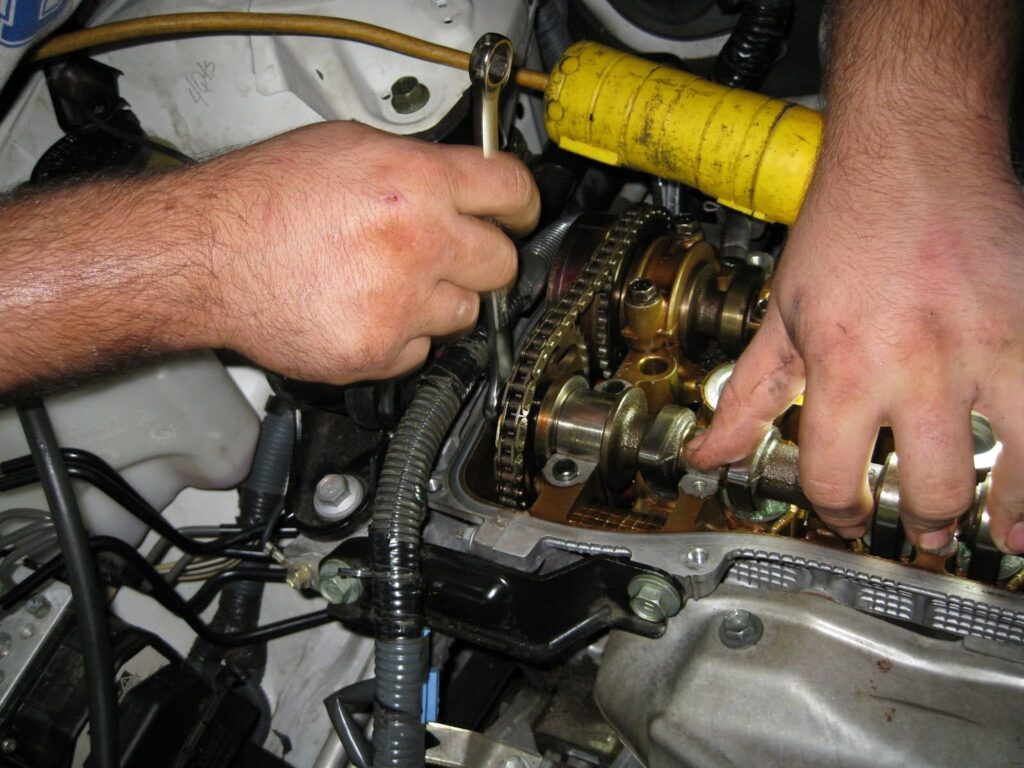
mechanic accessing overhead camshaft
Mechanic accessing an overhead camshaft after removing the valve cover to work on the valvetrain. | Image Source: Richard McCuistian

The valve cover prevents oil from leaking from the engine’s valvetrain. It is typically removed by unscrewing the bolts that keep the cover in place and disconnecting the wiring connectors located around the engine. 

Remember that valve cover gaskets must be properly reinstalled. Otherwise you risk an oil leak, which can be catastrophic. It’s common to replace valve cover gaskets every time the valve cover is opened, but they can be reused as long as you properly reinstall them. That said, the likelihood of a leak is greater if you reuse the valve cover gasket.

About The Authors
Written By Automotive and Tech Writers

The CarParts.com Research Team is composed of experienced automotive and tech writers working with (ASE)-certified automobile technicians and automotive journalists to bring up-to-date, helpful information to car owners in the US. Guided by CarParts.com's thorough editorial process, our team strives to produce guides and resources DIYers and casual car owners can trust.

Reviewed By Technical Reviewer at CarParts.com

Richard McCuistian has worked for nearly 50 years in the automotive field as a professional technician, an instructor, and a freelance automotive writer for Motor Age, ACtion magazine, Power Stroke Registry, and others. Richard is ASE certified for more than 30 years in 10 categories, including L1 Advanced Engine Performance and Light Vehicle Diesel.

Any information provided on this Website is for informational purposes only and is not intended to replace consultation with a professional mechanic. The accuracy and timeliness of the information may change from the time of publication.

File Under : Engine , Auto Repair , DIY
CP Mobile App
Subscribe
Notify of
guest
0 Comments
Oldest
Newest Most Voted
Inline Feedbacks
View all comments
expand_more
CarParts.com Fix-It-Forum BE PART OF OUR COMMUNITY: Share your knowledge & help fellow drivers Join Now