An oil pump is one of those parts that sounds straightforward until the box shows up and something doesn’t match. Maybe the pickup tube port is on the wrong side. Maybe the gasket was not included. Maybe the old timing cover has to come off, and now there’s a gasket surface that needs attention, but the replacement gasket is not in the cart. This is how a single-part order turns into a two-week project with a second shipping charge.
The right way to shop for an oil pump starts with one question: What exactly needs to go in the cart for this job to get done in one shot? Oil pumps sit deep in the engine, often behind the timing cover or inside the oil pan. Access is not trivial. That means every missed gasket, seal, or pickup tube creates real cost in repeat labor, not just a minor inconvenience.
This article walks through the order-building logic for an oil pump replacement. Not symptoms, not diagnosis, not installation steps. Just what belongs in the cart, what trips up shoppers, and how to avoid tearing the engine apart twice.
The Job in One Sentence
Replace the component responsible for pressurizing and circulating engine oil to every bearing, cam journal, and moving surface inside the engine.
An oil pump failure means the engine loses oil pressure. Without adequate pressure, bearings starve, surfaces scuff, and internal damage accelerates fast. The job is not just swapping a pump. It is restoring reliable oil pressure to the entire rotating assembly.
Do Not Assume the Pump Is the Only Cause of Low Oil Pressure
But do not forget that the oil pump pressure relief valve is not always a simple, built-in detail you can ignore. If the relief valve is serviced separately from the pump and is stuck open or the spring is broken, you may replace the oil pump and still find yourself with no oil pressure.
There are several engine platforms where this can become an issue. Here is one example:
The Chrysler 2.7L V6

This engine is notorious for oiling issues. While the oil pump is driven by the crankshaft, the oil pressure relief valve plunger and spring are serviced separately in the engine oiling system.
The trap: If the spring breaks or the valve sticks open due to sludge, you can replace the oil pump and the timing chain, a major job on this interference engine, and still have zero oil pressure at hot idle. If that is not enough of an issue, cam or crank bearing wear on any engine can cause low oil pressure issues that replacing the pump will not fix.
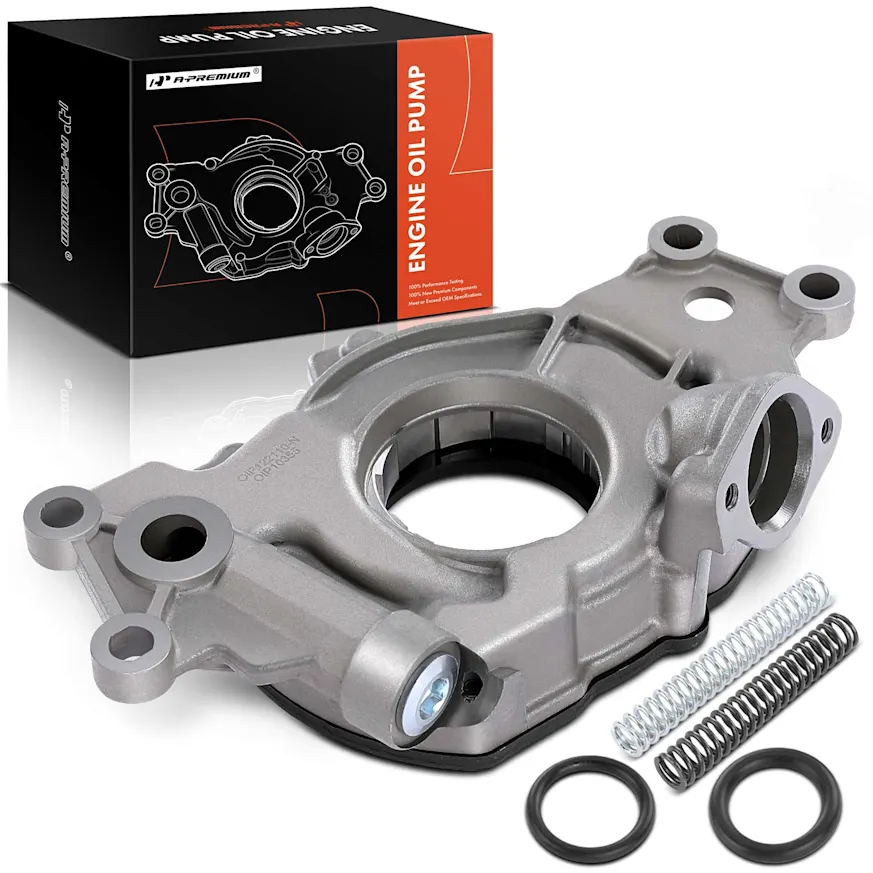
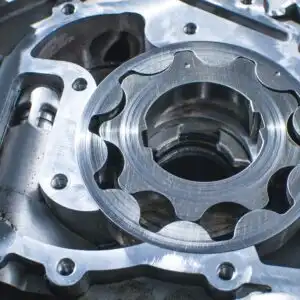
Oil pumps are commonly sold as bare pumps, but some listings include the pickup tube, screen, gasket, or even a complete timing cover assembly with the pump pre-installed. Knowing what the listing actually includes is half the battle.
Why Visual Matching Can Break an Oil Pump Order
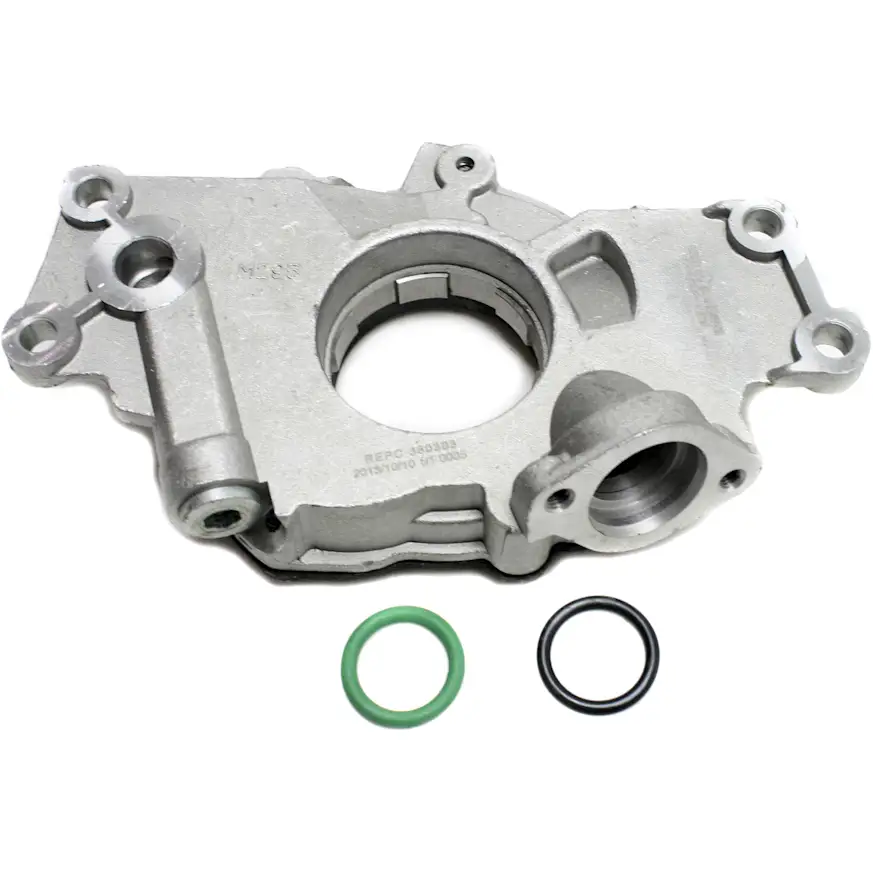
Be careful about “matching up” the part visually. A pump can look the same but be internally different so that it must spin in the opposite direction to work – this is true mostly with pumps driven by the camshaft where the same cam drive gear spins the distributor and the oil pump.
Choose Your Cart Size
Not every oil pump order needs to be the same size. The right cart depends on mileage, condition, and how long the vehicle needs to stay reliable.
Minimum Viable Repair
The pump failed or lost pressure. The goal is to restore oil pressure with the smallest sensible parts list.
Choose it if:
- The engine is relatively low-mileage and otherwise healthy
- Oil pressure loss is confirmed to be in the pump itself
- The timing cover and pan gasket surfaces are in good shape
Typical cart:
- Oil pump (confirm pickup tube inclusion)
- Oil pump gasket or O-ring
- Fresh engine oil and filter
- RTV sealant if the application requires it
Smart Same-Access Refresh
The front of the engine or the oil pan is already coming off. Replacing a few adjacent wear items now avoids reopening the same area later.
Choose it if:
- The vehicle has 80,000 miles or more
- The timing cover is being removed for pump access
- The oil pan gasket looks marginal
Typical cart:
- Oil pump with pickup tube and screen
- Oil pan gasket
- Timing cover gasket set
- Front crankshaft seal
- Engine oil, filter, and RTV sealant
High-Mileage / Do-It-Once Reset
The engine has serious miles on it, and this is the last time anyone wants to pull the front cover or drop the pan. Everything in the access zone gets refreshed.
Choose it if:
- Mileage is above 150,000
- The vehicle is a long-term keeper
- There are signs of sludge, scoring, or worn pickup screens
Typical cart:
- Oil pump (consider a high-volume pump if available for the application)
- Pickup tube and screen (new, not reused)
- Timing cover gasket set
- Oil pan gasket
- Front crankshaft seal
- Timing chain, guides, and tensioner if accessible
- Oil, filter, RTV, and any required coolant if the front cover contacts a water jacket
What Is Commonly Ordered Together on This Job
Sealing Items
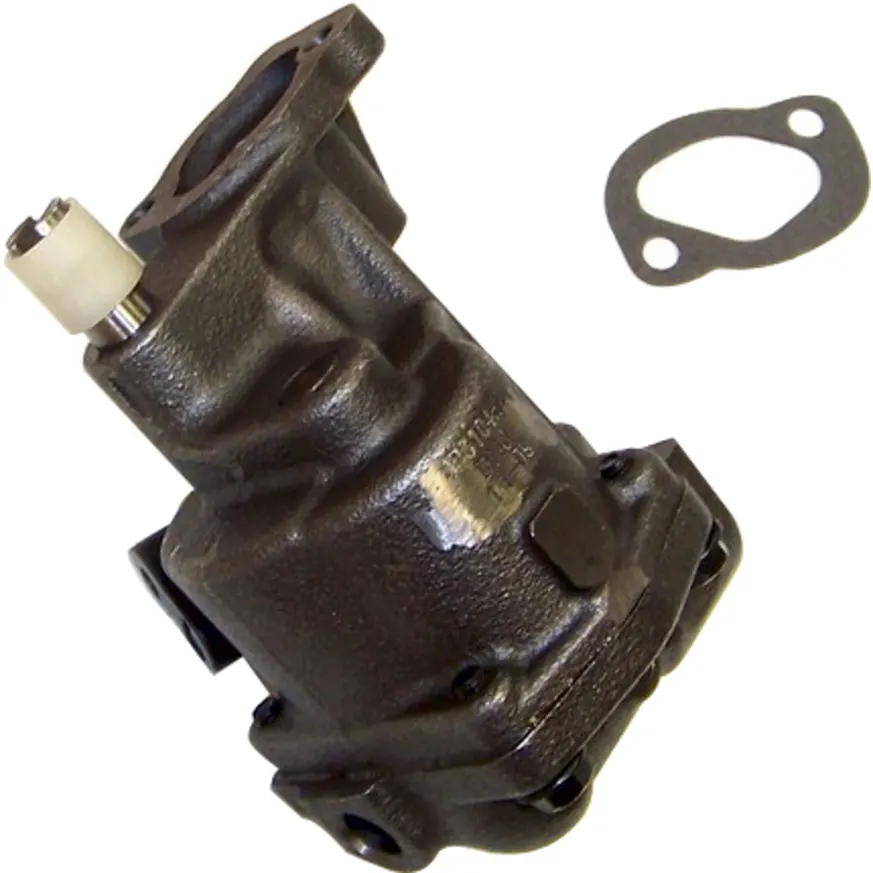
Oil pump jobs almost always require at least one gasket or O-ring that is not included with the pump itself. The oil pump gasket, timing cover gasket, and oil pan gasket are the most commonly needed. Many shoppers assume these come in the box. They usually do not.
Pickup Tube and Screen
Some oil pumps include the pickup tube. Many do not. A clogged or cracked pickup screen is a common reason for low oil pressure in the first place, so reusing the old one after pulling the pan defeats part of the purpose. Check the listing carefully for pickup tube inclusion.
Hardware and Fasteners
Oil pump mounting bolts, pickup tube bolts, and oil pan bolts can stretch or corrode. If the application uses torque-to-yield bolts on the timing cover, they should not be reused. A missing bolt kit has stalled more than a few weekend oil pump jobs.
Fluids and Consumables
Fresh engine oil and a new filter are non-negotiable after an oil pump replacement. RTV sealant is required on many oil pan and timing cover applications. Thread sealant may be needed for oil pressure sensor ports. Assembly lube should go on the pump gears before installation.
Front Crankshaft Seal
If the timing cover comes off to access the oil pump, the front crankshaft seal is exposed. Replacing a seal that costs a few dollars while the cover is already off saves significant labor if it starts leaking six months later.
Timing Components
On engines where the oil pump sits behind the timing cover, the timing chain, guides, and tensioner are in the same access zone. High-mileage engines with chain stretch or guide wear are strong candidates for a timing set while the front of the engine is open.
What People Forget Until the Vehicle Is Already Apart
This is the shortlist of items and questions that cause mid-job delays:
- Does the listing include the pickup tube and screen, or just the pump body?
- Is the oil pump gasket included, or sold separately?
- Does the oil pan gasket need to be replaced to reseal after the pan comes off?
- Are the mounting bolts reusable, or are they torque-to-yield?
- Is RTV sealant required for the pan or cover, and is the right type on hand?
- Does the front crank seal need to come out when the cover is removed?
- Is the oil pressure sending unit accessible now, and is it working correctly?
- Will the old pickup tube screen pass a visual inspection, or is it clogged with sludge?
- Is there enough fresh oil and a new filter ready for the refill?
When Replacing Only the Oil Pump Is False Economy
On some engines, a simple oil pump replacement is perfectly reasonable. If the pump is externally mounted on the block, access is simple, and no other sealing surfaces are disturbed, a bare pump and gasket is a legitimate order.
On engines where the oil pump is located behind the timing cover, the math changes. Removing the cover means disturbing the front crank seal, the timing cover gasket, and sometimes the timing chain tensioner. Reassembling all of that with the original 150,000-mile seal and a chain with noticeable slack is a gamble. The labor to reach those parts again is the same labor that was just performed.
The honest logic is simple: if reaching the oil pump already requires removing a major cover or dropping the pan, every cheap wear item in that access zone deserves a hard look. A front crank seal, a timing cover gasket, and a pickup screen cost very little compared to the labor it takes to reach them. On lower-mileage engines with clean internals, skipping the extras is fine. On high-mileage trucks and sedans with known sludge or chain noise, the minimalist order often creates a second job within a year.
The Fitment Splits That Break Oil Pump Orders
Engine Family
Oil pump design varies by engine, not just by vehicle. A V8 and a V6 in the same truck use completely different pumps. Even within the same engine family, displacement changes or generation updates can alter the pump casting, gear dimensions, and mounting points.
Pump Location and Drive Type
Some oil pumps are driven off the crankshaft behind the timing cover. Others are driven by the distributor or an intermediate shaft and mount on the outside of the block. The pump location determines the physical shape, drive mechanism, and required gaskets. Ordering based on vehicle year and model alone, without confirming engine and pump location, is a common mistake.
Pickup Tube Configuration
Pickup tubes vary in length and angle depending on the oil pan depth and shape. A standard-depth pan and a truck pan may use the same pump but different tubes. Ordering a pump without confirming whether the tube matches the pan setup leads to clearance problems.
Standard Volume vs. High Volume
Some applications offer both standard-volume and high-volume oil pumps. A high-volume pump moves more oil per revolution. It is often used for towing, performance, or engines with increased bearing clearances. Ordering the wrong volume specification changes oil pressure behavior and may not be appropriate for every application.
Assembly vs. Bare Pump
Oil pumps are sold as bare pump bodies, as pump-and-pickup assemblies, and as complete kits that include timing components. Choosing the wrong package type means either missing critical parts or paying for components that aren’t needed.
Production-Date or VIN Split
Some engines changed oil pump specifications mid-year. This is especially common during generation transitions. If the parts listing asks for a production date or VIN range, that information matters. A pump that fits the same engine made six months earlier may not fit the later version.

Delivery-Day Inspection Checklist
Before tearing into the engine, compare the new pump against the old setup:
- Confirm the bolt-hole pattern matches the block or timing cover mounting surface
- Check that the pickup tube port location and angle match the pan configuration
- Verify the drive mechanism (crank-driven, distributor-driven, or intermediate shaft)
- Count the included components: pump body, pickup tube, screen, gasket, hardware
- Inspect the gear or rotor set for shipping damage or foreign debris
- Compare the overall pump body dimensions against the original
- Confirm the oil pressure relief valve is present and moves freely
- Check the O-rings or seals for any damage
Your One-Job Order Sheet for an Oil Pump
Use this as a pre-checkout checklist to make sure the cart is complete.
- Confirm the Vehicle
Enter year, make, model, and engine. If the parts listing asks for a production date or VIN range, check the door jamb sticker or VIN plate.
- Confirm the Repair Scope
Decide whether the job is a bare pump swap, a same-access refresh, or a high-mileage reset. This determines the cart size.
- Confirm What the Listing Includes
Read the listing details. Does it include the pickup tube, screen, gasket, and hardware, or just the pump body?
- Add the Consumables and Adjacent Items
Engine oil, filter, RTV sealant, assembly lube, and any gaskets not included with the pump. Add the front crank seal if the timing cover is coming off.
- Bench-Check the Old Part
Before installation, compare the new pump to the old one side by side. Confirm bolt pattern, drive type, port location, and overall dimensions.
- Choose the Right Ownership Logic
A bare pump swap is fine for a low-mileage engine with a simple failure. A full access-zone refresh makes sense for a high-mileage vehicle that needs to stay reliable for years.
The Smart Way to Shop Oil Pumps
Getting the cheapest oil pump from the listings doesn’t always give you the best savings. A cart that is missing the gasket, the pickup tube, or the front seal turns a one-weekend repair into a drawn-out project with extra shipping charges and unnecessary downtime.
Shopping by repair scope keeps the order honest. Match the cart to the vehicle’s mileage, condition, and how long it needs to stay on the road. A shopper who builds the order around the job, not around the lowest thumbnail price, finishes the repair once and moves on.
Use the vehicle selector, confirm the engine, read the listing inclusions, and check the fitment notes. That is the difference between a correct order and an almost-right order that costs more in the long run.
Keep Reading: Related Posts


Any information provided on this Website is for informational purposes only and is not intended to replace consultation with a professional mechanic. The accuracy and timeliness of the information may change from the time of publication.