Search for an intake manifold gasket on any parts site, and the results get confusing fast. One listing is a single green O-ring for a few dollars. The next is a six-piece upper set. A third is a stamped-steel valley pan with sealant in the box.
They all share almost the same name, yet they don’t do the same job. That price spread, from a few dollars to a few hundred, isn’t random. It reflects real differences in what the listing contains and which engine it seals.
This article helps you match the listing to your vehicle before you commit. Fitment, gasket type, included pieces, and material all decide whether a listing is correct. Once you nail those, choosing a brand becomes the easy part.
Quick Answer: How Do You Choose the Right Intake Manifold Gasket?
Start by confirming your vehicle’s year, make, model, and exact engine. Gaskets are cut for specific manifold and cylinder-head layouts, so fitment comes first.
Next, decide which listing type your repair needs, whether that’s a single gasket, a full set, or an upper intake plenum gasket. Then check the material, since fiber, rubber, silicone, and multi-layered steel aren’t interchangeable. Finally, confirm what’s in the box and compare brands only after everything else lines up.

Start With the Vehicle, Not the Thumbnail
Fitment always comes first. Intake gasket shapes follow the manifold and cylinder-head design, so a gasket that looks close in a photo can seal the wrong port pattern. The image tells you very little about whether it actually fits.
Confirm these details before you filter any listings:
- Year, make, and model
- Engine size and configuration, like a V6 versus a V8
- Trim or sub model, which can change the intake design
- Engine code or VIN when the listing asks for it
The same model year often ships with more than one engine, and each can use a different gasket. A vehicle selector narrows the field far faster than scrolling. Enter your vehicle first, then judge whatever listings remain.
Identify the Version Your Repair Actually Needs
This is where most intake gasket orders go sideways. Two products can both say intake manifold gasket and still solve completely different problems. The name alone won’t tell you which one your repair calls for, so here’s how the main types break down.
Single Intake Manifold Gasket
A single gasket seals one specific joint, often a lower manifold-to-head surface or a throttle body flange. Some engines, especially plastic composite intakes, use one large gasket or one ring per port. These listings are affordable and correct when your repair only touches that surface.
Complete Intake Manifold Gasket Set
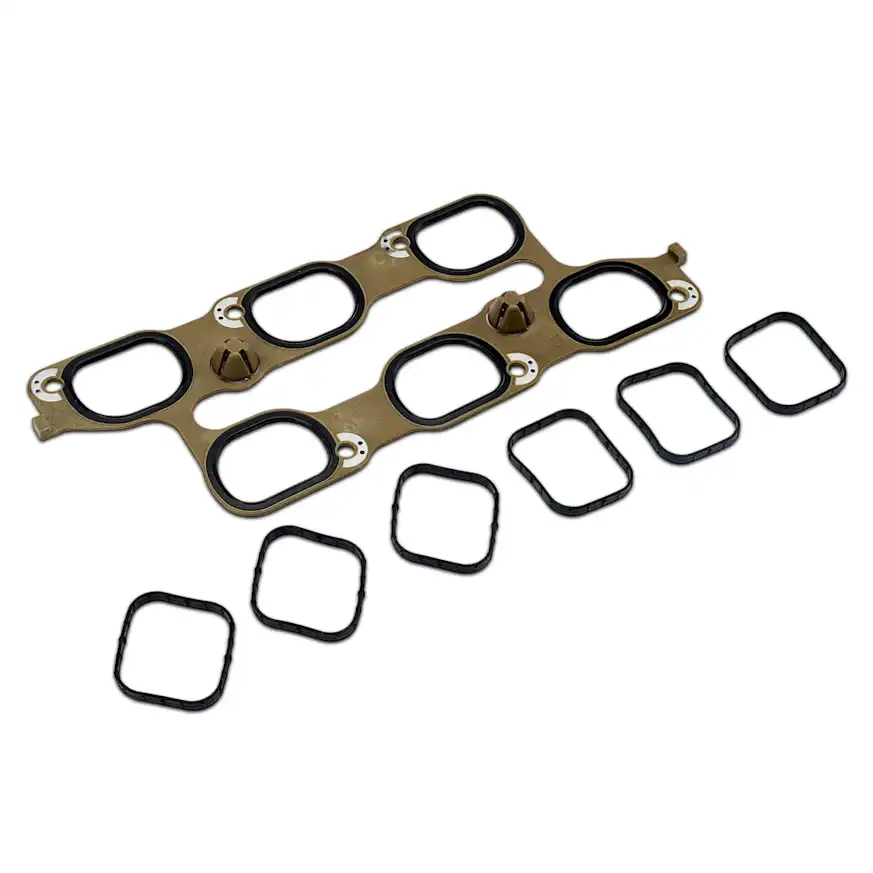
A set bundles the gaskets and seals for a fuller intake job on your engine family. Sets often add a throttle body gasket, O-rings, and port seals under one part number. If you’re pulling the whole manifold, a set usually saves you a second order.
Upper Plenum or Valley Pan Gasket
Many V6 and V8 engines use a two-piece intake that splits the gasket into upper and lower positions. Upper plenum and stamped-steel valley pan gaskets are separate listings, not stand-ins for a standard set. Confirm whether your engine uses an upper cover, a lower manifold, or both.

Compare the Details That Make the Part Fit
Use the product photo as a starting point, not the whole match. A thumbnail can confirm a general shape, but it can’t verify the details that decide sealing. Whenever you can, pull your old gasket and compare it directly against the listing.
Watch the port pattern first, since the number and shape of the intake ports has to match. Check the bolt-hole layout and whether the listing is a single gasket, a per-port ring, or a full set. Look closely at any coolant passage openings too, because some intakes route coolant through the gasket. On those engines, a mismatch leaks fluid rather than just air, so match the passages, not only the ports.
Check What Comes in the Box
Fitment and completeness are two separate questions. A listing can fit your engine perfectly and still leave out a piece your repair needs. The product name rarely spells out the full contents, so it pays to look closely.
Contents vary across listings, so verify which of these are included:
- Individual gaskets versus a multi-piece set
- Throttle body gasket
- O-rings and port seals
- Mounting hardware or an intake manifold bolt set
- RTV silicone sealer
That last item deserves attention. Some listings, often valley pan gaskets, include sealant in the box, while others expect you to supply it. Certain V8 engines call for a bead of RTV at the front and rear seals, so check your listing. If it doesn’t include a seal or gasket your job needs, add that companion item before checkout.
Compare Brands After You Confirm Fitment
Brand matters, but it shouldn’t be your first filter. A Fel-Pro, Dorman, or Victor Reinz gasket still has to match the engine, type, and contents before it belongs in your cart. A trusted name on the wrong configuration is still the wrong part.
Across intake gasket listings, you’ll commonly see brands like Fel-Pro, Dorman, Victor Reinz, Mahle, Edelbrock, and Cometic. Different brands lean toward different strengths, from complete OE-style sets to single service gaskets and performance lines. These aftermarket options give you real range once fitment is settled.
The better question isn’t which intake manifold gasket brand is best. It’s which brand offers the correct type, material, and contents for your engine. After that, brand becomes a confidence filter rather than a guess.
Choose the Right Ownership Lane
The right gasket isn’t automatically the priciest one. It’s the one that matches your engine, your repair scope, and how long you need the seal to hold. Three practical lanes cover most shoppers, and picking the right one saves money.
Single-Surface Repair
This fits you when the job touches just one sealing surface, like a throttle body flange or one leaking port. A single gasket or a per-port ring is often all you need here. There’s no reason to buy a full set for a small, isolated leak.
Full Manifold Service Set
Choose this when you’re removing the whole intake. A complete set replaces every gasket and seal you disturb under one part number. Building a one-job order sheet keeps you from a second order and a second teardown.
Upgraded Material or Performance Set
This suits high-mileage engines, heat-prone plastic intakes, and performance builds. Upgraded materials and heavier-duty sets resist warping and heat cycling well. Match the upgrade to a real need so you’re paying for capability you’ll actually use.
Make the Final Add-to-Cart Check
Run through a quick mental checklist before you head to the product page. Confirm your fitment with the year, make, model, and engine, then confirm the listing type and position. Double-check the material, the included seals and hardware, and the quantity for your ports or sides.
Compare the listing against your old part one last time, especially the port pattern and coolant openings. A mismatch here often shows up later as a vacuum leak, so it’s worth the extra minute. Pick your brand once everything above lines up, and add any missing companion gasket. A quick read of the product notes and return terms seals the deal.
Your Best Starting Point
Start with fitment, narrow by type, then confirm the contents match your repair at CarParts.com. Compare the listing against your old part, and use brand as a final confidence check. A step-by-step replacement guide helps you plan the job once the part is on the way.
The best intake manifold gasket order isn’t the closest-looking result or the most familiar name. It’s the listing that matches your engine, your repair scope, and the pieces you need. Get those right, and you’ll finish the job in a single pass.
Keep Reading: Related Posts





Any information provided on this Website is for informational purposes only and is not intended to replace consultation with a professional mechanic. The accuracy and timeliness of the information may change from the time of publication.