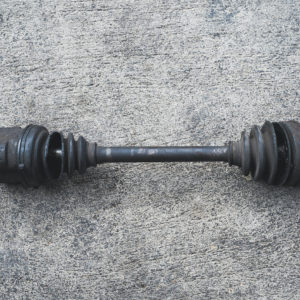
Most folks think “CV joint replacement,” but on modern cars, the job almost always means swapping the entire CV axle (half-shaft) that contains both constant-velocity joints. That detail matters because complete axles are easy to find off the shelf, which cuts risk for the shop and often lands cheaper than rebuilding a single joint.
Book time for one front axle usually falls between 1.5 and 3.0 hours depending on design quirks and corrosion. Parts choice and hourly rate move the needle far more than raw labor time.
If you’re pricing the job today, you’ll see two very different lanes based on vehicle and shop type. For common models at independent garages, one axle typically runs about $300–$900.
On late-model or tightly packaged vehicles—or at dealerships—the total can clear $1,000, and certain model/part pairings push past $1,500.
The spread comes from OEM vs. aftermarket axles, knuckle/hub designs that force extra disassembly, and whether seals or an alignment are folded into the visit. National estimators regularly show four-figure totals for “CV joint” line items when billed as a full assembly with OEM parts.
How Much Does CV Joint Replacement Cost?
Across the country, CV axle replacement often lands around $1,150–$1,365 when priced with higher-tier parts and typical labor; many published “CV joint” lines sit in the $1,200–$1,330 band. Those figures assume full axle assemblies and exclude taxes/fees. By contrast, mobile/independent pricing and budget parts can bring a one-side total into the mid-hundreds. Bottom line: for your car, parts tier and shop rate drive the number more than the time on the clock.
Model Snapshots (One side, Typical ranges)
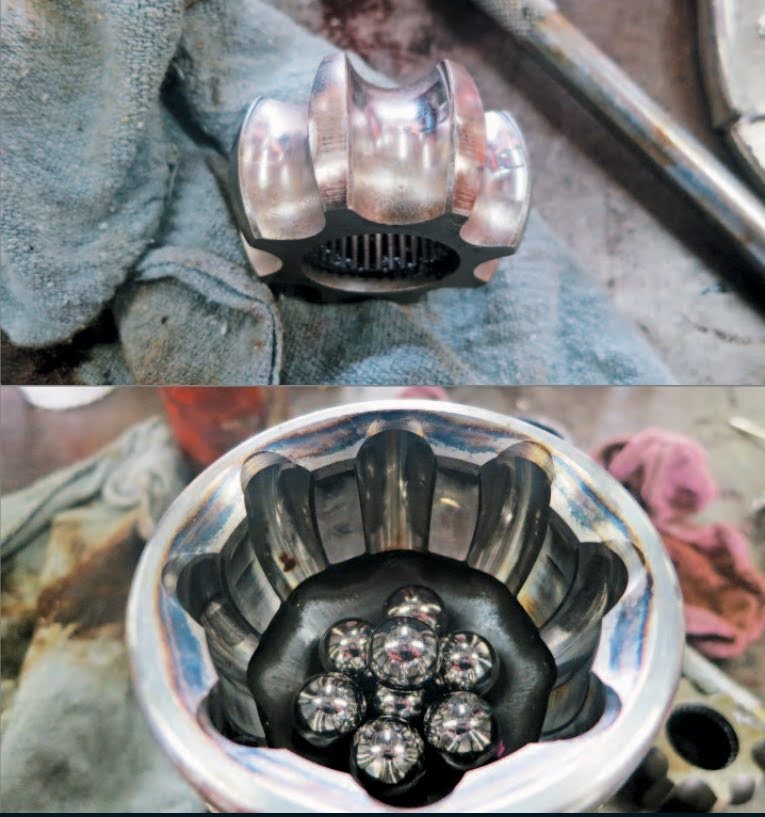
- Honda Accord: ~$1,836–$1,934 for “CV joint replacement” (assembly).
- Honda Civic: ~$1,388–$1,477.
- Honda Odyssey: ~$1,668–$1,763. Packaging and axle length push parts cost here.
- Toyota Camry: OEM axle assemblies cost a few hundred dollars per side (parts only); installed totals swing widely with shop and part choice.
- Ford Explorer: Older generations can price unusually low with economy parts; some estimates drop to ~$136–$188 for certain years, showing how platform and part choice skew results.
- Nissan Rogue: ~$839–$982 is typical with assembly pricing.
Why the quotes can’t agree: some calculators price joint-only work or assume OEM axles; others quote aftermarket assembly swaps with cheaper parts. Mobile outfits often undercut dealer rates. That $300 estimate beside a $1,300 estimate usually reflects parts tier and shop type, not a different repair.
Tip: Ask for two versions of the quote: OEM axle vs. reputable aftermarket (with warranty). Request the labor hours and the parts line so you can compare apples to apples.
CV Joint vs. Full Axle: Which Route Makes Sense?
- Full axle (most common): Lower comeback risk, similar time to a boot/joint service, and easy parts sourcing. Many chains and dealers default to this path for peace of mind.
- Boot-only or joint-only: Worth a look if a torn boot is caught early and the joint hasn’t run dry or started clicking. Labor often sits close to axle-swap time, so savings are modest. Even boot-only jobs often end up in the high hundreds once labor is counted.
Heads-up: Once you hear clicking on turns, the outer joint has already worn. Replacing just the boot usually delays, not dodges, an axle swap.
What Drives the Cost?
- Parts tier: OEM axles for late-model sedans and crossovers often list $300–$600+ each; performance or hybrid trims can be higher. Aftermarket assemblies can be roughly half that, and many carry lifetime warranties.
- Drivetrain layout: AWD/4WD can add time for extra shafts, carrier bearings, or removal of exhaust shields and splash panels.
- Rust/corrosion: Seized splines or ball joints add time (heat, pullers, or even knuckle removal).
- Related items: Axle seals, a new axle nut, fresh cotter pins, or a top-off of transaxle fluid may be needed. Some platforms want a wheel-speed sensor relearn if the tone ring gets disturbed.
- Shop type: Dealership labor rates can run roughly 40% higher than independents for the same job.
Is a Chain Store a Reasonable Pick for CV Joint Replacement?
National chains like Firestone are convenient for inspections, same-day parts sourcing, and warranties that travel with you. Many quote drivetrain checks and axle replacements with standard pricing. If you prefer a chain, that path is perfectly fine—just confirm whether the axle is OEM or aftermarket and what the warranty looks like for each.
Can You Drive With a Bad CV Joint?
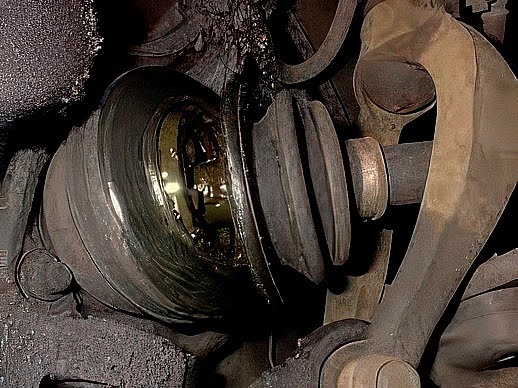
Clicking on turns (outer joint), grease flung around the inner fender, vibration under throttle, or a torn boot all merit a prompt visit. A failed joint can separate and whip the shaft around, chewing up brakes, struts, or exhaust. If vibration ramps up or you hear rhythmic clunks, park it and tow.
When CV Joint Repair (Not Replacement) Still Makes Sense
If the boot tear is fresh and the joint is quiet, a boot repair with fresh grease can be sensible on cars with pricey or hard-to-find axles. Ask the shop to inspect the bearing race and balls before committing. Compare:
- Boot kit + grease + clamps + labor: often $400–$520.
- Full axle assembly + labor: often similar or a bit higher—plus you leave with fresh joints.
DIY Tools
Axles make a solid intermediate DIY if you’ve handled brakes or struts. You’ll want:
- 1/2-inch impact or a stout breaker bar
- Axle-nut socket sized for your car
- Ball-joint or tie-rod separator
- Pry bar (to pop the inner stub from the transaxle—mind the seal)
- Torque wrench (for the axle nut and suspension hardware)
- Jack stands and wheel chocks
Typical front-axle outline:
- Break axle-nut torque on the ground: loosen the staked nut with the wheel chocked.
- Raise the car and set it on stands; remove the wheel. Hang the caliper if you need extra knuckle swing.
- Free the knuckle: remove the axle nut; disconnect the lower ball joint or the strut pinch bolt so the hub can swing out.
- Slide the outboard splines: push the outer stub through the hub—don’t hammer on the threads.
- Pop the inner joint: use a pry bar at the transmission case to release the snap ring; catch any fluid.
- Seat the new axle: snap the inner fully home (verify engagement), then feed the outer splines into the hub.
- Reassemble and torque: follow factory torque specs; stake or replace the axle nut; top off fluid if needed.
Road-Test: Look for leaks, ABS lights, and Any Clicking.
Plan on an alignment only if you loosen camber bolts or if impact damage came first. Otherwise, most axle swaps leave alignment untouched. If needed, budget about $100.
Practical ways to keep CV axle costs in check
- Match parts to the car’s stage of life: On a high-mileage daily, a reputable aftermarket axle with a strong warranty is often the smart buy. On newer vehicles still under powertrain coverage, sticking with OEM can avoid headaches.
- Price both sides but fix what’s actually worn: Both fronts may be tired around 100k miles, but there’s no rule you must do them as a pair unless inspection points that way.
- Ask for the labor time on the estimate: If someone quotes five hours for a one-side axle on a common sedan, request a line-item with labor hours and parts brand so you can compare to the typical 1.5–3.0-hour window.
If you like the convenience and nationwide warranty coverage of a big service network, booking through a well-known auto-care chain is a straightforward choice. They can check boots, joints, and nearby hardware and present both OEM and aftermarket paths.
Where to check prices and parts: national estimator tools for CV joint/axle replacement, model-specific pages for Honda, Toyota, Ford, and Nissan, plus OEM and aftermarket parts catalogs for axle pricing.
Keep Reading: Related Posts





Any information provided on this Website is for informational purposes only and is not intended to replace consultation with a professional mechanic. The accuracy and timeliness of the information may change from the time of publication.