Power steering fluid falls into four categories: ATF-based fluid such as Dexron II and III, dedicated mineral-based power steering fluid, synthetic hydraulic fluid like Pentosin CHF 11S and CHF 202, and OE-proprietary fluid such as Honda PSF-S and Mopar ATF+4. Your owner’s manual and the reservoir cap tell you which type your vehicle needs. Pour in the wrong one, and you can destroy a pump or steering rack that costs far more than the fluid ever will.
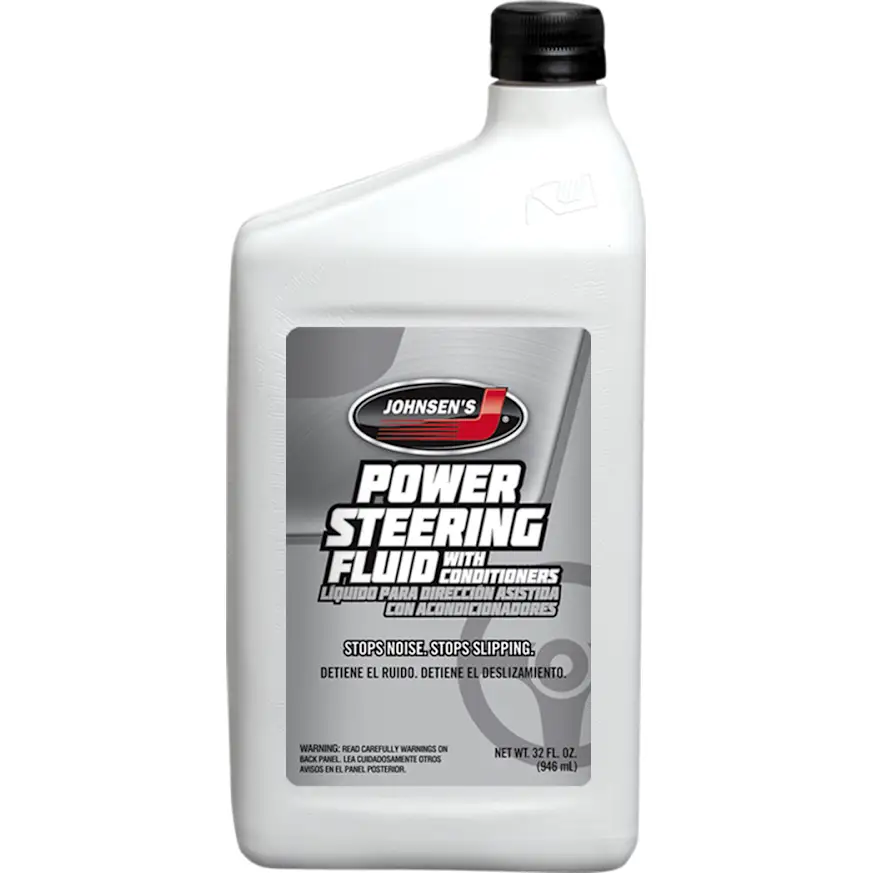
What Power Steering Fluid Does
Hydraulic power steering systems don’t turn your wheels with muscle alone. The pump pressurizes fluid, the fluid travels through hoses to the steering gear, and this pressure multiplies your input at the steering wheel. The same fluid lubricates the pump vanes, cools the system, protects seals and O-rings, and carries away wear particles.
That’s why fluid chemistry matters more than most drivers assume. Every formula carries a specific additive package tuned to a particular set of seal materials and pump tolerances. Change the chemistry, and you’ll change how the seals behave. Shop the full power steering fluid catalog here at CarParts.com to match your vehicle’s system. If your pump already sounds tired, browse replacement power steering pumps while you’re there.
The 4 Main Power Steering Fluid Types
ATF-Based Fluid (Dexron II, Dexron III, Mercon)
Plenty of manufacturers spec automatic transmission fluid for the power steering system, and Toyota leads this list. In these vehicles, ATF isn’t a substitute or a shortcut, it’s the correct fill. Dexron II and Dexron III show up most often, and Ford systems frequently call for Mercon or a Mercon-compatible fluid.
Dexron VI now replaces older Dexron grades on parts store shelves. GM lists it as backward compatible, though some technicians still prefer a Dexron III equivalent for older steering systems because of its slightly heavier viscosity.
Dedicated Mineral-Based Power Steering Fluid
This is the amber or pinkish fluid most people picture when they hear the words “power steering fluid.” Manufacturers formulate it purely for steering duty, so it skips the friction modifiers that transmissions need and leans harder on anti-wear additives and seal conditioners. Domestic vehicles from the 1990s through the 2000s use it widely.
Watch the label on universal formulas. Many blend in stop-leak polymers that swell seals to slow a drip. These additives help a leaking system limp along, but they can accelerate wear on tight-tolerance pumps and racks, so don’t reach for them unless you’re managing a known leak.
Synthetic Hydraulic Fluid (Pentosin CHF 11S and CHF 202)
European vehicles usually demand a synthetic hydraulic fluid rather than anything labeled ATF or standard PSF. Pentosin CHF 11S and CHF 202 dominate this space, and BMW, Mercedes-Benz, Audi, Volkswagen, Volvo, Porsche, and Saab applications use them heavily.
These fluids hold their viscosity across an enormous temperature range, which keeps steering effort consistent on a cold morning and stable under sustained load. CHF 11S and CHF 202 mix with each other safely. Neither one mixes with ATF. CarParts.com carries Pentosin power steering fluid for exactly these applications.
OE-Proprietary Fluid (Honda PSF-S, Mopar ATF+4)
Some automakers engineer their own chemistry and expect you to honor it. Honda and Acura specify Honda PSF-S, and their systems notoriously groan and chatter on generic fluid. Chrysler, Dodge, Jeep, and Ram systems often call for ATF+4, a licensed spec that generic bottles can’t legally claim without approval. Look for Mopar power steering fluid for these vehicles, and check the Honda Accord power steering fluid page for Honda-specific options.
Is Power Steering Fluid the Same as Transmission Fluid?
No. Both are hydraulic fluids, and both move pressure through a closed system, but ATF carries detergents and friction modifiers that clutch packs need. Dedicated power steering fluid skips these and prioritizes seal protection and pump lubrication instead.
So can you use transmission fluid in a power steering system? Only when the manufacturer says so. If your manual calls for Dexron II or III, ATF is the right answer. If it calls for PSF-S, CHF 11S, or ATF+4, ATF becomes the wrong answer, and the damage often shows up weeks later as a whine, a leak, or stiff steering.
Power Steering Fluid by Make and Model
Toyota Camry and Corolla
Most older Toyota Camry and Corolla models with hydraulic steering take Dexron II or Dexron III ATF rather than a bottle labeled power steering fluid. Newer Corolla and Camry generations moved to electric power steering, which uses no fluid at all. Confirm your vehicle year before you buy, then shop Toyota Camry power steering fluid for the correct match.

Toyota Tundra and Sequoia
Toyota Tundra and Sequoia power steering systems follow the same rule. Both call for Dexron II or III ATF, and the reservoir cap usually prints the spec in fine text if your manual has gone missing. If your Sequoia already whines at full lock, a fresh fill may not save it, so compare Toyota Sequoia power steering pumps at the same time.
Other Popular Applications
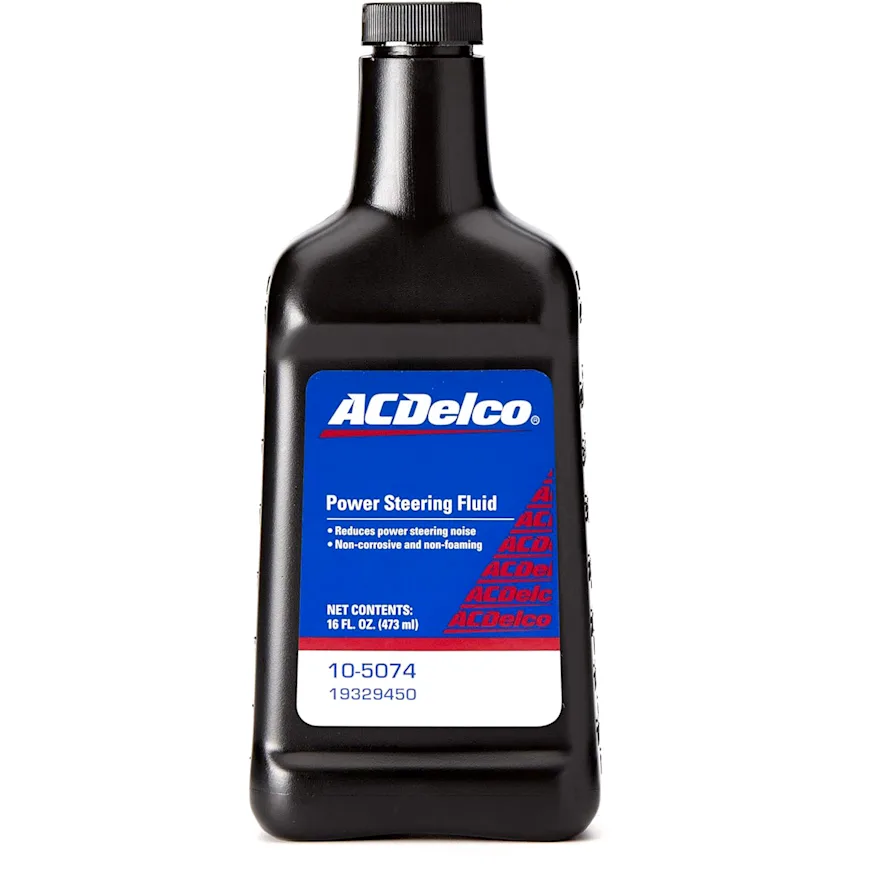
Nissan systems typically use a dedicated Nissan-approved PSF, and you’ll find fitment-matched options on the Nissan power steering fluid and Nissan Sentra pages. GM applications commonly take an AC Delco fluid such as AC Delco 10-5074.
Best Power Steering Fluid Brands
No single brand wins every application, so match the spec first and shop the brand second.
- Pentosin. The default choice for European vehicles that specify CHF 11S or CHF 202.
- AC Delco. OE fluid for GM applications, and a safe pick where GM specs apply.
- Mopar. The licensed source for ATF+4 in Chrysler, Dodge, Jeep, and Ram systems.
- Valvoline and Prestone. Broad-coverage aftermarket fluids, available in both plain and stop-leak formulas.
- Lucas. Popular for high-mileage systems, with thicker formulas that quiet older pumps.
CarParts.com stocks these brands alongside fitment filters, so you can confirm compatibility before you check out instead of guessing in a parts aisle.
What Happens If You Use the Wrong Power Steering Fluid?
Seal swelling comes first, then leaks, then a whining pump. Mixing incompatible chemistries can also cause the fluid to gel or foam, which starves the pump of lubrication and cooks it. Repair bills for a failed rack routinely climb past a thousand dollars, and none of this damage announces itself on day one.
If you catch the mistake early, flush the system completely rather than topping it off. Drain the reservoir, run fresh fluid through with the wheels turning lock to lock, and repeat until the fluid runs clean.
Signs Your Power Steering Fluid Needs Attention
- Awhine or groan that rises as you turn the wheel
- Stiff or jerky steering, especially when cold
- Darkbrown or black fluid instead of clear, amber, red, or green
- A visible puddle under the front of the vehicle
- A foamy or milky look in the reservoir
Most manufacturers don’t publish a strict change interval, but many technicians recommend a flush every 50,000 to 75,000 miles or whenever the fluid darkens.
Does Electric Power Steering Use Fluid?
No. Fully electric power steering systems replace the pump and hoses with an electric motor, so there’s no reservoir to check and no fluid to change. Electro-hydraulic systems sit in between and still use fluid, usually a synthetic hydraulic type. If you can’t find a reservoir with a dipstick cap near the engine, your vehicle almost certainly runs electric assist.
Where To Find the Best Deals on Power Steering Fluid
Buying online beats a last-minute parts run in almost every case, because you can filter by your vehicle’s exact year, make, and model before you pay. CarParts.com pairs this fitment data with a lowest price guarantee and free returns, so you don’t gamble on a bottle that turns out wrong for your ride’s system. Start at the power steering fluid hub and let the vehicle selector narrow it down.
Choosing the right power steering fluid takes about two minutes when you know the spec, and CarParts.com makes this lookup simple by matching every fluid, pump, and hose to your exact vehicle. Order today and get fast shipping, a lowest price guarantee, and free returns if something doesn’t fit. Shop power steering fluid and steering components at CarParts.com now, and keep your steering smooth, quiet, and safe.
Keep Reading: Related Posts






Any information provided on this Website is for informational purposes only and is not intended to replace consultation with a professional mechanic. The accuracy and timeliness of the information may change from the time of publication.